
Short Answer
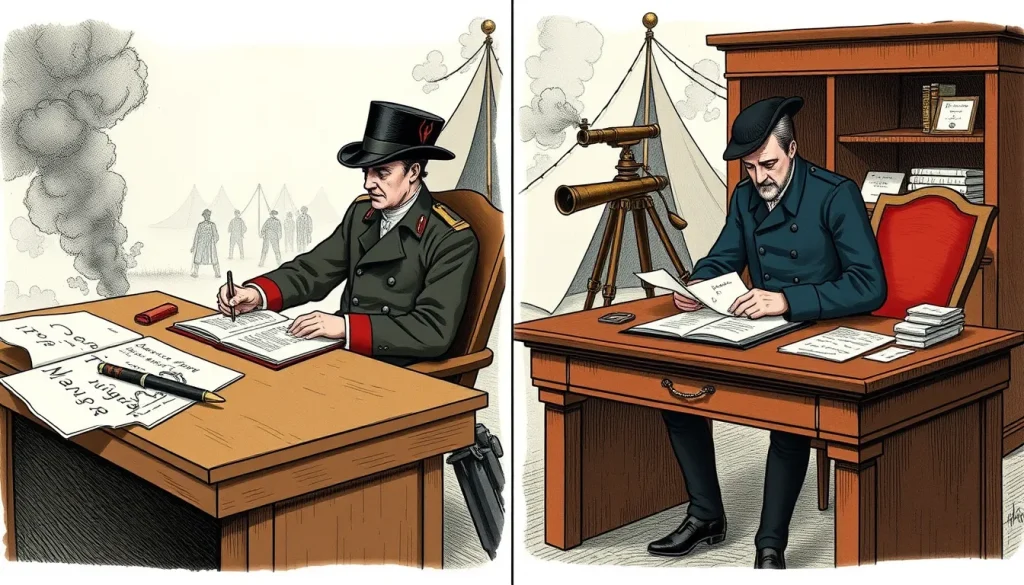
Comparing American and British battle reports from the War of 1812 reveals how each side shaped its military narratives for national audiences. These reports—ranging from official dispatches to newspaper articles—not only informed civilians but also influenced morale and future military decisions. This article analyzes their differences, using examples from key engagements, and explains why historians treat them as layered sources rather than straightforward accounts.
Historical Context
The War of 1812 (1812–1815) saw the United States arrayed against Great Britain, with major operations along the Canadian border, the coasts, and the Gulf. Both governments relied on written reports from commanders to inform political leaders and the public. The early nineteenth century was a period of intense nationalism; newspapers on both sides of the Atlantic often printed official reports with minimal editing, making them a primary means of shaping public opinion. However, the pace of communication was slow—news from the front could take weeks to reach capitals—and reports were subject to the biases of their authors, who often sought to justify failures or amplify successes. The British Army maintained a more formal and hierarchical reporting structure, while American forces, still developing a professional officer corps, sometimes produced less standardized documents. These differences became apparent in the way each side described battles.
What Happened
The War of 1812 produced hundreds of battle reports, from the failed American invasion at Queenston Heights in October 1812 to the bloody stalemate at Lundy’s Lane in July 1814 and the climactic Battle of New Orleans in January 1815. In each, commanders filed official reports to their respective higher authorities. For example, American General William Hull’s report on the fall of Detroit (August 1812) blamed insufficient supplies and militia cowardice, while British General Isaac Brock’s report emphasized rapid maneuver and the psychological impact of his demand for surrender. At Queenston Heights, Brock’s death elevated the British report into a heroic narrative, whereas the American account, initially obscured by confusion and contradictory orders, became a defensive narrative blaming raw troops. Later, at Chippawa in July 1814, American General Winfield Scott filed a detailed after-action report that praised his professionally trained regulars, contrasting with British General Phineas Riall’s more terse report acknowledging a surprising reverse. The reports differed not only in length and tone but also in casualty figures, which each side often underestimated on their own side and exaggerated on the enemy’s. For instance, at the Battle of Crysler’s Farm (November 1813), both sides claimed victory; American reports emphasized the withdrawal of British forces to Cornwall, while British reports stressed their repulse of a larger American army. These discrepancies were common, and the publication of each report in home newspapers further entrenched partisan versions of events.
Why It Matters
Battle reports shaped immediate political reactions: in the United States, defeats such as Detroit and Crysler’s Farm fueled calls for military reform, while victories like New Orleans—fought after the peace treaty was signed but unknown to participants—created a sense of national triumph. In Britain, reports from the Canadian front were often secondary to the larger Napoleonic War in Europe, but they still influenced public perceptions of the empire’s North American possessions. For historians, comparing these reports reveals the evolving professionalism of the American army, as later reports from 1814 exhibit greater detail and tactical analysis than earlier ones. They also expose the role of rhetoric in constructing national identity. By studying the differences, scholars can cross-check facts and assess the reliability of each source, moving beyond patriotic narratives to a more nuanced understanding of what actually occurred.
Definition
Battle reports are official or unofficial records of a military engagement, usually authored by a commanding officer for superiors, and often subsequently published in newspapers. They include troop movements, unit designations, casualties, and subjective evaluations. In the War of 1812, they were typically written within days of the action and transmitted through military channels before being reprinted in civilian press.
Background
The tradition of formal battle reporting evolved in European armies during the seventeenth and eighteenth centuries, with an emphasis on clear, factual summaries that could be used for strategic review. The British Army in 1812 followed this tradition, using standardized forms and hierarchical channels. The American army, newly expanded in 1812, lacked a large cadre of trained officers; many were political appointees with limited military experience, leading to reports that were often verbose, defensive in tone, or less precise in their tactical descriptions. The U.S. War Department issued no standard format until later in the war, relying instead on individual commanders’ discretion.
How It Worked
After a battle, the senior on-scene commander drafted a report for the army headquarters or the secretary of war (in the American case) or the governor-in-chief and Horse Guards (in the British case). These reports included a narrative of actions, lists of killed and wounded, and assessments of the enemy. They were then carried to Washington or London, where they might be read aloud in Congress or Parliament and, more commonly, published in newspapers. For example, the London Gazette published official dispatches, while American papers printed reports from generals and naval officers. The reports often reflected the author’s personality and career concerns: a general facing inquiries might downplay failures, while a victorious commander might overstate the odds. Casualty figures were notoriously unreliable; both sides often omitted their own losses or reported the enemy’s as heavier that they were.
Competing Viewpoints
American and British reports differed in several systematic ways. British reports, shaped by a professional officer corps, tended to be concise and focused on operational details, with a staid tone—though this varied by author. They often assumed the superiority of British regulars and emphasized the discipline of the ranks. American reports, reflecting a citizen-army tradition and the political nature of promotions, sometimes included patriotic flourishes or lengthy justifications for retreats. They were more likely to blame militia units or supply failures, as seen in Hull’s report. Additionally, American commanders often wrote more extensively about the courage of their troops, while British reports might stress the effectiveness of the line and bayonet charge. These differences were not absolute, but they are noticeable when comparing reports from similar actions, such as the 1813 engagements at York and Fort George.
Role in the War of 1812
During the war, reports served as political tools. In the United States, defeats reported by generals fed into Federalist critiques of President Madison’s management and contributed to anti-war sentiment in New England. Conversely, victories like Oliver Hazard Perry’s report on Lake Erie (September 1813)—with its famous line “We have met the enemy and they are ours”—bolstered national morale. In Britain, reports from Canada were used to demonstrate that British arms held firm in the colonies, even as the larger Napoleonic War absorbed public attention. The discrepancies between American and British accounts of the same battles, such as the Battle of Craney Island (June 1813) or the Battle of Bladensburg (August 1814), led to reciprocal accusations of exaggeration or mendacity. These competing narratives shaped contemporary opinions and have persisted in national histories.
Consequences and Historical Interpretation
For historians, comparing battle reports is essential for reconstructing the war’s realities. Reports provide the skeleton, but they must be weighed against letters, diaries, court-martial records, and later archaeological or topographical evidence. Scholars like Donald Hickey and Alan Taylor have shown how reports reflect the authors’ political and personal biases. The American report of the Battle of Chippawa, for instance, overstates the number of British regulars engaged, while British reports understate their losses. By juxtaposing multiple reports, historians can identify likely facts—such as the number of units present or the timing of movements—while acknowledging that exact casualty numbers remain contested. The differences also reveal the institutional learning curves: American reports from 1814 are notably more professional than those from 1812, corresponding to the training reforms initiated by Winfield Scott and others. Thus, the reports themselves are evidence of the war’s military evolution.
Primary Sources
Key primary sources include the official dispatches of General William Hull and General Isaac Brock for the Detroit campaign; the report of Major General Henry Dearborn after the capture of York; the detailed report of Winfield Scott at Chippawa; and the British dispatches of Sir George Prevost and General Gordon Drummond. Additionally, newspapers such as the Niles’ Weekly Register (American) and the London Gazette (British) printed these reports, sometimes with editorial commentary. These sources are accessible in national archives and published compilations, such as The Documentary History of the Campaign upon the Niagara Frontier by E.A. Cruikshank. Each report must be read with its intended audience and the author’s rank and circumstance in mind; for example, Brock’s report of Queenston Heights was written just before his death and later amended by his aide.
Further Reading
- Adams, Gregg. US Soldier vs British Soldier: War of 1812. Osprey Publishing, 2021.
- Hickey, Donald R. The War of 1812: A Forgotten Conflict. University of Illinois Press, 1989.
- Taylor, Alan. The Civil War of 1812: American Citizens, British Subjects, Irish Rebels, & Indian Allies. Alfred A. Knopf, 2010.
- Cruikshank, E.A., ed. The Documentary History of the Campaign upon the Niagara Frontier. Lundy’s Lane Historical Society, 1896–1908.
References
- Adams, Gregg. US Soldier vs British Soldier: War of 1812. Osprey Publishing, 2021. [See source at https://lonewarriorswa.com/wp-content/uploads/2021/10/Combat-54.pdf and https://www.ospreypublishing.com/uk/osprey-blog/2021/us-soldier-vs-british-soldier/]
- Hickey, Donald R. The War of 1812: A Forgotten Conflict. University of Illinois Press, 1989.
- Taylor, Alan. The Civil War of 1812. Alfred A. Knopf, 2010.
- Cruikshank, E.A. The Documentary History of the Campaign upon the Niagara Frontier. 1896–1908.
FAQ
Why did American and British battle reports differ?
Differences stemmed from military professionalism and national cultures. British officers were part of a long-standing professional hierarchy, producing concise, standardized reports. American officers, many new and politically appointed, often wrote longer, more defensive accounts that blamed others for failures.
How reliable are battle reports as historical sources?
They are valuable but biased. Casualty figures and enemy-strength estimates are often inaccurate. Historians compare multiple reports and other evidence to approximate the truth.
Which battles show the most conflicting reports?
Battles like Crysler's Farm and Chippawa saw both sides claim victory. Reports from these engagements highlight how each side framed the same events to suit their audience.
Leave a Reply