
Short Answer
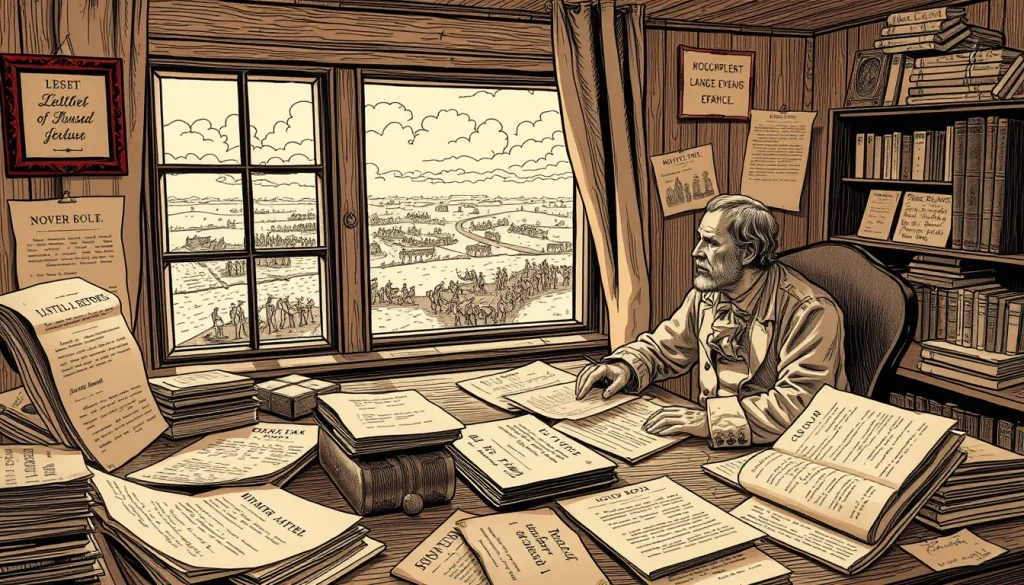
The question of how reliable War of 1812 battlefield accounts are touches on the core challenge of historical research: every written description of combat is filtered through the perspective, memory, and purpose of its author. During the war (1812–1815), participants on both sides produced official dispatches, private letters, newspaper reports, and later memoirs that often contradict one another. For historians, understanding these accounts means weighing the political pressures on commanders, the limits of personal observation, and the strong pull of national mythology.
Historical Context
The War of 1812 was fought between the United States and Great Britain, with British forces and their Indigenous allies defending the British North American colonies. The war was driven by American grievances over maritime rights, impressment, trade restrictions, and territorial ambitions in the Northwest. It was a geographically scattered conflict, with battles along the Canadian border, the Chesapeake Bay region, the Great Lakes, and the Gulf Coast. Commanders operated with limited intelligence and often had difficulty coordinating forces. Both sides used the war for political purposes: American Republicans sought to assert national sovereignty and potentially annex Canada, while Britain saw the conflict as a side-show to the larger Napoleonic Wars. This political atmosphere shaped the creation of battle reports, which were written not only to inform but also to justify actions, boost morale, and influence public opinion. In the aftermath of the war, competing national narratives emerged—Americans celebrated victories like New Orleans, while Canadians emphasized defense of their territory—making the reliability of accounts even more contested.
What Happened
The term “battlefield account” refers to any written description of a military engagement, including official reports by commanders, letters from soldiers, diary entries, newspaper articles, and later memoirs. During the war, commanders like Isaac Brock, James Yeo, Oliver H. Perry, and Andrew Jackson filed official reports immediately after engagements, but these were often tailored to burnish reputations or deflect blame. For example, the American report of the Battle of Queenston Heights (October 13, 1812) initially claimed a potential victory, even though the Americans were decisively defeated and surrendered. Similarly, the British report of the Battle of New Orleans (January 8, 1815) understated the losses, while American accounts emphasized a heroic defense. Participants’ letters and diaries sometimes provide more candid details, but they too are filtered by personal bias and limited field of vision. The battles themselves were chaotic, with smoke, noise, and terrain obstructing view, making it rare for any single observer to see the whole action. After the war, many veterans wrote memoirs decades later, mixing memory with hearsay and patriotic sentiment. These accounts often contradicted official records, and the discrepancies became fodder for later historians.
Why It Matters
The reliability of battlefield accounts directly shapes how we understand the War of 1812. If historians rely too heavily on official reports, they risk perpetuating propaganda; if they trust memoirs, they may inherit nostalgia and invention. The stakes are high because the war’s outcome and legacy remain contested. For Americans, the war is remembered as a second war of independence, symbolized by the defense of Baltimore and the victory at New Orleans. For Canadians, the war is seen as a successful defense of their territory against invaders. For Indigenous peoples, the war brought territorial losses and displacement, yet their perspective is often missing from mainstream accounts. The reliability of sources also affects modern debates about military leadership, tactical decisions, and the war’s significance. Scholars like Donald E. Graves and Ernest Cruikshank have shown how early histories were heavily biased, and their work has encouraged critical reevaluation of accounts. Thus, studying reliability is not an abstract exercise; it is the necessary foundation for any accurate narrative of the conflict.
Definition
In the context of the War of 1812, a “battlefield account” is any written record that describes the events, actions, or outcomes of a military engagement. Reliability refers to the degree to which that account accurately represents what actually happened, free from deliberate distortion, unconscious bias, or factual error. Historians assess reliability by comparing multiple accounts, checking against official records, interrogating the author’s perspective, and considering the purpose of the document.
Background
The War of 1812 occurred before the development of modern war correspondence and with no photography. Official reports were typically written by commanders or their aides immediately after a battle, but these reports served strategic and political functions. They were read by governments, published in newspapers, and used to justify promotions or censure. Personal letters and diaries were more private but still affected by the author’s ability to see only a fraction of the action. The scale of battles varied widely, from small skirmishes to large engagements like New Orleans, where thousands were involved. After the war, the process of writing history itself became a site of national mythmaking. In both the United States and British North America, early historians such as William James and Gilbert Auchinleck crafted narratives that glorified their own side. This background explains why accounts are often contradictory and why later scholars had to sift through layers of bias.
How It Worked
Battlefield accounts were produced through several common channels. Official reports were composed by commanding officers, often within days of the battle, and sent to government authorities. These reports were then widely reproduced in newspapers, shaping public perception. For example, Lieutenant-Colonel John Harvey’s report of the Battle of Stoney Creek (June 6, 1813) helped establish a British/Canadian narrative of defensive triumph. American reports, such as those by William Henry Harrison at the Battle of the Thames, were similarly crafted to emphasize victories. Letters and diaries written by lower-ranking soldiers and officers often provide the most immediate personal insights, but they rarely cover the entire battlefield landscape. Newspapers relied on eyewitness statements and unofficial letters, but editing and partisan slant often colored what was printed. After the war, many veterans were encouraged to publish memoirs, and these became popular but were written years later, subject to fading memory and a desire to present oneself in a heroic light. These memoirists also borrowed from other published accounts, sometimes fabricating conversations or events. The result is a chaotic record that requires careful cross-correlation to establish even basic facts like troop numbers, casualties, and the sequence of actions.
Competing Viewpoints
Competing viewpoints are inherent to the sources. American and British/Canadian accounts often diverge on key details. For example, at the Battle of Queenston Heights, both sides claimed victory and disputed casualty figures. American accounts emphasized the death of British General Isaac Brock as a blow to the enemy, while British accounts stressed that the Americans surrendered after a desperate fight. At the Battle of New Orleans, the American victory was celebrated, and British accounts, while acknowledging failure, pointed to the late arrival of troops and the strength of the American defenses. Indigenous participation is often noted but rarely detailed, as most accounts were written by non-Indigenous observers. Later historians have also taken sides. In the 19th century, American historians like Theodore Roosevelt (in his naval history) sought to affirm American naval prowess, while Canadian historians like Ernest Cruikshank compiled documents to support a Canadian national narrative. Modern scholars such as Donald Hickey and Alan Taylor have moved beyond binary debates, looking at social, economic, and cultural factors, and they explicitly criticize the reliability of older nationalistic accounts.
Role in the War of 1812
Battlefield accounts played an immediate role during the war itself. Commanders used reports to secure promotions, defend their actions, or undermine rivals. The American government, facing intense political opposition to the war, used victories to rally support; defeats were often downplayed or blamed on local militia. The British and colonial administrations used reports to maintain morale among their troops and the civilian population. For Indigenous nations, the war was part of a larger struggle for territory, and their participation was sometimes celebrated by allies but omitted in later mainstream accounts. The accounts also influenced negotiations at Ghent, as each side sought to claim strategic advantages. After the war, accounts became the raw material for patriotic histories and school texts, cementing national myths. For example, the phrase “We have met the enemy and they are ours” from Oliver Perry’s report became a rallying cry. These myths, in turn, influenced public memory for more than a century, making reliable historical reconstruction even more difficult.
Consequences and Historical Interpretation
The unreliability of battlefield accounts has led historians to develop critical methods. They compare multiple sources, look for internal inconsistencies, and use modern knowledge of terrain and logistics. They also recognize that no account is entirely objective. The rise of social and cultural history has encouraged scholars to broaden the range of voices, including those of women, enslaved people, and Indigenous peoples, who often left few written records. The historiography of the War of 1812 shows a progression from nationalistic celebration to more balanced analysis. Ernest Cruikshank’s documentary collections, published in the early 20th century, remain valuable because they reproduce primary sources, but his interpretations were still shaped by his pro-British perspective. Donald Graves has highlighted the “militia myth” and the tendency to exaggerate regular troop contributions. The influence of these interpretations is still felt in textbooks and commemorative events. Today, historians generally agree that a reliable account of any battle requires triangulating official records, private writings, and material evidence, while remaining alert to the biases that shaped each source.
Primary Sources
The most relevant primary sources include official military dispatches, such as the reports of Isaac Brock, Alexander Macomb, and Andrew Jackson, which are held in national archives. Contemporary newspapers like the Montreal Gazette and the Niles’ Weekly Register reprinted these reports and provided commentary. Personal letters and diaries, such as those of soldiers and officers, offer ground-level perspectives; collections exist at institutions like the Library and Archives Canada and the Library of Congress. Later memoirs, such as that of William James, are useful but must be treated with caution due to their retrospective nature. For Indigenous perspectives, oral traditions and some diplomatic records exist, but they are fragmentary. All these sources have inherent limitations: official reports are self-serving; newspapers are partisan; diaries are incomplete; memoirs are filtered by memory. Historians must therefore compare sources and evaluate their purposes.
Further Reading
- Donald R. Hickey, The War of 1812: A Forgotten Conflict expanded edition (University of Illinois Press, 2012).
- Alan Taylor, The Civil War of 1812: American Citizens, British Subjects, Irish Rebels, and Indian Allies (Knopf, 2010).
- Donald E. Graves, Where Right and Glory Lead! The Battle of Lundy’s Lane, 1814 (Dundurn, 1997).
- J.C.A. Stagg, The War of 1812: Conflict for a Continent (Cambridge University Press, 2012).
- Ernest Cruikshank, The Documentary History of the Campaign upon the Niagara Frontier, 9 vols. (Welland, 1896–1908).
References
- Paul L Dawson, “Memoires: Fact or Fiction?”, The Napoleon Series, https://www.napoleon-series.org/research/eyewitness/c_memoires.html.
- Donald E. Graves, “Where Did the Time Go? Four Decades of Canadian Scholarship and Research on the War of 1812,” The War of 1812 Magazine Issue 21, January 2014, https://www.napoleon-series.org/military-info/Warof1812/2014/Issue21/Graves.pdf.
- “Early Canada Historical Narratives – Whose History?”, http://www.uppercanadahistory.ca/1812/181211.html.
- Peter J. Kastor, “What to Make of the War of 1812?”, Reviews in American History 42, no. 4 (2014): 644-651, https://doi.org/10.1353/rah.2014.0100.
- Theodore Roosevelt, The Naval War of 1812 (1882), via Internet Archive, http://archive.org/details/navalwarof1812or01roosrich.
FAQ
Why are War of 1812 battlefield accounts often contradictory?
Accounts differ because each participant saw only a fraction of the action, wrote with political or personal motives, and recorded events after the fact. Commanders sought to justify their decisions, newspapers added partisan spins, and veterans misremembered later in life.
How do historians determine which account is reliable?
Historians compare multiple independent accounts, check against official documents, and evaluate the author's purpose and proximity to events. They also use terrain, archaeology, and knowledge of military tactics to test plausibility.
What is an example of an unreliable War of 1812 account?
Many early American accounts of the Battle of Queenston Heights claimed that American troops fought bravely and nearly won, although they actually suffered a decisive defeat and surrendered. Later historians, using British records and evidence, corrected this distortion.


Leave a Reply