
Short Answer
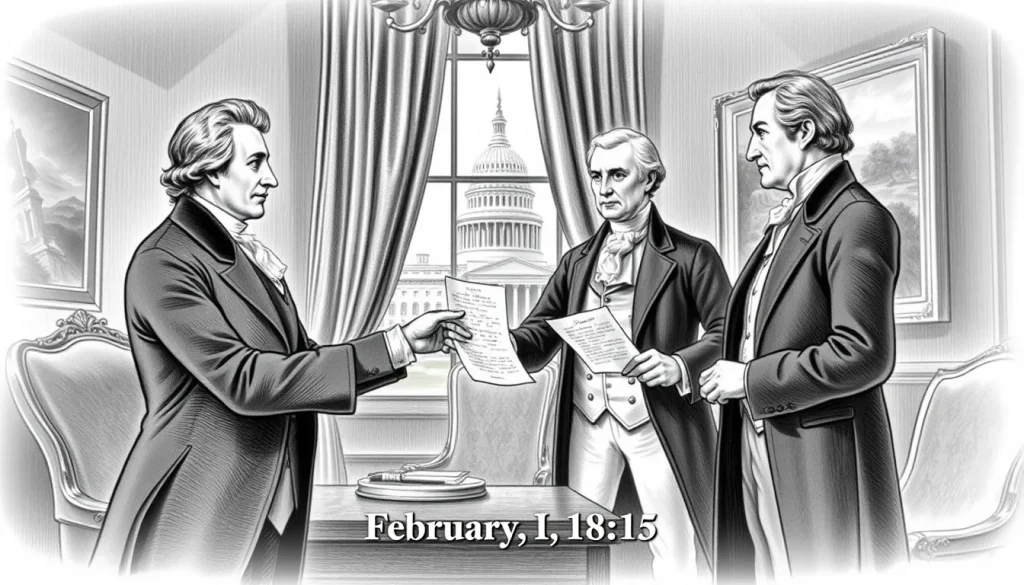
The War of 1812 between the United States and Great Britain officially ended on February 17, 1815, when the two nations exchanged ratified copies of the Treaty of Ghent in Washington, D.C. The treaty had been signed on December 24, 1814, in the Belgian city of Ghent, but it took nearly two months for formal ratifications to be exchanged, making the February date the true legal end of hostilities. This date marks the conclusion of a conflict that shaped North American boundaries and relations between the two nations.
Historical Context
The War of 1812 was fought from June 18, 1812, when the United States declared war on Great Britain, to the ratification of the Treaty of Ghent in 1815. Causes included impressment of American sailors, trade restrictions, and British support for Indigenous resistance to American expansion. By late 1814, both sides were exhausted and willing to negotiate. The Napoleonic Wars had ended, reducing British maritime interference, and the American economy suffered from war. Peace talks opened in Ghent in August 1814, but progress was slow as Britain initially sought territorial concessions and a buffer state for Indigenous allies. American victories at Baltimore and Lake Champlain in September 1814 helped moderate British demands.
What Happened
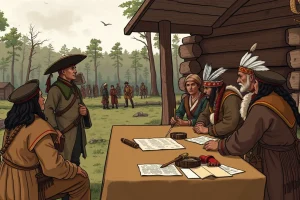
The American peace commissioners—John Quincy Adams, James A. Bayard, Henry Clay, Jonathan Russell, and Albert Gallatin—negotiated with British representatives James Gambier, Henry Goulburn, and William Adams. After months of stalemate, both sides agreed to return to the status quo ante bellum, restoring prewar borders and territories. The treaty was signed on December 24, 1814. The British government ratified it on December 27, 1814, and a copy was dispatched across the Atlantic. Meanwhile, unaware of the treaty, American forces under Andrew Jackson defeated the British at the Battle of New Orleans on January 8, 1815. The treaty arrived in New York on February 11, 1815, and President Madison submitted it to the Senate on February 16. The Senate approved it unanimously that day, and Madison signed it. The next day, February 17, 1815, Secretary of State James Monroe exchanged the ratified document with the British minister, officially ending the war.
This exchange of ratifications was the decisive legal act. According to Article I of the treaty, “All hostilities both by sea and land shall cease as soon as this Treaty shall have been ratified by both parties.” Thus, the war did not end at the signing, nor at the British ratification, but at the mutual exchange of ratifications, which occurred on February 17, 1815.
Why It Matters
The official end of the war established a durable peace between the United States and Great Britain, though it resolved none of the original issues like impressment. The treaty restored prewar boundaries, leaving the United States and British North America (later Canada) unchanged. For Indigenous peoples, the end of the war meant the loss of a powerful British ally, which had significant long-term consequences as American westward expansion continued. The war also reinforced a sense of American nationalism and produced heroes like Andrew Jackson. The exact date—February 17, 1815—remains important in historical record because it marks the point at which hostilities legally ceased, even though some isolated fights occurred afterward due to slow communication.
Historians have debated the war’s significance, but the Treaty of Ghent is often seen as a return to the status quo, essentially a draw. The official end date is thus both a simple fact and a symbol of the conflict’s inconclusive outcome.
Definition
In the context of the War of 1812, “officially end” refers to the legal termination of hostilities through the exchange of ratifications of a peace treaty. According to international law, a treaty does not take effect until both parties have ratified it and exchanged those ratifications. For this conflict, that moment occurred on February 17, 1815, when the United States and Great Britain formally exchanged their approved copies of the Treaty of Ghent in Washington, D.C.
Background
The war began in June 1812 over maritime grievances and frontier conflicts. By 1814, with Napoleon’s defeat, Britain turned its attention to America, but American defeats and British military failures created a stalemate. Both sides were willing to negotiate, and the neutral city of Ghent was chosen for talks. The negotiations were complicated by British demands for territorial concessions and an Indigenous buffer state. However, after a series of American victories, the British government, advised by the Duke of Wellington, decided to accept a return to prewar boundaries to avoid prolonged conflict.
How It Worked
The Treaty of Ghent was signed on December 24, 1814. According to its terms, hostilities would cease as soon as both parties ratified the treaty. The British Privy Council ratified it on December 27, 1814, and a copy was sent on the British ship Favorite to the United States. The treaty arrived in New York on February 11, 1815, and was delivered to Secretary of State James Monroe. President Madison sent it to the Senate on February 16, 1815, which approved it unanimously that same day. Madison then signed the ratification instrument, and the following day, Secretary Monroe exchanged it with the British minister, Sir Henry Wellesley. The exchange of ratifications on February 17, 1815, formally ended the war. The treaty’s first article stipulated that peace would be “firm and universal” upon ratification, and orders to cease hostilities were to be sent immediately.
Competing Viewpoints
Some might argue that the war ended with the signing of the treaty on December 24, 1814, or with the British ratification on December 27. However, the treaty itself specified that it would take effect only after ratification by both parties. Since the U.S. Senate did not approve until February 16, and the formal exchange occurred the next day, the official end is February 17, 1815. A related issue is the Battle of New Orleans, fought on January 8, 1815, after the signing but before ratification. This battle is often called the “aftermath” battle, but it had no bearing on the legal end date. Some British accounts might point to the end of the Napoleonic Wars as the reason, but the War of 1812 was separate. Thus, the consensus among historians and official sources is February 17, 1815.
Role in the War of 1812
The official end date is the culmination of the war’s final chapter. It marks the point at which the conflict ceased to be a military engagement and became a matter of diplomacy and reconstruction. The delay between signing and ratification allowed for the Battle of New Orleans, which boosted American morale and influenced the perception of the war’s outcome. The treaty itself did not address impressment or neutral rights, but it did provide for the restoration of captured territories and the return of prisoners. For the United States, the conclusion affirmed its independence and sovereignty, while for Britain, it removed a troublesome conflict as it dealt with the post-Napoleonic reorganization of Europe. For Indigenous nations, the treaty’s Article IX promised restoration of their rights, but this was not enforced, leading to their further displacement.
Consequences and Historical Interpretation
The Treaty of Ghent’s ratification on February 17, 1815, had lasting consequences. It established a lasting peace between the United States and Great Britain, leading to improved relations and eventual alliance. The status quo ante bellum meant no territorial changes, but it effectively secured American independence and Canadian boundaries. Historians have debated the war’s “true” winners, but many view it as a negotiated peace with both sides claiming victory. The official end date is significant in historical chronology, marking the boundary between the war era and the postwar period. It also highlights the importance of treaty ratification processes in international law. The memory of the war’s end, including the celebration of Jackson’s victory, shaped American nationalism. In Canada, the war is seen as a founding moment of national identity. Thus, the date of February 17, 1815, is more than a bureaucratic detail; it is a symbol of the conflict’s resolution and its ongoing historical legacy.
Primary Sources
The primary source for the end of the war is the Treaty of Ghent itself, signed December 24, 1814. Its text is held by the National Archives. The U.S. Senate’s executive journal records the unanimous approval on February 16, 1815. The exchange of ratifications is documented in letters from Secretary of State James Monroe to the British minister and in the British Foreign Office records. The NPS, Senate History, and other sources use these documents. One limitation is that the treaty does not mention impressment, which was a major cause, but it is a crucial primary source because it legally defines the end.
Further Reading
- Donald Hickey, The War of 1812: A Forgotten Conflict (University of Illinois Press, 1989).
- Henry Adams, History of the United States of America during the Administrations of James Madison (Library of America, 1986).
- J.C.A. Stagg, Mr. Madison’s War: Politics, Diplomacy, and Warfare in the Early American Republic, 1783-1830 (Princeton University Press, 1983).
- National Archives, “Treaty of Ghent,” Milestone Documents.
- U.S. Senate Historical Office, “The Senate Approves for Ratification the Treaty of Ghent.”
References
- National Archives, “Treaty of Ghent (1814),” https://www.archives.gov/milestone-documents/treaty-of-ghent
- National Park Service, “War’s End,” Star-Spangled Banner National Historic Trail, https://nps.gov/stsp/learn/historyculture/war-s-end.htm
- United States Senate, “The Senate Approves for Ratification the Treaty of Ghent,” https://www.senate.gov/about/powers-procedures/treaties/senate-approves-treaty-of-ghent.htm
- American Battlefield Trust, “The Treaty of Ghent: Ending the War of 1812,” https://www.battlefields.org/learn/articles/treaty-ghent-ending-war-1812
- Encyclopaedia Britannica, “War of 1812 – Final stages of the war and the aftermath,” https://www.britannica.com/event/War-of-1812/Final-stages-of-the-war-and-the-aftermath
FAQ
Why did the War of 1812 officially end on February 17, 1815, rather than the day the treaty was signed?
Because the treaty stated that hostilities would cease only after both parties ratified it and exchanged ratifications. The U.S. Senate did not approve until February 16, and the exchange occurred the next day.
What happened at the Battle of New Orleans after the treaty was signed?
The battle occurred on January 8, 1815, after the treaty was signed but before ratification. It was a major American victory, but it had no effect on the official end date because the treaty was already signed.
Did the Treaty of Ghent end impressment?
No, the treaty did not mention impressment, as that issue had become less important with the end of the Napoleonic Wars.

Leave a Reply