

Short Answer
The Siege of Fort Erie (4 August – 21 September 1814) was a British attempt to recapture Fort Erie, located at the entrance to the Niagara River opposite Buffalo, New York, which American forces had seized on 3 July 1814 during the War of 1812. The siege ended in an American defensive victory, marked by a costly British assault on 15 August and an American sortie on 17 September that compelled the British to withdraw. It was one of the final major engagements on the Niagara frontier and played a significant role in the stalemate that characterized the war’s closing months.
Historical Context
By mid-1814, the United States had launched a renewed invasion of Upper Canada across the Niagara River, hoping to gain control of the Niagara Peninsula and break the strategic deadlock along the border. American forces under Major General Jacob Brown captured Fort Erie on 3 July 1814, then advanced northward, defeating the British at the Battle of Chippawa on 5 July. However, the bloody Battle of Lundy’s Lane on 25 July, though tactically indecisive, left the American army severely weakened and its commander wounded. The American troops, now under Brigadier General Eleazer Wheelock Ripley, retreated to Fort Erie, where they prepared to defend against a British pursuit. Lieutenant General Gordon Drummond, the Lieutenant Governor of Upper Canada, commanded the British forces that followed, intending to drive the Americans from Canadian soil and eliminate the threat to the frontier.
What Happened
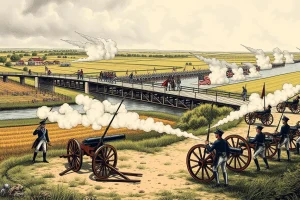
After Lundy’s Lane, the Americans withdrew to Fort Erie and rapidly strengthened its defences under the direction of Major General Brown, who remained at the fort despite his wounds. Drummond’s army, arriving on 4 August, was initially too weak to mount an immediate assault and instead attempted to cut off American supplies by raiding Buffalo and Black Rock across the Niagara River. That raid failed, and the Americans reinforced the fort with additional troops and artillery. Drummond then established siege batteries and began a bombardment on 13 August. On the night of 15 August, he launched a three-pronged assault: one column against the American position at Snake Hill to the south, one against the fort’s main works, and one against the northern entrenchments. The attack failed badly; British soldiers attacking Snake Hill had removed the flints from their muskets to preserve surprise and were cut down by heavy fire when the defenders were alerted. The columns assaulting the fort and the northern works also suffered severe casualties, including the deaths of Colonel Hercules Scott and Lieutenant Colonel William Drummond, and the attack collapsed after a massive explosion in the fort’s magazine killed many attackers. The British continued the siege but suffered from sickness and exposure in their camps. On 17 September, the American garrison launched a well-executed sortie that captured and spiked several British siege guns, inflicting heavy losses. Realizing he had lost half his artillery and his troops were exhausted, Drummond lifted the siege on 21 September and withdrew to Chippawa Creek. The Americans, though successful, were unable to exploit their victory; with winter approaching and supply shortages, they evacuated Fort Erie on 5 November 1814, demolishing the fort as they left to deny its use to the British.
Why It Matters
The Siege of Fort Erie had immediate strategic consequences: it prevented the last major American invading force from advancing further into Upper Canada and ended the British offensive effort along the Niagara frontier. While the Americans retained temporary control of the fort, their subsequent withdrawal meant that neither side achieved a decisive military advantage in the region. The siege contributed to the broader stalemate on the northern border, which, along with the failed British campaign at Plattsburgh, helped pave the way for peace negotiations. Historians view the siege as a demonstration of the effectiveness of improvised field fortifications and the challenges of night assaults against prepared positions. It also highlighted the human cost of the war, with both sides suffering heavy casualties and disease. The memory of the siege is preserved in the reconstructed Fort Erie, which is now a National Historic Site and a popular tourist destination.
Prelude
Following the Battle of Lundy’s Lane, the American army retreated to Fort Erie. The fort, captured on 3 July, had been partially dismantled by the British earlier in the war but was quickly reinforced by the Americans, who expanded its earthworks and added fortifications. Drummond’s forces advanced slowly, giving the Americans time to strengthen their position. On 3 August, Drummond dispatched a force across the Niagara to raid American supply depots at Buffalo and Black Rock, but the raid was repulsed. The British then established a siege line to the west of the fort, bringing up artillery and preparing for a formal investment.
Forces and Commanders
- American: Major General Jacob Brown (overall command), Brigadier General Edmund P. Gaines (garrison commander), Brigadier General Eleazer Wheelock Ripley, and later General Gaines was wounded during the siege; the garrison numbered about 2,800 troops, with reinforcements arriving during the siege.
- British: Lieutenant General Sir Gordon Drummond (commander), Lieutenant Colonel Victor Fischer (assault force against Snake Hill), Lieutenant Colonel Hercules Scott (assault force against the northern works, killed in action), Lieutenant Colonel William Drummond (assault force against the northeast bastion, killed in action). British strength was approximately 4,800 men, though many were of mixed quality.
Battlefield and Map Context
Fort Erie occupied a strategic position at the southern end of the Niagara River, on the Canadian side, opposite Buffalo, New York. The American defensive line extended from Snake Hill, a sandy hill about 700 metres south of the fort, to a battery on the lake shore north of the fort. The defences included earthworks, abatis made of felled trees, a dry ditch lined with sharpened stakes, and improved bastions. The British established their camps and siege batteries to the west, using the natural cover of woods and a ravine. The ground was marshy and wooded, limiting avenues of approach and contributing to the difficulty of the assault.
Battle Chronology
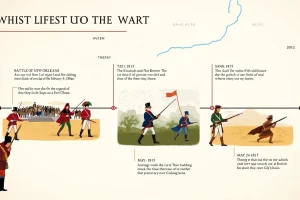
4 August–12 August: British forces invest Fort Erie; skirmishing occurs; Drummond orders a raid on Buffalo and Black Rock (3 August), which fails. Americans reinforce defences; British prepare siege batteries.
13 August–14 August: British artillery bombards the fort, but the fire is largely ineffective.
15 August (2:00–3:00 a.m.): British launch a three-pronged assault against Snake Hill, the fort, and the northern entrenchments. The attack fails with heavy losses, including the deaths of Colonels Scott and Drummond.
16 August–16 September: British continue the siege, suffering from disease and exposure; occasional skirmishes occur.
17 September: American force sorties, captures and spikes British siege guns; both sides suffer significant casualties.
21 September: Drummond lifts the siege and withdraws to Chippawa Creek.
5 November: Americans evacuate Fort Erie and destroy the fort before leaving.
Casualties and Losses
American casualties during the siege totaled approximately 1,075, including 213 killed, 565 wounded, 240 captured, and 57 missing. British losses were higher: at least 285 killed, 508 wounded, 748 captured, and 12 missing, totaling 1,551, with many additional deaths from sickness and exposure in the siege camps. The failed assault on 15 August alone cost the British about 900 killed, wounded, or missing.
Result
The siege resulted in an American defensive victory. The British failed to recapture Fort Erie and were forced to withdraw after the American sortie. The Americans held the fort until November, but then abandoned and destroyed it. Neither side gained a lasting strategic advantage on the Niagara frontier.
Strategic Consequences
The Siege of Fort Erie marked the end of the last major British offensive on the northern border during the War of 1812. It prevented the American army from advancing into Upper Canada after Lundy’s Lane, but also prevented the British from eliminating the American presence on Canadian soil. The destruction of the fort and the American withdrawal removed the immediate threat but left the frontier in a state of stalemate. The siege contributed to the overall military deadlock that influenced the peace negotiations at Ghent, leading to the Treaty of Ghent in December 1814, which restored the pre-war boundaries.
Primary Accounts
Important primary sources include official reports from both commanders. American reports were filed by Major General Brown and Brigadier General Gaines, detailing the siege operations and the sortie. British dispatches from Lieutenant General Drummond describe the failure of the assault and the reasons for the withdrawal. E.A. Cruikshank’s multi-volume documentary history, The Documentary History of the Campaign upon the Niagara Frontier, contains many of these reports along with correspondence and contemporary accounts. The diary of American Lieutenant David Douglass, who commanded the lake-shore battery, provides a detailed engineer’s perspective. These sources must be read critically, as commanders often sought to justify their actions to superiors and the public.
Battlefield Today
The original fort was destroyed by the Americans in November 1814. The present Fort Erie, located in Fort Erie, Ontario, is a reconstruction built in the 1930s on the original site. It is a National Historic Site of Canada operated by the Niagara Parks Commission. Visitors can explore the fortifications, including a reproduction of the original barracks and earthworks, and learn about the 1814 siege through interpretive displays and re-enactments. The surrounding area, including Snake Hill, is now partly developed, but the fort itself offers a tangible connection to the conflict.
Primary Sources
Key primary sources include the official reports of Major General Jacob Brown and Brigadier General Edmund P. Gaines to the U.S. War Department, and the dispatches of Lieutenant General Sir Gordon Drummond to the British Commander-in-Chief in Canada. These documents provide the strategic rationale and tactical details from each side. The memoir of Captain Thomas Powell, who led the forlorn hope at Snake Hill, offers a vivid soldier’s account. The documentary collection compiled by E.A. Cruikshank, published in the early 20th century, remains an essential resource, bringing together correspondence, returns, and narratives from archives in Canada, the United States, and Britain. While these sources are invaluable, they reflect the biases of the authors and must be cross-referenced with other accounts to establish an accurate narrative.
Further Reading
- Hickey, Donald R. The War of 1812: A Forgotten Conflict. University of Illinois Press, 1989.
- Cruikshank, E.A. The Documentary History of the Campaign upon the Niagara Frontier. Lundy’s Lane Historical Society, 1896–1908.
- Zavitz, Sherman. “Siege of Fort Erie, War of 1812.” The Canadian Encyclopedia, 2011.
- American Battlefield Trust. “Siege of Fort Erie.” Accessed 2025.
- Carsted, Frederick. “The Siege of Fort Erie 1814.” warof1812.ca, accessed 2025.
References
- Zavitz, Sherman. “Siege of Fort Erie, War of 1812.” The Canadian Encyclopedia. Last edited December 14, 2013. https://thecanadianencyclopedia.ca/index.php/en/article/siege-of-fort-erie-war-of-1812.
- “Siege of Fort Erie.” Wikipedia, accessed 2025. https://en.wikipedia.org/wiki/Siege_of_Fort_Erie.
- American Battlefield Trust. “Siege of Fort Erie Battle Facts and Summary.” Accessed 2025. https://www.battlefields.org/learn/war-1812/battles/siege-fort-erie.
- Carsted, Frederick. “The Siege of Fort Erie 1814.” warof1812.ca. Accessed 2025. https://www.warof1812.ca/forterie.htm.
- Cruikshank, E.A. The Siege of Fort Erie August 1st – September 23rd, 1814. Brock University Digital Repository, 2010. http://hdl.handle.net/10464/2648.
FAQ
Why did the British assault on Fort Erie on 15 August 1814 fail?
The British assault failed due to several factors: the Americans were forewarned by deserters, the attacking columns were detected early, the British troops at Snake Hill had removed musket flints to maintain surprise and were unable to return fire, and the well-prepared American defences with artillery and abatis inflicted heavy losses. The assault also suffered from poor coordination and the death of senior officers.
What was the result of the American sortie on 17 September 1814?
The American sortie surprised the British and succeeded in capturing and spiking several heavy siege guns, inflicting significant British casualties. Although the British counterattacked and pushed the Americans back, the sortie forced Drummond to recognize his losses and eventually lift the siege on 21 September.
Why did the Americans destroy Fort Erie in November 1814?
After withstanding the siege, the American army, facing supply shortages and the onset of winter, decided to evacuate across the Niagara River to Buffalo. To prevent the fort from being used by the British again, they blew up its remaining fortifications and structures before departing on 5 November 1814.



Leave a Reply