
Short Answer
During the War of 1812, American soldiers received modest monthly wages that varied by rank and changed over time, with privates initially paid $5 per month before Congress raised their pay to $8–$9 in late 1812. Enlistment bounties of cash and land were crucial incentives, while officers’ pay scaled from $20 to $200 monthly. This article examines the scale of pay, the additional bounties, the difficulties soldiers faced in actually collecting their wages, and the broader significance of compensation for recruitment and morale.
Historical Context
The United States entered the War of 1812 with a small regular army of fewer than 7,000 men. To fight Britain, which had tens of thousands of troops in North America, the U.S. government relied on new recruits and state militias. The federal budget was limited, and the pay scales were largely inherited from the Continental Army, with adjustments made after 1790. The financial system was also young; there was no stable national currency, and paper money often depreciated. These economic realities meant that soldiers’ nominal pay often translated to far less purchasing power.
What Happened
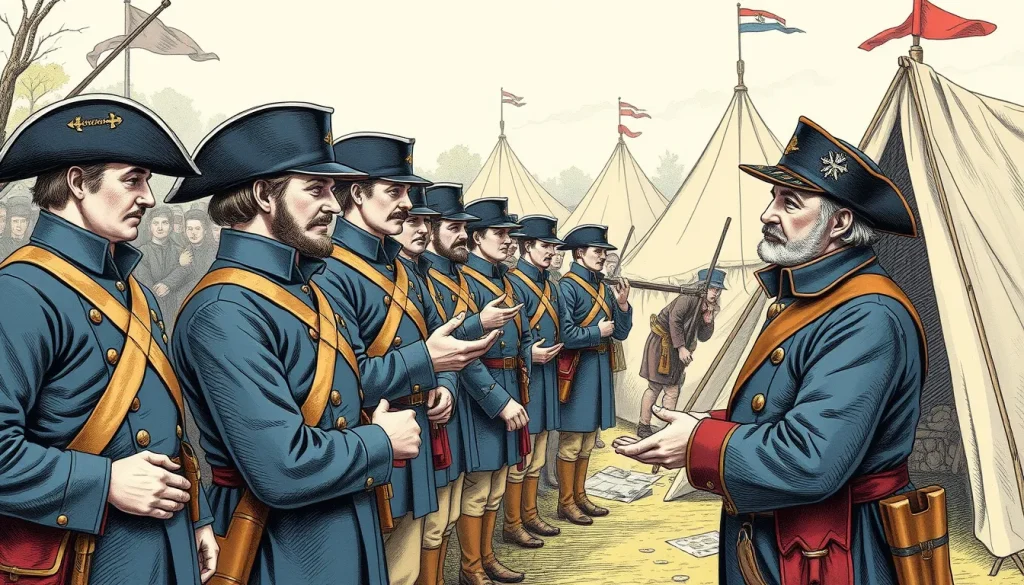
At the outbreak of war, Congress set the pay for a private at $5 per month, with noncommissioned officers earning between $7 and $9. Officers received substantially more: a captain could earn $20, a colonel $50, and a brigadier general up to $200. In addition to monthly wages, recruits were offered a one-time enlistment bounty: initially $31 and 160 acres of land, later increased to $124 and 320 acres as recruitment lagged. In December 1812, Congress approved a pay raise of $4 per month for privates and noncommissioned officers, bringing privates to $8 or $9, although sources differ on the exact figure.
Despite these promised wages, the army’s pay system was inefficient. Paymasters were few, and payments often arrived months late. By the fall of 1814, soldiers were commonly six to twelve months behind in pay, which caused severe hardship and led to sporadic mutinies. In October 1812, for example, some troops refused to march until they received their arrears. Officers also struggled financially, as their pay was tied to a salary schedule that did not keep pace with inflation.
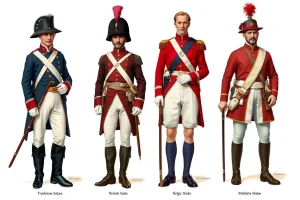
The British regulars, by contrast, had a different pay structure. British private soldiers earned approximately one shilling per day (about £18 per year), but deductions for rations and clothing reduced their take-home pay. British officers’ pay varied widely by purchase and seniority, and many relied on personal wealth. This article focuses primarily on American pay, as that is where the primary source record is most complete and where the question is usually directed.
Why It Matters
The level and reliability of pay directly affected the army’s ability to recruit and retain soldiers. Low pay and delayed wages discouraged enlistment, and the bounty system was designed to compensate. The financial difficulties also contributed to desertion and low morale. Military pay shaped the social composition of the army, as many recruits came from economically marginal backgrounds. The problem of arrears became a political issue, prompting congressional investigations and ultimately leading to improvements in the pay administration.
Definition
Military pay in the War of 1812 was the periodic stipend given to soldiers and officers for their service. It was distinct from bounties, which were one-time incentives paid at enlistment. Pay was typically calculated monthly, though it was often disbursed irregularly.
Background
The pay system used during the War of 1812 evolved from the Continental Army’s structure. The 1790 Pay Act established a monthly scale for a standing army, but wartime legislation altered these figures. The U.S. government intended to maintain a professional force while keeping costs low, and pay rates reflected the agrarian economy where unskilled labor might earn $10–$15 per month.
How It Worked
Soldiers received pay according to rank, with monthly rates set by Congress. Enlisted men were promised regular payments, but paymasters traveled slowly and often lacked funds. Bounties were paid in cash and land certificates, but the land was often located in distant territories. Deductions for clothing and equipment, which soldiers were required to purchase, further reduced take-home pay. Officers’ pay was more stable but also subject to delays.
Competing Viewpoints
Historians disagree on the adequacy of soldier pay. Some argue that even with delays, the combination of bounty and future land made service attractive to poor men. Others emphasize that the real value of wages eroded due to inflation and that soldiers were effectively undercompensated. Contemporary accounts, such as the memoir of a soldier named Joseph Plumb Martin (though he served in the Revolution, similar attitudes persisted), expressed frustration over worthless paper money and missed payments. The extent of the pay problem is debated, but there is consensus that arrears were widespread.
Role in the War of 1812
Pay was a central factor in recruitment. The initial bounty of $31 and 160 acres was increased twice to spur enlistment. The pay raise of December 1812 was also an attempt to attract volunteers. However, the chronic arrears undermined these incentives. The lack of pay led to mutinies, such as the refusal of some militia to cross into Canada in 1812, and it exacerbated tensions between regular troops and volunteers.
Consequences and Historical Interpretation
The pay system’s failures influenced post-war reforms. Congress recognized the need for a more reliable pay department, leading to the creation of a dedicated paymaster system. The experience also shaped public perception of military service. Later historians have used pay records to analyze the social origins of soldiers and the economic pressures of the early republic. The War of 1812 pay controversy is often compared to the Revolution’s payment problems, highlighting a systemic weakness that persisted across decades.
Primary Sources
Primary sources for soldier pay include official recruitment circulars, congressional debates, and the reports from the War Department. The American State Papers: Military Affairs series contains correspondence about pay delays. The memoir of Private Isaac Snelling, who served in the 4th Infantry, describes the difficulties of living on $5 a month. The paymaster’s ledgers, held at the National Archives, document actual payments. Each source has biases: official reports may downplay problems, while personal memoirs may exaggerate hardships. No transcript of a pay table from the war is readily available, but the Library of Congress holds a pay schedule from 1790 that provides a baseline.
Further Reading
- Donald R. Hickey, The War of 1812: A Forgotten Conflict (University of Illinois Press, 1989).
- J. C. A. Stagg, Mr. Madison’s War: Politics, Diplomacy, and Warfare in the Early American Republic, 1783–1830 (Princeton University Press, 1983).
- Robert S. Quimby, The U.S. Army in the War of 1812: An Operational and Command Study (Michigan State University Press, 1997).
- National Archives, “Records of the Office of the Paymaster General,” Record Group 99.
References
- Clare Fitzgerald, “These Are the Salaries Paid to US Troops During Each War,” War History Online, January 5, 2022, https://www.warhistoryonline.com/instant-articles/us-troops-salaries.html.
- Logan Nye, “This is how much troops were paid in every major American war,” We Are The Mighty, June 21, 2022, https://www.wearethemighty.com/popular/this-is-how-much-troops-were-paid-in-every-major-american-war/.
- “Pay of the Army on the New Establishment agreeably to Act of Congress, April 30, 1790,” U.S. Capitol Visitor Center, https://www.visitthecapitol.gov/artifact/pay-army-new-establishment-agreeably-act-congress-april-30-1790.
FAQ
How much did a private earn in the War of 1812?
A private initially earned $5 per month, rising to $8–$9 after Congress raised pay in December 1812. This was supplemented by enlistment bounties of cash and land.
What bounties were offered to recruits?
Recruits were initially promised $31 and 160 acres of land, later increased to $124 and 320 acres as recruitment goals were not met.
Why were soldiers not paid regularly?
The pay system was inefficient: paymasters were few, travel was slow, and the treasury often lacked funds. As a result, troops were frequently months behind on their pay, leading to hardships and occasional mutinies.



Leave a Reply