Short Answer
Napoleon’s Continental System was a series of French economic decrees, beginning with the Berlin Decree of November 1806, that sought to blockade Great Britain from trading with continental Europe and to weaken its economy during the Napoleonic Wars. Its enforcement and the British counter-blockade of the Orders-in-Council directly entangled the United States as a neutral trading nation, contributing to the maritime grievances that led to the American declaration of war against Britain in June 1812.
Historical Context
After Napoleon’s decisive victory at Austerlitz in December 1805 and Britain’s naval triumph at Trafalgar in October 1805, the two belligerents achieved dominance on land and sea respectively. Unable to defeat Britain by direct invasion, Napoleon turned to economic warfare, attempting to destroy Britain’s commercial prosperity by closing European ports to British goods. Britain, in turn, used its naval supremacy to enforce its own blockade and to search neutral vessels trading with the Continent.
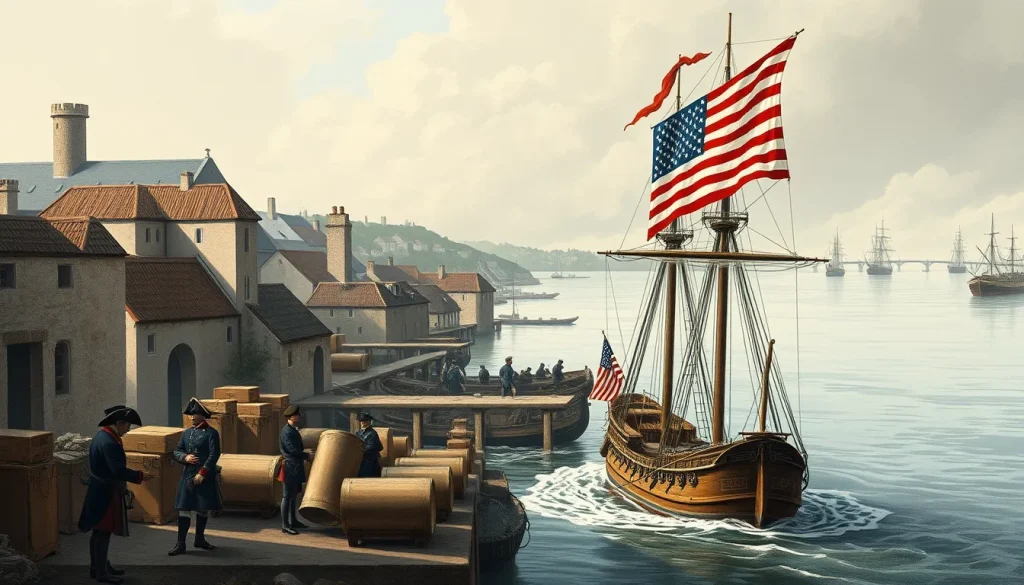
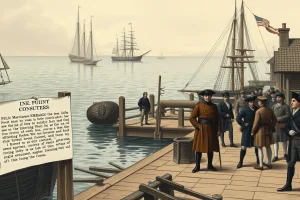
The United States, as the largest neutral carrier, profited from the wartime carrying trade between French colonies and France. American merchants faced confiscation of ships and cargoes by both belligerents. Britain’s Orders-in-Council (first issued in November 1807) required neutral ships to obtain a licence and call at a British port before entering European ports, while France under the Continental System ordered the seizure of any neutral ship that complied with British regulations. This double squeeze made lawful neutral trade nearly impossible and inflamed American opinion.
Additional irritants included the British practice of impressment of sailors from American vessels and the Chesapeake-Leopard affair of 1807, which outraged the American public. President Thomas Jefferson’s response was the Embargo Act of 1807, which prohibited American ships from engaging in foreign trade, but the embargo proved economically damaging and was repealed in 1809.
What Happened
Napoleon issued the Berlin Decree on 21 November 1806, declaring the British Isles blockaded and prohibiting any ship that had called at a British port from entering French-controlled continental ports. The Milan Decree of 17 December 1807 expanded the system: any neutral ship that submitted to British search or visited a British port was declared denationalized and subject to seizure by French warships or privateers.
Subsequent decrees tightened enforcement. The Bayonne Decree of 17 April 1808 ordered the confiscation of all American ships in French-controlled ports, while the Rambouillet Decree of 23 March 1810 authorised seizure of American ships in French ports. The Trianon Decree of 5 August 1810 raised tariffs on cotton and other colonial goods, and the Fontainebleau Decree of 18 October 1810 increased penalties for smuggling. On 28 April 1811, the St. Cloud Decree began to relax the system by allowing British and American ships to enter French ports if they purchased a licence.
British counter-measures included the Orders-in-Council, which from November 1807 required neutral ships to stop at British ports, pay duties, and obtain a licence before trading with the Continent. These orders were rescinded in June 1812, just days before the American declaration of war, but news had not reached Washington.
The Continental System also affected other neutral powers. Russia withdrew from the system on 31 December 1810, and Napoleon’s invasion of Russia in 1812 marked the beginning of the system’s collapse. By 1813, France’s control over Europe was waning, and the system effectively ended with Napoleon’s abdication in 1814.
Why It Matters
The Continental System is significant because it exemplifies the intersection of economic warfare and geopolitical rivalry. It failed to bankrupt Britain; British trade actually shifted toward the Americas, while French and allied economies suffered from shortages and smuggling. The system contributed directly to the War of 1812 by creating the maritime restrictions against which American leaders protested. Although the United States declared war on Britain in 1812, France’s own seizures of American ships also played a part, demonstrating that the war arose from complex transatlantic tensions. The war itself ended in a stalemate with the Treaty of Ghent in 1814, but the economic disputes of the Napoleonic era shaped American foreign policy for a generation.
Definition
The Continental System was a French economic blockade of the British Isles, implemented by a series of decrees between 1806 and 1814, designed to exclude British goods from all continental European markets under French influence.
Background
The system emerged from the stalemate of the Napoleonic Wars. After Trafalgar, Britain controlled trade routes, while Napoleon’s armies dominated Europe. The Berlin Decree was the first major attempt to use trade restriction as a weapon of war, building on earlier French embargoes of British goods. The system expanded as Napoleon extended his control over Prussia, Russia, and other states.
How It Worked
The system functioned through decrees that forbade neutral ships from entering French-controlled ports after calling at British ports, and later authorised seizure of any neutral that complied with British Orders-in-Council. Enforced by French warships, privateers, and customs officials, the system also involved licensing exceptions and tariffs on colonial goods to raise revenue. The system depended on the cooperation of European states, many of which resented it.
Competing Viewpoints
Historians disagree over the system’s effectiveness and its role in causing the War of 1812. Some argue that the system was a significant factor because it prompted Britain’s Orders-in-Council, which were more damaging to American trade than French decrees. Others contend that impressment and British searches were the primary American grievances. Still others view the war as a result of American expansionism and domestic politics, with the Continental System as a triggering context rather than a direct cause.
Role in the War of 1812
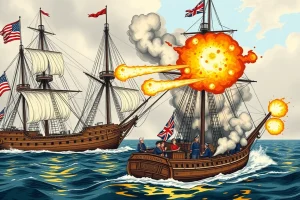
The Continental System contributed to the war’s outbreak in two ways. First, it provoked Britain’s Orders-in-Council, which the United States regarded as an attack on its neutral rights. Second, French seizures of American ships, authorised by the Milan and Bayonne decrees, also damaged American commerce. These maritime disputes, combined with impressment and territorial ambitions regarding British North America, led President James Madison to ask Congress for a declaration of war on 1 June 1812, which was approved on 18 June.
Consequences and Historical Interpretation
The system’s failure to crush Britain is widely acknowledged. It burdened European economies, stimulated smuggling, and strengthened Britain’s trade with the Western Hemisphere. For the United States, the system and Britain’s response accelerated the development of American manufacturing and the pursuit of economic self-sufficiency. Historians have also noted that the system indirectly affected the War of 1812’s outcome by drawing British military resources into the European conflict and limiting the forces available in North America. The system remains a case study in the limitations of economic coercion in war.
Primary Sources
Primary sources include the Berlin Decree (1806), Milan Decree (1807), and subsequent decrees, all issued by Napoleon and available in French archives. The British Orders-in-Council of 1807 and later orders illustrate the counter-blockade. American documents, such as President Madison’s war message to Congress (June 1, 1812), the Embargo Act of 1807, and contemporary newspaper editorials, capture American reactions. These sources show each government’s justifications but are necessarily partisan; they must be read against the actions of other powers and the actual effects on trade.
Further Reading
- Hickey, Donald R. The War of 1812: A Forgotten Conflict. University of Illinois Press, 1989.
- Heckscher, Eli F. The Continental System: An Economic Interpretation. Clarendon Press, 1922.
- O’Rourke, Kevin H. “War and Welfare: Britain, France and the United States 1807-14.” SSRN, 2006.
- Marsh, James H., and Pierre Berton. “War of 1812.” The Canadian Encyclopedia, updated 2026.
- Hickey, Donald R. “1812: A Sideshow in the ‘Second Hundred Years’ War?’” National Park Service, 2015.
References
- “France – Continental System, Napoleonic Wars, Blockade.” Encyclopaedia Britannica. https://www.britannica.com/place/France/The-Continental-System
- Marsh, James H., and Pierre Berton. “War of 1812.” The Canadian Encyclopedia. https://thecanadianencyclopedia.ca/en/article/war-of-1812
- Hickey, Donald R. “1812: A Sideshow in the ‘Second Hundred Years’ War?’” National Park Service. https://www.nps.gov/articles/1812-sideshow.htm
- “Napoleon’s Continental System.” American History Central. https://www.americanhistorycentral.com/entries/continental-system/
- O’Rourke, Kevin H. “War and Welfare: Britain, France and the United States 1807-14.” SSRN. https://doi.org/10.2139/ssrn.922285
FAQ
What was the Continental System?
The Continental System was Napoleon’s economic blockade of Britain, implemented through decrees that forbade neutral nations from trading with British ports and, later, from complying with British trade regulations. It aimed to weaken the British economy but also damaged neutral American trade.
How did the Continental System contribute to the War of 1812?
The Continental System prompted Britain to issue Orders-in-Council that restricted neutral trade with Europe. Both policies interfered with American commerce and helped inflame American grievances, leading to President Madison’s declaration of war against Britain in June 1812.
When did the Continental System end?
The system began to unravel with Russia’s withdrawal on December 31, 1810, and effectively ended with Napoleon’s abdication in 1814, after the failed invasion of Russia and the loss of French control over continental Europe.


Leave a Reply