
Short Answer
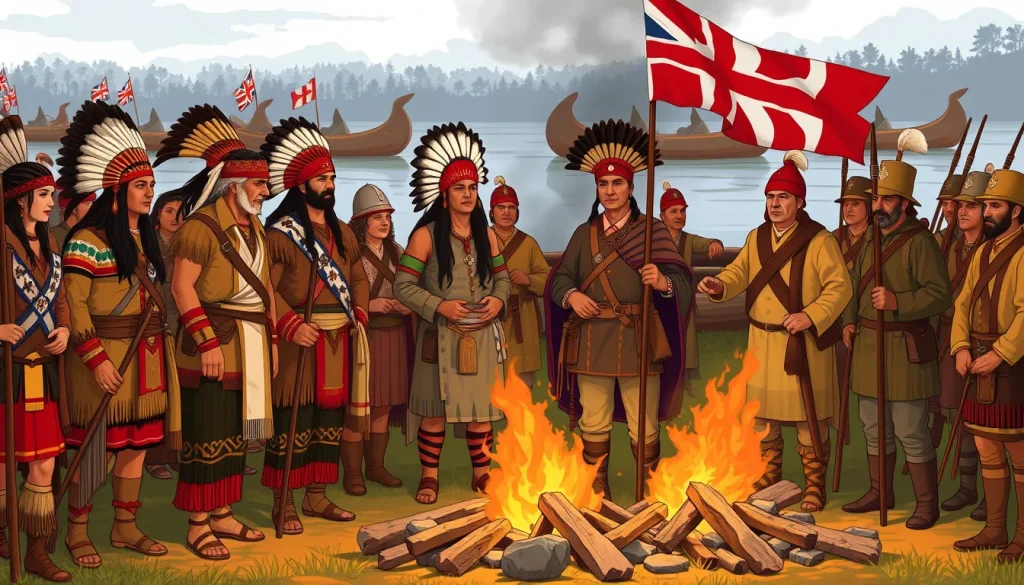
Remembering Indigenous Participants in the War of 1812 examines the significant roles of First Nations, Métis, and Native American peoples in the conflict between the United States and Great Britain from 1812 to 1815, and traces how that participation has been commemorated, marginalized, and reinterpreted in public memory. The war was pivotal for Indigenous communities, as their alliances with British forces offered a last major opportunity to resist American westward expansion. The long-term consequences were devastating for these peoples, yet their contributions have been unevenly remembered across national narratives. This article explores both the historical record of Indigenous involvement and the evolving ways that involvement has been remembered and memorialized.
Historical Context
By the early 1800s, the United States was expanding aggressively into territory long inhabited by Indigenous nations. The Treaty of Paris (1783) had transferred lands west of the Ohio River to American control, violating earlier promises such as the Royal Proclamation of 1763. The Shawnee brothers Tecumseh and Tenskwatawa (the Prophet) built a pan-Indigenous confederacy to resist further land cessions, uniting nations from the Great Lakes to the Gulf of Mexico. British officials in Canada, preoccupied with the Napoleonic Wars in Europe, viewed Indigenous alliances as vital to defending their thinly garrisoned colonies. When war erupted in June 1812, both sides actively sought Indigenous support, though most Indigenous nations chose to ally with the British, seeing them as the lesser evil compared to American settler expansion.
What Happened
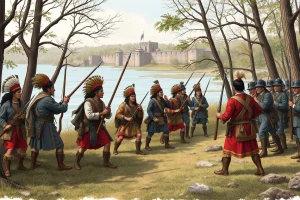
Indigenous warriors played decisive roles in several early victories. At Fort Mackinac on 17 July 1812, a force of about 400 Odawa, Ojibwe, and other warriors overwhelmed the American garrison. Tecumseh’s 600 warriors helped compel the surrender of Detroit in August 1812. At Queenston Heights in October 1812, Mohawk and Delaware warriors under John Norton and John Brant held critical ground until British reinforcements arrived. In June 1813, the capture of an American force at Beaver Dams was accomplished largely by Caughnawaga and Mohawk fighters. Indigenous contributions continued at Stoney Creek, Châteauguay, Lundy’s Lane, and across the western and southern theatres. The death of Tecumseh at the Battle of the Thames on 5 October 1813 proved a turning point, as the confederacy fragmented and British support waned.
After the war, the Treaty of Ghent (1814) promised to restore Indigenous lands and rights, but these terms were never honoured. The British, having secured Canada, abandoned their Indigenous allies. The United States pursued removal policies that culminated in the Indian Removal Act of 1830 and the Trail of Tears. For decades, Indigenous participation in the war was largely erased from mainstream historical narratives, which focused on British or American heroes. Only in the late twentieth century did historians and Indigenous communities begin to reclaim these stories, leading to commemorative efforts such as the 2012 bicentennial initiatives.
Why It Matters
Remembering Indigenous participants is not merely an act of historical correction; it is essential to understanding the full consequences of the War of 1812. The war shattered the last major Indigenous military coalition in the eastern half of the continent, opening the door to wholesale land dispossession. Yet Indigenous peoples served as critical allies to Britain, and without them the fate of Canada might have been different. Their service and sacrifice challenge triumphalist national narratives and demand a reckoning with the war’s true costs. Modern recognition, including official commemorations and apologies, helps acknowledge past wrongs and supports Indigenous cultural continuity and sovereignty.
Definition
“Remembering Indigenous Participants” encompasses the ways in which Indigenous involvement in the War of 1812 has been represented, commemorated, and historically interpreted. It includes official monuments and medals, educational curricula, Indigenous oral traditions, and scholarly research.
Background
Indigenous peoples were not peripheral to the War of 1812; they were central military and diplomatic actors. However, the immediate postwar period saw their contributions buried under narratives focused on American or British triumph. This erasure was partly deliberate, as both the United States and Britain sought to diminish Indigenous claims arising from service to the crown. Over time, Indigenous communities preserved their own memories, and a new generation of historians in the late twentieth century began to recover the historical evidence.
How It Worked
Memory of Indigenous participation was shaped by several processes. Official war memorials in Canada and the United States rarely mentioned Indigenous warriors until the 2000s. School textbooks omitted or downplayed their roles. At the same time, Indigenous nations transmitted their own histories through oral storytelling and community ceremonies. The growth of Indigenous rights movements and academic studies of the war brought new attention to these sources. Bicentennial events in 2012, including the creation of the Canadian Forces War of 1812 Commemorative Medal and Banner, marked a turning point in public acknowledgment.
Competing Viewpoints
History scholars disagree on how to assess Indigenous participation. Some emphasize that Indigenous nations were independent actors pursuing their own interests, not merely auxiliaries to Britain. Others argue that the alliance with Britain was a strategic miscalculation that ultimately accelerated Indigenous displacement. There is also debate over whether the war was a “victory” for anyone; for Indigenous peoples, the outcome was catastrophic. Commemoration also raises questions: should events celebrate the war as a foundation of Canadian nationhood, or highlight the tragic consequences for Indigenous communities?
Role in the War of 1812
Indigenous fighters were indispensable to British operations, providing knowledge of terrain, intelligence, and combat effectiveness. Tecumseh’s confederacy gave the British a credible defensive force in the west. The psychological impact of Indigenous warriors on American troops was significant. Yet the British did not commit to protecting Indigenous lands in the peace treaty. The role of memory in the war’s legacy thus reflects both the critical contributions and the betrayal that followed.
Consequences and Historical Interpretation
The consequences of the war for Indigenous peoples were profound. With the confederacy broken and British support removed, American expansion proceeded almost unopposed. The removal policies of the 1820s and 1830s built directly on this military reality. Historians now recognize that the War of 1812 was a turning point in Indigenous–settler relations. Modern historical interpretation seeks to restore Indigenous agency and acknowledge their sacrifices. As one chief lamented after the war: “After we have fought for you, endured many hardships… you make peace for yourselves, leaving us to obtain such terms as we can.”
Primary Sources
Contemporary records include official British Indian Department dispatches, letters from Tecumseh and other leaders, and journals such as John Norton’s “The Journal of Major John Norton.” Visual sources include portraits by artists like William Berczy and military paintings showing Indigenous warriors. The limitations are significant: most documents were written by European officers, and Indigenous voices are filtered through translation and colonial bias. The Canadian Museum of History and Library and Archives Canada hold many of these items.
Further Reading
- Carl Benn, Native Warriors and the War of 1812 (2012).
- Alan Taylor, The Civil War of 1812 (2010).
- Peter MacLeod, The War of 1812 and the Aboriginal Peoples of the Great Lakes (2012).
- Donald E. Graves, Where Right and Glory Lead! The Battle of Lundy’s Lane (1997).
- Historica Canada, “First Nations and Métis Peoples in the War of 1812,” The Canadian Encyclopedia.
- Crown-Indigenous Relations and Northern Affairs Canada, “Exhibit: Indigenous Contributions to the War of 1812.”
References
- Historica Canada, “First Nations and Métis Peoples in the War of 1812,” The Canadian Encyclopedia. thecanadianencyclopedia.ca/en/article/first-nations-in-the-war-of-1812.
- Crown-Indigenous Relations and Northern Affairs Canada, “Exhibit: Indigenous Contributions to the War of 1812.” rcaanc-cirnac.gc.ca/eng/1348771334472/1607906032957.
- The Historica-Dominion Institute, “1812: Aboriginal Peoples’ Guide.” education.historicacanada.ca/files/10/1812_aboriginal_guide_EN.pdf.
- Anthony Wilson-Smith, “John Norton and the War of 1812,” The Canadian Encyclopedia. thecanadianencyclopedia.ca/index.php/en/article/john-norton-and-the-war-of-1812.
- The War of 1812 Website, “The Indigenous Experience – War of 1812.” thewarof1812.org/indigenous/.
- Alan Taylor, The Civil War of 1812: American Citizens, British Subjects, Irish Rebels, & Indian Allies (New York: Knopf, 2010).
FAQ
Why did many Indigenous peoples fight for the British in the War of 1812?
They saw the British as a less immediate threat to their lands than American settlers. The British provided trade goods, military support, and recognized Indigenous territorial rights, whereas American expansion was driving Indigenous peoples off their lands.
What was the outcome of the War of 1812 for Indigenous nations?
It was catastrophic. Tecumseh's confederacy was shattered, the British abandoned their Indigenous allies in the Treaty of Ghent, and the United States proceeded with removal policies that led to the Trail of Tears and widespread displacement.
How are Indigenous participants remembered today?
Modern commemorations include official medals and banners, historical markers, educational programs, and scholarship that highlights Indigenous agency. However, many Indigenous communities continue to call for greater recognition and reconciliation.
Leave a Reply