
Short Answer
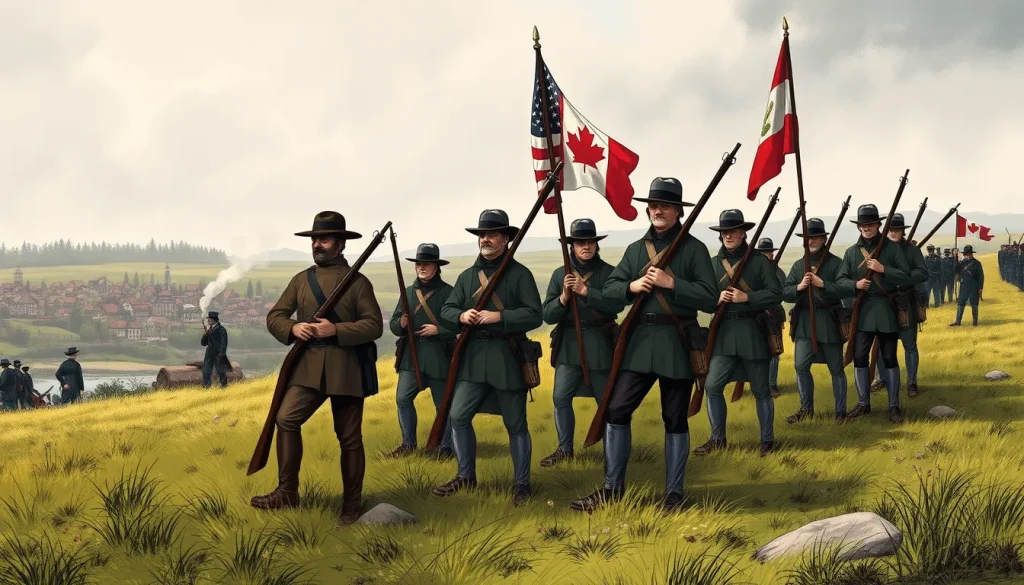
Militia service during the War of 1812 refers to the participation of part-time citizen soldiers, organized under state and federal laws, in the conflict between the United States and Great Britain from 1812 to 1815. The militia played a central, often controversial role, as the United States relied heavily on state forces while also confronting significant legal and military limits. This article examines the system, its operations, and its legacy.
Historical Context
The American militia system emerged from colonial traditions and the Constitution’s reservation of militia power to the states, subject to federal call-up. The Uniform Militia Act of 1792 required all able-bodied white males aged 18 to 45 to serve, but it also restricted federal service to three months per year and lacked enforcement mechanisms. The Calling Forth Act of 1795 allowed the president to summon the militia in national emergencies but required state approval for use outside U.S. territory. The Act of 1808 appropriated $200,000 annually for arming and organizing the militia, yet training remained largely a state responsibility. These laws created a fragmented system that proved difficult to mobilize effectively.
What Happened
During the war, state militias were called up for multiple campaigns. In 1812, New York militia under General Stephen Van Rensselaer refused to cross the Niagara River into Canada, citing constitutional limits, which contributed to the failure at the Battle of Queenston Heights. In the Chesapeake region, Virginia and Maryland militias performed poorly in 1813–1814, but also contributed to the defense of Baltimore in September 1814. At the Battle of New Orleans in January 1815, Andrew Jackson’s forces included Tennessee and Kentucky militia and volunteers, who fought effectively. Meanwhile, Canadian militias, including sedentary and embodied units, played a role in the defense of Upper Canada, supported by British regulars and Indigenous allies. The militia’s role varied widely by region and circumstance.
Why It Matters
The war exposed serious flaws in the American militia system, leading to calls for a larger regular army and reforms. The refusal to serve across the border reinforced federalist concerns about state sovereignty and the limits of federal power. In British North America, the militia’s role became part of Canadian national memory as a defensive force. Historians debate the militia’s effectiveness, with some emphasizing occasional skill and others noting frequent unreliability. The war’s experiences helped shape post-war military policy on both sides of the border.
Definition
In the context of the War of 1812, militia service meant compulsory or volunteer part-time military duty performed by civilian citizens, organized by state governments, and liable to federal call-up for limited terms. It was distinct from regular army service, which required full-time professional soldiers, and from volunteer corps, which often enlisted for specific campaigns.
Background
The legal framework for militia service in the War of 1812 was set by the Militia Act of 1792 and subsequent amendments. The 1792 act established a uniform militia but left most training and equipment to states. The 1795 act and 1808 act provided federal funding and presidential authority. However, state governors and courts determined whether federal orders could override state concerns about service outside U.S. territory. The system inherited from the Revolutionary era was decentralized and rarely well prepared for a sustained conflict.
How It Worked
Men aged 18 to 45 were enrolled in local units. They periodically mustered, provided their own weapons, and elected officers. When called up, they served for terms that often lasted three months, though extensions were possible. Governors and state adjutants general managed the system, while the federal government requested quotas. Militia could be used for local defense or federal campaigns, but the president had to request troops and states could refuse if they deemed the call unconstitutional. This process often led to delays and inconsistencies.
Competing Viewpoints
Republicans generally favored a strong citizen militia as a check on standing armies, while Federalists argued for a professional army. During the war, governors like Daniel Tompkins of New York clashed with the Madison administration over the legality of invading Canada. Federal courts, most notably in the case of Martin v. Mott (1819), later upheld presidential authority to call out the militia, but the debate continued. The issue of federal overreach versus state rights was a recurrent theme.
Role in the War of 1812
The militia served in the Niagara campaign, the defense of the Chesapeake, the Gulf Coast, and the northern frontier. Significant failures included the surrender at Detroit in 1812 (though that involved regulars and militia), the refusal at the Niagara, and the rout at Bladensburg in 1814. Significant successes included the Battle of New Orleans and the defense of Fort McHenry. In Canada, local militia, alongside British regulars and Indigenous allies, helped secure key victories like at Châteauguay and Crysler’s Farm in 1813, though their numbers were always limited.
Consequences and Historical Interpretation
Post-war reforms included the gradual enlargement of the regular army and increased federal involvement in national defense. The militia remained important for local defense but lost prestige as a decisive force. Historians have debated the militia’s effectiveness, with some arguing that it was a liability and others that it provided essential manpower under appropriate conditions. The war’s experiences shaped later debates over military organization, and the militia’s legacy in both the United States and Canada remains a subject of scholarly interest.
Primary Sources
Important primary sources include President Madison’s call-up orders, letters from generals like Andrew Jackson, official reports on battles, and state documents like Governor Tompkins’s correspondence. The published memoir of Winfield Scott, who served as a regular officer, criticizes militia performance. Canadian militia service is documented in the records of Upper Canada, including muster rolls and official correspondence. These sources provide insight into the legal, political, and practical challenges of militia mobilization.
Further Reading
- Hickey, Donald R. The War of 1812: A Forgotten Conflict. University of Illinois Press, 1989.
- Stagg, J. C. A. Mr. Madison’s War: Politics, Diplomacy, and Warfare in the Early American Republic, 1783–1830. Princeton University Press, 1983.
- Hitsman, J. Mackay. The Incredible War of 1812: A Military History. University of Toronto Press, 1965.
- New York State Military Museum. “Union Blue and Militia Gray: The Role of the New York State Militia in the Civil War.” Available at https://museum.dmna.ny.gov/.
References
- New York State Military Museum. “Union Blue and Militia Gray: The Role of the New York State Militia in the Civil War.” Accessed 2023. https://museum.dmna.ny.gov/unit-history/conflict/us-civil-war-1861-1865/union-blue-and-militia-gray-role-new-york-state-militia-civil-war/.
- Hickey, Donald R. The War of 1812: A Forgotten Conflict. University of Illinois Press, 1989.
- Stagg, J. C. A. Mr. Madison’s War. Princeton University Press, 1983.
FAQ
Why did some U.S. militias refuse to cross into Canada during the War of 1812?
Governors and militia commanders argued that the Constitution only permitted federal use of militia for invasion, not for offensive campaigns abroad. This legal interpretation led to refusals like that of New York militia at the Niagara River in 1812.
What role did Canadian militias play in the war?
Canadian militias, particularly in Upper Canada, were called out for local defense. They supplemented British regulars and participated in victories such as the Battle of Châteauguay (1813), though their numbers and effectiveness varied.
How did the war influence changes to the U.S. military system?
The poor performance and legal disputes over militia service highlighted the need for a larger regular army. After the war, Congress and military leaders advocated for stronger federal forces, leading to the expansion of the regular army in the 1820s.
Leave a Reply