
Short Answer
The War of 1812 (1812–1815) placed severe financial strain on the United States, which was unprepared to fund a major conflict. The country entered the war with a weak treasury, a disorganized banking system, and limited revenue from tariffs that the British blockade soon disrupted. This article examines the structural and political reasons for the American financial struggle, its impact on military operations, and its lasting consequences for national finance.
Historical Context
When the United States declared war on Great Britain in June 1812, the federal government had no modern taxing or borrowing machinery. The First Bank of the United States, chartered in 1791, had expired in 1811 because Congress failed to renew its charter on political and constitutional grounds. The Treasury, headed by Secretary Albert Gallatin, depended primarily on customs duties and proceeds from public land sales. Domestic taxes—such as excise taxes—had been repealed in 1802 under President Thomas Jefferson’s policy of retrenchment. The Republican majority distrusted standing armies, national debt, and centralized financial institutions. As a result, the country entered a major war with a fragile financial base.
Moreover, America’s economy was heavily trade-dependent. Exports, especially to Britain and its colonies, generated a significant share of national wealth and federal revenue. The prewar embargoes and non-importation acts had already reduced trade, and the outbreak of war led to a British naval blockade that further choked American commerce. This combination left the federal government with few sources of income at a time when military expenditures mounted rapidly.
What Happened
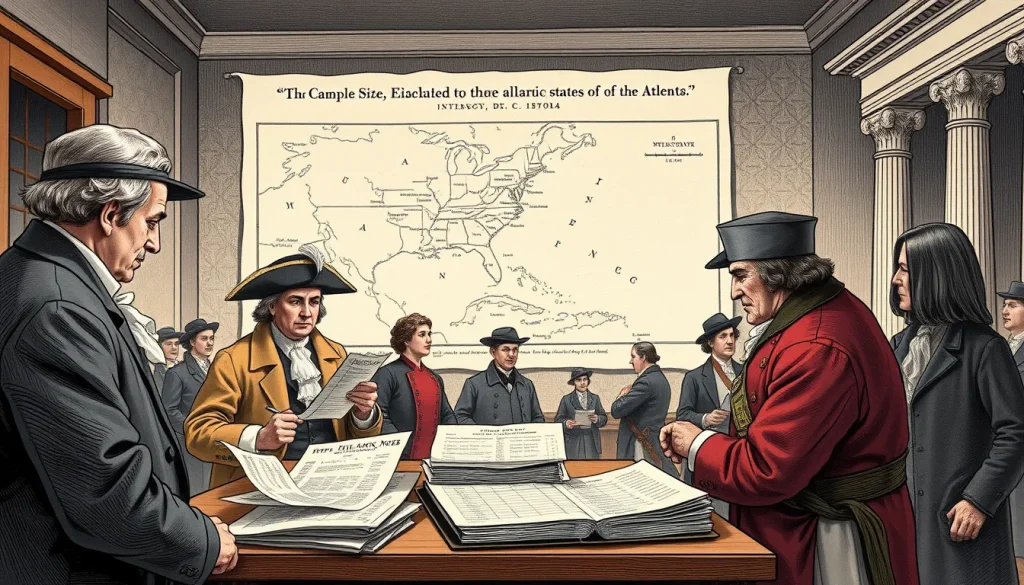
Early in the war, Treasury Secretary Gallatin proposed a financial plan based largely on borrowing. He estimated the conflict would cost about $30 million per year, and he hoped to raise that sum through a mix of loans, Treasury notes, and increased import duties. Congress authorized a $10 million loan in March 1812, followed by another $20 million in February 1813. However, the loans met with only limited success. Northern financiers, especially in New England—which opposed the war—were reluctant to purchase government bonds. Sales lagged and the Treasury had to accept steep discounts, effectively paying higher interest rates.
To supplement borrowing, Congress passed the Revenue Act of 1813, which levied a direct tax on real property and introduced various excise taxes. These measures were controversial and faced resistance from states and citizens. Implementation was slow, and collections did not meet expectations. Meanwhile, the Royal Navy’s blockade—announced in November 1812 and extended in 1814—severely reduced customs revenue. Since duties were the largest single source of federal income, this loss was crippling.
The Treasury also issued treasury notes, which were interest-bearing promissory notes due in one or two years. These notes circulated as paper money but lacked the legal-tender status of coins. They quickly depreciated against gold and silver, fueling inflation. By the end of 1814, the federal government’s expenditures had soared to over $80 million, while revenues from taxes and customs remained under $15 million. The national debt, which was about $45 million in 1812, had more than doubled to roughly $127 million by 1815.
Why It Matters
The financial crisis of the War of 1812 had immediate military and political effects. In several campaigns—particularly on the Niagara frontier and in the Chesapeake theater—American forces were short of supplies, pay, and munitions because the Treasury could not transfer funds quickly or in adequate amounts. The inability to finance a respectable navy contributed to the failure to contest the British blockade effectively. Domestic dissent, especially in the Federalist strongholds of New England, intensified as residents were asked to pay taxes for a war they opposed. Some even threatened secession at the Hartford Convention of 1814–1815.
The war’s financial lessons influenced postwar policy. The fiscal chaos highlighted the need for a national bank, leading to the establishment of the Second Bank of the United States in 1816. It also prompted a more systematic approach to federal taxation and borrowing. Historians generally agree that the war exposed the weakness of Republican financial ideology in the face of modern warfare, and that the government’s difficulties were a significant factor in the war’s conduct.
Definition
In the context of the War of 1812, the “struggle to finance the war” refers to the United States government’s difficulty in raising adequate and reliable funds to pay for military operations. This included collecting revenue, borrowing, and maintaining a stable currency. The struggle arose from political constraints, an underdeveloped financial system, and economic disruptions caused by the conflict itself.
Background
Before the war, the federal government had deliberately minimized taxation and public debt. The Jeffersonian Republicans who dominated government after 1801 sought to shrink the national state. They reduced internal taxes, paid down the national debt, and allowed the charter of the First Bank to expire. Consequently, when war came, the government had no central bank to coordinate credit and few standing taxes to raise revenue. The only significant income came from customs duties, which were highly vulnerable to trade disruptions.
Additionally, the United States had no established mechanism for issuing paper currency except through state-chartered banks. These banks issued their own banknotes, but they were often unstable and not uniformly accepted. The federal government had to rely on these banks for loans and the transfer of funds, which proved unreliable during wartime.
How It Worked
In practice, the Treasury attempted to fund the war through three main methods: borrowing (sale of bonds), issuing treasury notes, and raising taxes. The government sold long-term bonds at interest rates of 6% or more, but the demand was insufficient due to investor uncertainty. Treasury notes were short-term obligations that paid interest and could be used as money; they helped the government cover immediate expenses but inflated the money supply. Taxation included a direct tax apportioned among states and excise taxes on items like whiskey, salt, and carriage. Collections were slow and often resisted. The system functioned poorly because it relied on fragile bank credit and a taxpayer base that was divided over the war.
Competing Viewpoints
Historians disagree about how much of the financial crisis was avoidable. Some argue that the Jeffersonian aversion to taxes and centralized banking made failure inevitable, while others point to the unforeseen severity of the British blockade and the lack of national unity. Federalist critics blamed the war and the administration’s mismanagement, while Republican supporters blamed British aggression and the commercial interests of New England. Contemporary Treasury reports and congressional debates show considerable partisan wrangling over taxation and borrowing, indicating that political conflicts within the United States were as significant as external economic pressure.
Role in the War of 1812
The financial problem directly shaped military strategy. With limited funds, the government could not enlarge the regular army enough or equip it adequately. Naval expansion was also constrained, enabling Britain to maintain its blockade. The lack of money contributed to the failure of American invasions of Canada, as supplies and troops were often delayed. The government’s inability to pay sailors and soldiers led to mutinies and desertions. By 1814, the Treasury was effectively bankrupt, and the government had to rely on state banks and private loans to keep operating.
Consequences and Historical Interpretation
The financial struggle of the War of 1812 left a lasting impact. The national debt grew from about $45 million to $127 million, and the government’s credit was damaged. The war demonstrated the need for a central bank and a diversified tax system. In 1816, Congress chartered the Second Bank of the United States and introduced a permanent framework of internal taxes, though many of the latter were later repealed. The war also influenced American public finance by establishing the precedent that wartime borrowing could be secured against future tariffs and land sales. Historians continue to debate whether a stronger financial system could have shortened the war or altered its outcome, but most agree that the fiscal crisis was a decisive constraint that American leaders never fully overcame.
Primary Sources
Key primary sources include Albert Gallatin’s annual reports on the finances (1812–1814), which detailed the government’s revenue and borrowing difficulties. The Treasury correspondence with lenders and state bank commissioners reveals the practical obstacles. Congressional debates, available in the Annals of Congress, show the partisan disputes over taxation and financing. Letters from military officers to the War Department frequently complain about shortages of funds. These sources provide insight into the decision-making process, though they often contain self-serving justifications and incomplete data.
Further Reading
- Hickey, Donald R. The War of 1812: A Forgotten Conflict. Urbana: University of Illinois Press, 1989.
- Stagg, J.C.A. Mr. Madison’s War: Politics, Diplomacy, and Warfare in the Early American Republic. Princeton: Princeton University Press, 1983.
- Perkins, Edwin J. American Public Finance and Financial Services. Columbus: Ohio State University Press, 1994.
- Rodgers, Daniel T. Contested Truths: Keywords in American Politics Since Independence. New York: Basic Books, 1987.
- Library of Congress. “Annals of Congress.” Washington, D.C., 1812–1815.
References
- Hickey, Donald R. The War of 1812: A Forgotten Conflict. University of Illinois Press, 1989.
- Stagg, J.C.A. Mr. Madison’s War. Princeton University Press, 1983.
- Perkins, Edwin J. American Public Finance and Financial Services. Ohio State University Press, 1994.
- Gallatin, Albert. Reports on the Finances. Washington, D.C., 1812–1814.
- Annals of Congress. 12th and 13th Congresses. Library of Congress.
FAQ
Why did the United States have no national bank during the War of 1812?
The charter of the First Bank of the United States expired in 1811 because Congress, dominated by Democratic-Republicans, refused to renew it on constitutional and political grounds. This left the government without a central institution to manage borrowing and issue stable currency.
How did the British blockade affect American finances?
The Royal Navy's blockade reduced American exports and imports, sharply cutting customs revenue, which was the federal government's main income source. This forced the government to rely more on borrowing and treasury notes, which depreciated.
What were the long-term financial consequences of the war?
The war left the United States with a large national debt and a damaged credit system, prompting Congress to charter the Second Bank of the United States in 1816 and to adopt a more permanent system of internal taxation.



Leave a Reply