
Short Answer
USS Constitution, a United States Navy frigate launched in 1797, is known worldwide as “Old Ironsides.” The nickname dates to the War of 1812, specifically to the ship’s victory over the British frigate HMS Guerriere on August 19, 1812. During that battle, according to popular accounts, enemy cannonballs appeared to rebound off Constitution’s thick oaken hull, prompting sailors to exclaim that her sides were made of iron. This article examines the historical evidence behind the nickname, its context, and its enduring legacy.
Historical Context
In the early years of the United States, the fledgling navy was small, while Britain’s Royal Navy dominated the seas. The Naval Act of 1794 authorized the construction of six heavy frigates, including Constitution, designed by Joshua Humphreys to be powerful and fast, with thick hulls made of live oak and white oak. These frigates were larger and more heavily armed than typical European frigates, intended to outgun any similar-sized enemy ship.
By 1812, tensions over impressment, trade restrictions, and British support of Native American resistance led to the American declaration of war. The U.S. Navy faced a daunting opponent, and early setbacks were expected. The Constitution had already served in the Quasi-War with France and the Barbary Wars, but the War of 1812 brought its most famous challenges.
What Happened
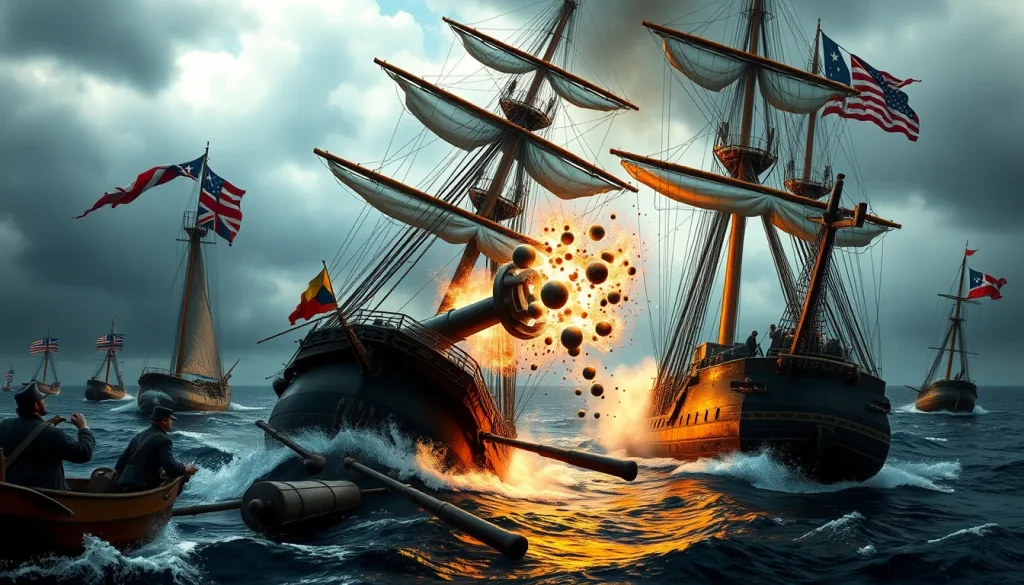
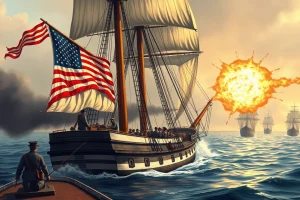
On August 19, 1812, under Captain Isaac Hull, USS Constitution encountered HMS Guerriere, a 38-gun British frigate, about 400 miles off the coast of Nova Scotia. Guerriere had been notorious for stopping American merchant vessels and impressing sailors. Both captains were eager to fight. Around 5 p.m., the two ships closed to within a few dozen yards. Guerriere opened fire, but many of its shots seemed to have little effect. According to the famous account, one British sailor supposedly shouted, “Huzza! Her sides are made of iron!” after a cannonball bounced off Constitution’s side. The American frigate delivered heavy broadsides, wrecking Guerriere’s masts and rigging. After about 30 minutes, the British ship was a defenseless hulk, having lost its mizzenmast and foremast. Captain James Dacres eventually struck his colors in surrender. The Americans took the crew as prisoners, but Guerriere was too damaged to be towed, so it was set afire and destroyed.
The victory was a major morale boost for the American public. Constitution had survived with only 7 killed and 7 wounded, while Guerriere suffered 13 dead and 62 wounded. The story of the “iron sides” spread quickly, and Constitution returned to Boston on August 30, now nicknamed “Old Ironsides.”
Why It Matters
The nickname solidified Constitution’s place in American naval history and symbolized the surprising success of the U.S. Navy against the world’s most powerful fleet. The victory at sea boosted American morale during a war that saw many land defeats. Constitution went on to defeat HMS Java in December 1812 and later captured HMS Cyane and Levant in 1815, further cementing its reputation. The nickname also reflected a technical reality: Constitution’s hull, composed of live oak and white oak to a thickness of about 24 inches, was considerably more resistant to shot than standard British frigates. Yet the myth that the ship was impenetrable was exaggerated; some shots did penetrate, as evidenced by later accounts. The nickname nevertheless became a lasting symbol of American naval pride and is still associated with the ship today, which remains a commissioned warship open to the public in Boston.
Definition
“Old Ironsides” is a nickname for the USS Constitution, emphasizing the belief that the ship’s wooden hull was as tough as iron. The term emerged during the War of 1812, particularly after the battle with Guerriere, and was popularized by sailors and eventually by the American public.
Background
The nickname’s origin is tied to the ship’s construction and the battle itself. Constitution was built with a heavy hull of live oak and white oak, sheathed in copper. This design gave it exceptional strength. During the battle with Guerriere, many British 18-pounder cannonballs struck the hull but failed to cause serious damage, leading to the sailors’ exclamation. However, historians have noted that the exact phrase may have been used earlier for a British ship, HMS Britannia, and that not all shots bounced off. The nickname nonetheless became attached to Constitution.
How It Worked
Contemporary accounts, such as the narrative of seaman Moses Smith, describe the moment during the battle when an enemy shot “struck us, but the plank was so hard it fell out and sank in the waters.” This led to the cry: “Huzza! Her sides are made of iron! See where the shot fell out!” The phrase was also repeated in later reports. The nickname quickly gained currency among the crew and then in the wider American consciousness. By 1813, it was used in newspapers and official correspondence.
Competing Viewpoints
While the popular story emphasizes that the hull was impenetrable, period evidence shows that some British shots did penetrate Constitution’s hull. For instance, in the battle with Guerriere, the ship was hulled three times, and in later battles more penetrations occurred. The U.S.S. Constitution Museum and historians like Matthew Brenckle have pointed out that the nickname arose because the hull was so resistant compared to typical frigates, not because it was truly ironclad. Additionally, the term “Old Ironsides” was used for HMS Britannia as early as 1806, suggesting the nickname may have been borrowed from British sailors who joined the American crew. Thus, the nickname’s origin is more nuanced than the simple anecdote suggests, but its association with Constitution remains iconic.
Role in the War of 1812
Constitution’s victory over Guerriere marked a turning point in the naval war, demonstrating that American frigates could defeat British ships of equal or superior strength. It was one of several single-ship engagements that forced the Royal Navy to reassess its tactics and helped secure American control of crucial sea routes. The nickname became a rallying cry, and the ship’s subsequent victories over Java, Cyane, and Levant further bolstered American morale. The ship’s role in the war was not decisive in a strategic sense, but it had outsized psychological and symbolic importance.
Consequences and Historical Interpretation
Historically, the nickname contributed to the legend of “Old Ironsides,” which helped preserve Constitution from scrapping in the 1830s when public outcry saved the aging ship. It also solidified the ship’s place in American culture as a symbol of early national pride. Interpretations of the nickname have evolved; while 19th-century historians often celebrated the ship’s invincibility, modern scholars emphasize the actual damage the ship sustained, showing that its real strength lay in the skill of its crews and the quality of its construction. The nickname remains a testament to the era’s naval technology and the importance of symbolic victories in wartime.
Primary Sources
Contemporary accounts include the 1846 memoir of Seaman Moses Smith, Naval Scenes in the Last War, which recounts the battle and the famous cry. Abel Bowen’s 1816 The Naval Monument documents the number of times Constitution was hulled in different engagements. The court martial record of Captain James Dacres of HMS Guerriere, held in the Public Records Office (ADM 1/5431), provides British testimony. Additionally, Edward Fraser’s 1908 compilation lists American sailors aboard HMS Britannia at Trafalgar, suggesting a possible link in the nickname’s transfer. These sources offer both the famous anecdote and the counter-evidence that some shots did penetrate.
Further Reading
- Brenckle, Matthew. “Another Old Ironsides.” USS Constitution Museum, 2014. https://ussconstitutionmuseum.org/2014/08/19/another-old-ironsides/
- Brenckle, Matthew. “Old Ironsides?” USS Constitution Museum, 2013. https://ussconstitutionmuseum.org/2013/08/20/old-ironsides/
- Klein, Christopher. “How USS Constitution Became ‘Old Ironsides.’” HISTORY, 2012. https://www.history.com/articles/how-uss-constitution-became-old-ironsides-200-years-ago
- Kolakowski, Chris. “Old Ironsides: a History of America’s Ship of State.” American Battlefield Trust, 2025. https://www.battlefields.org/learn/articles/old-ironsides-history-americas-ship-state
- Greenwalt, Phillip. “Old Iron Sides.” American Battlefield Trust, 2022. https://www.battlefields.org/learn/articles/old-iron-sides
References
- Archibald Duncan, The British Trident; or, Register of Naval Actions, Vol. V (London: James Cundee, 1806), 43.
- John James M’Gregor, History of the French Revolution, Vol. VIII (London: G.B. Whittaker, 1828), 93–94.
- Edward Fraser, Champions of the Fleet (London: John Lane, 1908), 283.
- “Record of the Court Martial of Captain James Richard Dacres, Jr., Late Commander of HMS Guerriere,” Public Records Office, ADM 1/5431.
- Moses Smith, Naval Scenes in the Last War (New York: 1846).
- Abel Bowen, The Naval Monument (Boston: 1816).
- USS Constitution Museum articles referenced above.
FAQ
Did the nickname 'Old Ironsides' come from the battle with Guerriere?
Yes, the nickname is traditionally traced to that battle when British cannonballs allegedly bounced off Constitution's hull, prompting a sailor to exclaim that its sides were made of iron. However, earlier usage of the term for a British ship exists, and some shots did penetrate the hull.
Was the USS Constitution's hull really impenetrable?
No, it was not impenetrable. Historical evidence shows that the ship was penetrated several times in various battles, but its thick oak construction made it more resistant than typical frigates, contributing to the nickname.


Leave a Reply