Short Answer
The Battle of Queenston Heights, fought on 13 October 1812, was the first major engagement of the War of 1812. It took place at Queenston, Upper Canada (now Ontario), on the Niagara River frontier. The battle resulted in a British, Canadian, and Indigenous victory over an American invasion force, and is most remembered for the death of British Major General Isaac Brock. It was a decisive check to American ambitions to conquer Canada in the early months of the war.
Historical Context
The War of 1812 began when the United States declared war on Great Britain in June 1812, driven by grievances including impressment, trade restrictions, and British support for Indigenous resistance on the American frontier. The American strategy called for a four-pronged invasion of Canada: one army under William Hull crossing from Detroit, another under Stephen Van Rensselaer crossing the Niagara River, a third to capture Kingston on Lake Ontario, and a fourth under Henry Dearborn advancing toward Montreal. The attacks were intended to be quick and force Britain to concede. However, by August 1812, Hull’s force had been surrounded at Detroit and surrendered without a major battle, giving the British an early success and boosting Indigenous allies. As the Americans regrouped, an informal armistice was negotiated, but it collapsed in early September. Van Rensselaer, a New York militia officer without previous combat command, was tasked with invading Upper Canada at the Niagara River. His army was composed of regulars and poorly trained militia, many of whom refused to cross into foreign territory.
What Happened
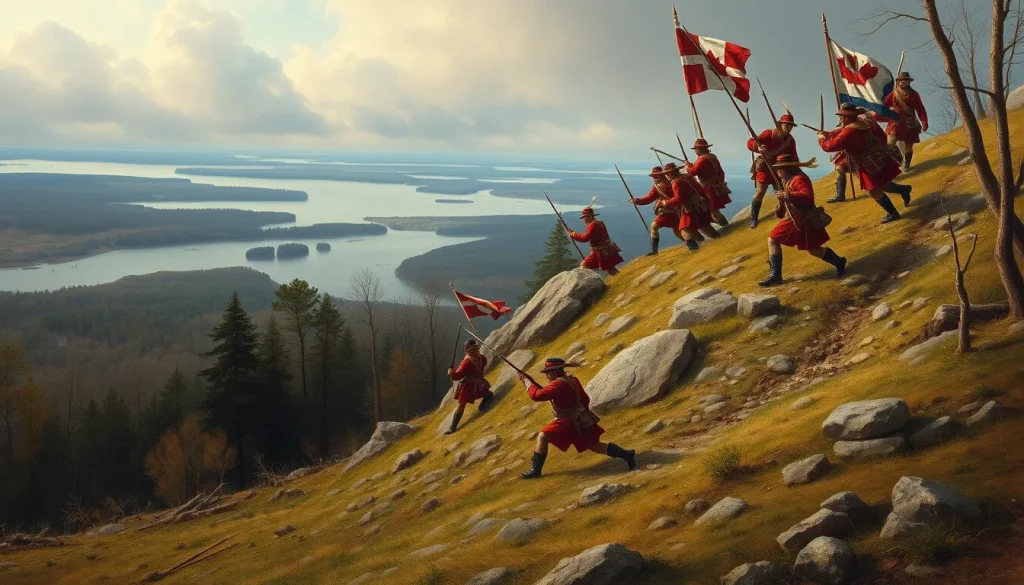
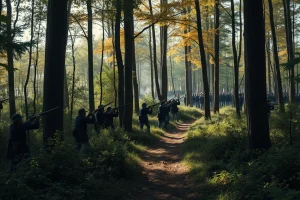
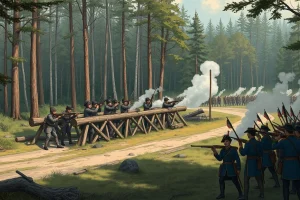
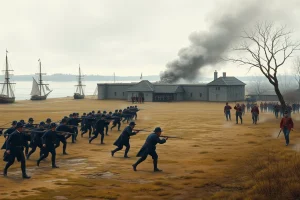
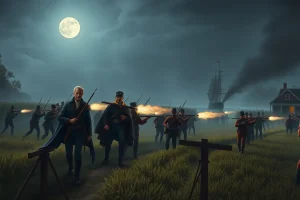
On the night of 12–13 October 1812, American troops under Van Rensselaer crossed the Niagara River from Lewiston to Queenston. The first attempt was disorganized and was initially dismissed by British General Isaac Brock as a feint. A second attempt before dawn succeeded in establishing a foothold on the Canadian shore. American forces, guided by a hidden path, climbed the escarpment and captured the British redan (a small earthwork) that protected the river approach. Brock, awakened by the gunfire, hastened from Fort George to the scene. He organized a hurried counterattack with the 49th Regiment and local militia. Leading the charge up the heights, Brock was wounded in the arm but continued, then was shot in the chest and killed. His second-in-command, Major General Roger Hale Sheaffe, arrived later with reinforcements from Fort George, including British regulars, militia, and Runchey’s Corps of Coloured Men. Meanwhile, Mohawk warriors under John Norton and John Brant played a crucial role in pinning down the American forces on the heights with musketry from the woods. When Sheaffe arrived, he attacked the American position from an unexpected direction, rolling up their flank. The Americans, stranded without reinforcements—their militia refused to cross the river—were forced to surrender. Over 900 American soldiers were taken prisoner. Winfield Scott, a young American regular officer, led the final resistance but eventually capitulated.
Why It Matters
The British victory at Queenston Heights protected Upper Canada from an early American conquest and helped solidify Canadian identity. The battle ended the American offensive of 1812, as Van Rensselaer resigned and the American government scrambled to avoid further defeats. The heroic death of Isaac Brock created a powerful symbol for British North America and later for Canada; Brock’s Monument at Queenston is a national shrine. For Indigenous peoples, the battle demonstrated the crucial role of their warriors in the defense of their lands, though their contributions were often downplayed in later colonial narratives. For the United States, the defeat exposed the weaknesses of a reliance on state militias and the lack of regular army readiness, leading to long-term military reforms.
Prelude
After the fall of Detroit, British forces under Brock were redeployed to the Niagara frontier. Van Rensselaer, under pressure from Washington and the public to reverse the defeat, marshalled his forces at Lewiston. He planned to cross the river at Queenston, a narrow point near the escarpment. On 12 October, a first attempt was aborted due to weather and confusion. Brock, uncertain of the exact American crossing point, had dispersed his troops. A prisoner exchange arranged by the British revealed that the Americans were preparing a major attack, and Brock reinforced the Queenston area. However, the American crossing on the night of the 13th initially surprised him.
Forces and Commanders
British and Allied: Major General Isaac Brock (killed), Major General Roger Hale Sheaffe, Lieutenant Colonel John Macdonell (mortally wounded), Mohawk chiefs John Norton and John Brant. Units included British regulars of the 41st and 49th Regiments of Foot, the Royal Artillery, Canadian militia (including the York Militia and Runchey’s Corps of Coloured Men), and about 300–500 Indigenous warriors (Mohawk, Cayuga, Oneida, Onondaga, and Delaware). Total allied strength was roughly 1,400–1,500, though reinforcements arrived throughout the battle.
American: Major General Stephen Van Rensselaer, Lieutenant Colonel Solomon Van Rensselaer (wounded), Lieutenant Colonel Winfield Scott, Brigadier General William Wadsworth. Forces included U.S. regulars, New York militia, and elements of the 6th, 13th, 16th, and 21st U.S. Infantry. Total crossed or attempted to cross: about 3,550, though only about 1,000–1,600 actually reached the Canadian shore.
Battlefield and Map Context
The battle was fought around Queenston, a village on the west bank of the Niagara River, about 7 kilometres south of Fort George. The key feature is Queenston Heights, a steep escarpment rising about 100 metres above the river. A redan (a small triangular earthwork) sat on the heights, with a British 18-pounder gun that commanded the river crossing. The American landing beach was at the base of the hill, while the British controlled the river up to Vrooman’s Point. The strategic importance lay in the fact that if the Americans held the heights, they could control the river and threaten Fort George and the interior of Upper Canada.
Battle Chronology
c. 3:00 a.m. American boats begin crossing the river; the first wave lands near Queenston. c. 4:30 a.m. The Americans capture the redan and spike the gun. British pickets fire but are forced back. c. 5:30 a.m. Brock arrives from Fort George and organizes a counterattack with available troops. c. 7:00 a.m. Brock’s charge up the heights fails; Brock is mortally wounded. c. 8:00 a.m. John Norton and his warriors engage the American right flank, slowing their advance. c. 10:00 a.m. Sheaffe arrives with reinforcements, having marched inland to climb the escarpment away from American observers. c. 3:00 p.m. Sheaffe launches a coordinated attack from the rear; the Americans, low on ammunition and without reinforcements, are surrounded. c. 4:30 p.m. Winfield Scott surrenders the remaining American force. Over 900 men are taken prisoner.
Casualties and Losses
Casualty figures vary by source, but the most widely cited are: British and allied: 21 killed, 85 wounded, 22 captured. The dead included Brock, Macdonell, and several Indigenous chiefs. American: between 60 and 100 killed, 80 wounded, and 955 captured (of whom about 90 were wounded). The Canadian Encyclopedia gives totals of 105 British/Canadian/First Nations and 300 American casualties, but detailed breakdowns suggest higher American losses. The disparity reflects the poor American discipline and the effectiveness of the final British envelopment.
Result
The battle was a decisive British, Canadian, and Indigenous victory. The American invasion force was repelled, the surviving troops surrendered, and Upper Canada remained under British control. Strategically, it ended the American campaign on the Niagara frontier for 1812. Tactically, the victory was due to the combination of determined British resistance, the delaying action of Indigenous warriors, and the failure of American militia to come to the aid of their comrades across the river.
Strategic Consequences
The victory at Queenston Heights, coming after the capture of Detroit, strengthened British control of Upper Canada and discouraged American recruiting and morale. General Van Rensselaer resigned and was replaced by his deputy. The American public was shocked by the defeat, while British and Canadian loyalists gained confidence. The battle also demonstrated the critical importance of Indigenous alliances to the British war effort, although this would be downplayed in later histories. For the United States, the defeat led to a reevaluation of the militia system and contributed to President Madison’s efforts to increase the regular army.
Primary Accounts
Several contemporary accounts exist. British official reports include Major General Sheaffe’s dispatch to Governor General Prevost, dated 14 October 1812, which describes the battle and Brock’s death. American accounts include the official report of Major General Van Rensselaer to Governor Tompkins, and the diary of Lieutenant Colonel Winfield Scott, who later became a leading American general. First Nations perspectives are recorded in the memoir of John Norton (Teyoninhokarawen), who played a key role, though his account was published later. These sources vary in detail and bias; for example, American accounts often emphasize militia refusal, while British accounts highlight the heroism of Brock and the regulars.
Battlefield Today
Queenston Heights is now a National Historic Site of Canada, managed by Parks Canada. It features Brock’s Monument, a 185-foot column erected in the 1850s to honour Sir Isaac Brock. The site also includes a monument to Laura Secord, who was a civilian heroine of the War of 1812. Interpretive trails and plaques explain the battle. Visitors can still see the redan site and parts of the escarpment. The battlefield is located in Niagara-on-the-Lake, Ontario, near the village of Queenston.
Primary Sources
Key contemporary documents include:
• Sheaffe’s official dispatch of 14 October 1812, which provides the British order of battle and casualty list (held by Library and Archives Canada).
• Van Rensselaer’s report to the New York governor, dated 16 October 1812, detailing the American failure.
• Winfield Scott’s memoir, published later, gives a personal account.
• John Norton’s journal, which offers an Indigenous viewpoint of the battle.
These documents are accessible in published collections, such as The Documentary History of the Campaign upon the Niagara Frontier (1840). Each has limitations: military reports often understate casualties or exaggerate bravery, and personal memoirs are written with hindsight.
Further Reading
- Malcomson, Robert. Burying General Brock: A History of Brock’s Monument. Toronto: University of Toronto Press, 2002.
- Hickey, Donald R. The War of 1812: A Forgotten Conflict. Urbana: University of Illinois Press, 1989.
- Latimer, Jon. 1812: War with America. Cambridge, MA: Harvard University Press, 2007.
- Benn, Carl. The War of 1812. Oxford: Osprey Publishing, 2002.
- Parks Canada. “Queenston Heights National Historic Site.” https://parks.canada.ca/lhn-nhs/on/queenston
References
- “Battle of Queenston Heights.” The Canadian Encyclopedia. https://thecanadianencyclopedia.ca/en/article/battle-of-queenston-heights
- “Culture and history – Queenston Heights National Historic Site.” Parks Canada. https://www.parks.canada.ca/lhn-nhs/on/queenston/culture
- “Queenston Heights Battle Facts and Summary.” American Battlefield Trust. https://www.battlefields.org/learn/war-1812/battles/battle-queenston-heights
- “Battle of Queenston Heights.” Wikipedia. https://en.wikipedia.org/wiki/Battle_of_Queenston_Heights
- “Queenston Heights National Historic Site.” U.S. National Park Service. https://nps.gov/places/queenston-heights.htm
FAQ
Why did the Americans lose the Battle of Queenston Heights?
The Americans were unable to land their full force because New York militia refused to cross the river, leaving the small force on the Canadian side unsupported. British and Indigenous counterattacks, led first by Brock and then by Sheaffe, overwhelmed the stranded Americans.
What happened to Isaac Brock at Queenston Heights?
Brock was killed while leading a counterattack on the American position. He was struck by a musket ball in the chest and died almost instantly.
How did Indigenous warriors contribute to the British victory?
Mohawk and other warriors under John Norton and John Brant held down the American forces on the heights with accurate fire from the woods, delaying them until Sheaffe's reinforcements arrived and launched a decisive attack.
Leave a Reply