Short Answer
During the War of 1812, British forces occupied eastern Maine in 1814, capturing Eastport and the Passamaquoddy islands in July and then Castine, Hampden, and Bangor in September. American soldiers, sailors, and militiamen taken in these operations became prisoners of war. Their treatment varied: some were paroled locally, others were held aboard British ships or sent to Halifax, and most were exchanged or released by the end of the conflict. The episode exposed the vulnerability of the Maine frontier, shaped local memory of the war, and contributed to the movement that made Maine a separate state in 1820.
Historical Context
The United States declared war on Great Britain in June 1812, but New England remained deeply divided over the conflict. The region depended on maritime trade, and many Federalists opposed what they called Mr. Madison’s War. Britain extended its blockade to New England on April 25, 1814, bringing the war directly to Maine’s coast. Eastern Maine was especially exposed because it lay close to British Nova Scotia and New Brunswick and because the boundary between Maine and British North America remained disputed. The British considered the line of communications between Halifax and Quebec vital and feared that the United States might use eastern Maine as a base against it. Moose Island, where Eastport stood, had been claimed by Britain under a disputed reading of the Treaty of 1783. American regular forces in the region were few, and the militia was poorly equipped and unprepared for a coordinated British amphibious attack. British naval superiority allowed expeditions from Halifax to strike almost at will.
What Happened
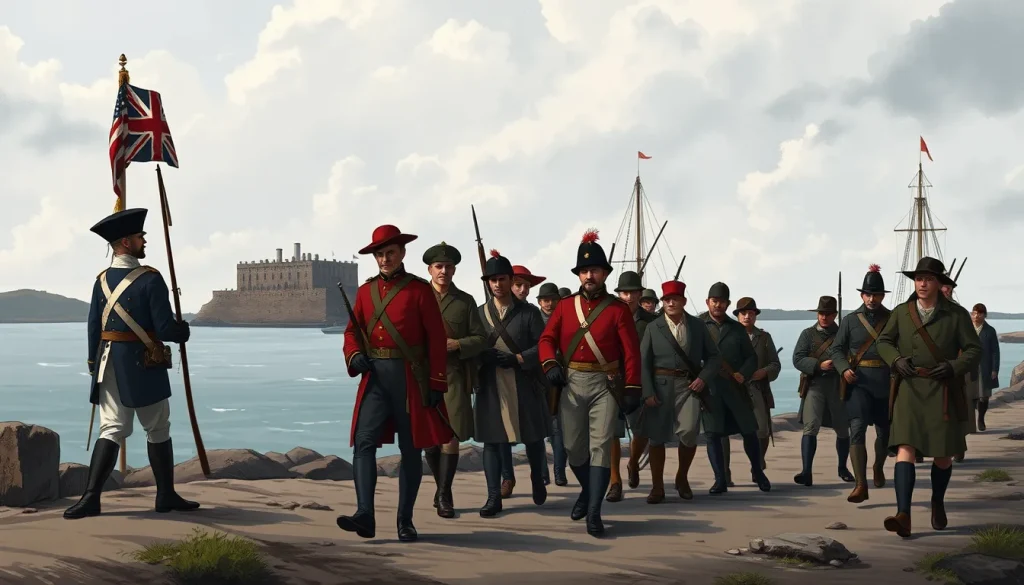
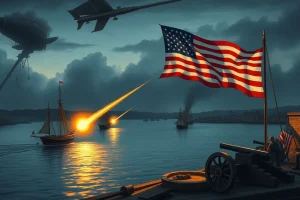
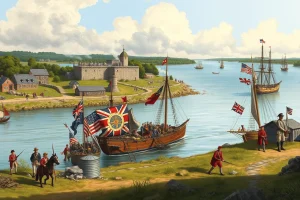
The first major seizure of American prisoners in eastern Maine occurred at Eastport on July 11, 1814. A British squadron under Sir Thomas Masterman Hardy, including the seventy-four-gun ship HMS Ramillies and several smaller vessels, anchored off the town and demanded the surrender of Fort Sullivan. The American commander, Major Putnam, initially refused, but the townspeople, faced with overwhelming firepower, urged him to avoid destruction. The fort surrendered. British forces hoisted their flag, took possession of public property, and seized the American soldiers of the garrison. According to the local history Stories of Maine, the prisoners were forced aboard the British ships. The exact number of soldiers taken is not firmly established in readily available sources, but the garrison was small. The British also required the inhabitants of Moose Island and other islands in Passamaquoddy Bay to assemble and either swear allegiance to the British Crown or leave within seven days; a large majority reportedly submitted.
A second and larger movement followed in September 1814. A British expedition under Lieutenant General Sir John Sherbrooke, governor of Nova Scotia, sailed from Halifax on August 26 with a powerful fleet and nearly three thousand troops, though some accounts give higher numbers. In early September 1814, the force entered Penobscot Bay and occupied Castine without resistance; the small American garrison blew up its battery and fled. On September 3, British troops landed at Hampden, where they defeated a mixed force of Maine militia and U.S. Navy sailors and marines under Captain Charles Morris of the frigate USS Adams. Morris ordered the Adams burned to prevent its capture. The battle was short, and American casualties were relatively few, but the British took prisoners, including wounded men and militiamen. Many of the militia were paroled after promising not to fight again; regular soldiers and sailors were more likely to be held or sent to Halifax. The British occupied Bangor on September 4 and later extended their control to Machias and other coastal points.

Prisoners taken in eastern Maine were handled through the broader British and American prisoner-of-war system. Some were kept at Castine or aboard ships in Penobscot Bay. Others were transported to Halifax, where American prisoners were held in facilities including Melville Island. Officers were often paroled to specific towns, while enlisted men faced confinement or exchange. The cartel system allowed for exchanges, but communications were slow and the number of prisoners fluctuated. After the Treaty of Ghent was signed on December 24, 1814, remaining prisoners were to be released. British forces evacuated Castine in April 1815, but Eastport and the Passamaquoddy islands remained under British control until 1818 because of the unresolved boundary dispute.
Why It Matters
The fate of these prisoners mattered immediately to families and communities in eastern Maine, who feared impressment or long confinement. It also revealed how weakly the United States defended the region. The occupation disrupted trade, forced oaths of allegiance, and left a legacy of resentment. In the longer term, the inability of Massachusetts to protect Maine strengthened the argument for separate statehood, which was achieved in 1820. Historians disagree about British intentions. Some emphasize that the occupation was a strategic move to secure the Halifax-Quebec line and deny the United States a base. Others stress the punitive effects on civilians and the pressure placed on local loyalty. The treatment of prisoners reflects broader War of 1812 practices: parole, exchange, and confinement were common, but they were unevenly applied and poorly documented. The episode is also a reminder that the war’s impact was not confined to the famous battlefields of the Great Lakes or the Atlantic seaboard; it reached small coastal towns and their militias.
Definition
American prisoners taken during the British occupation of eastern Maine refers to soldiers, sailors, and militiamen captured by British forces during the 1814 expeditions that occupied Eastport, Castine, Hampden, Bangor, and Machias. The group includes regular U.S. Army garrison troops at Eastport, U.S. Navy personnel from the USS Adams, and local militia called out to defend their towns. It does not include the many civilians who were required to take oaths or leave the occupied islands, although their experiences were closely connected.
Background
The British and Americans had established a rough cartel system for exchanging prisoners, but it often broke down. Officers were usually treated better than enlisted men and could be paroled to live in specified locations. Enlisted prisoners might be held in prison ships, barracks, or temporary facilities. In eastern Maine, the British had the additional advantage of naval mobility and a nearby base at Halifax. American authorities had few resources to negotiate for or recover prisoners, so local commanders often made ad hoc arrangements.
How It Worked
When British forces captured Americans, they typically separated officers from enlisted men and regulars from militia. Militiamen were often offered parole if they promised not to serve again during the war; many accepted because they needed to return to farms and families. Regular soldiers and sailors were more likely to be sent to Halifax or another depot. Some prisoners were exchanged relatively quickly; others waited months. The process depended on the number of British prisoners available for exchange, the state of negotiations, and the distance from Halifax. Records are fragmentary, so the exact number of prisoners and the precise destination of each group remain uncertain.
Competing Viewpoints
American accounts in the nineteenth century often portrayed the prisoners as victims of British aggression and emphasized the hardships they suffered. British officials, by contrast, regarded the captures as legitimate acts of war and argued that the occupation was necessary to protect Canada and the maritime provinces. Modern historians generally agree that the British occupation of eastern Maine was primarily strategic, but they debate how much it was intended to punish New England or to support boundary claims. Some scholars emphasize the relatively restrained use of parole and exchange; others point to the disruption and coercion experienced by civilians and prisoners alike.
Role in the War of 1812
The captures in eastern Maine formed part of the wider British coastal campaign of 1814, which included raids in the Chesapeake and the occupation of parts of Maine. They tied down American forces, embarrassed the Madison administration, and demonstrated British control of the sea. For the United States, the loss of eastern Maine was a serious blow to morale and trade. For Britain, the occupation helped secure communications and provided bargaining leverage, though it did not lead to permanent annexation.
Consequences and Historical Interpretation
Most American prisoners taken in eastern Maine eventually returned home. Some were exchanged during the war; others were released after the Treaty of Ghent. The occupation itself ended in stages: Castine was evacuated in 1815, while Eastport remained under British control until 1818. The experience contributed to a lasting sense of grievance in Maine and fed support for statehood. Historians continue to debate how many prisoners were taken, how they were treated, and how much the British occupation shaped the region’s postwar development. The lack of comprehensive records means that any total figure should be treated as an estimate.
Primary Sources
Contemporary evidence for these prisoners is scattered. British Admiralty dispatches from Sir Thomas Hardy and Sir John Sherbrooke, held in series ADM 1 at The National Archives (Kew), report the captures and occupation. American military reports, including Captain Charles Morris’s account of the loss of the USS Adams and militia reports from the Hampden area, provide the American perspective. Town records and petitions from Eastport and the Passamaquoddy islands document the oath of allegiance and the departure of those who refused. Newspaper items in the Boston Columbian Centinel and other New England papers carried reports of the captures, but they often relied on rumor and should be read cautiously. Robert Fraser’s 2007 article in Maine History draws on many of these sources and remains a useful guide, though it focuses more on the campaign than on every prisoner’s fate.
Further Reading
- Robert Fraser, “The Battle of Hampden and Its Aftermath,” Maine History 43, no. 1 (2007): 21–40.
- Donald R. Hickey, The War of 1812: A Forgotten Conflict (Urbana: University of Illinois Press, 1989).
- William S. Dudley, ed., The Naval War of 1812: A Documentary History, 3 vols. (Washington, DC: Naval Historical Center, 1985–2002).
- J. C. A. Stagg, Mr. Madison’s War: Politics, Diplomacy, and Warfare in the Early American Republic, 1783–1830 (Princeton: Princeton University Press, 1983).
- Maine Historical Society, War of 1812 collections and research guides.
- “Stories of Maine,” Chapter 18, “The British Again in Maine,” at kellscraft.com.
References
- Robert Fraser, “The Battle of Hampden and Its Aftermath,” Maine History 43, no. 1 (2007): 21–40. https://exa.ai/library/publication/xpgxw83t8q9.
- “Stories of Maine,” Chapter 18, “The British Again in Maine,” https://kellscraft.com/StoriesOfMaine/StoriesOfMaineCh18.html.
- Donald R. Hickey, The War of 1812: A Forgotten Conflict (Urbana: University of Illinois Press, 1989).
- William S. Dudley, ed., The Naval War of 1812: A Documentary History, 3 vols. (Washington, DC: Naval Historical Center, 1985–2002).
- J. C. A. Stagg, Mr. Madison’s War: Politics, Diplomacy, and Warfare in the Early American Republic, 1783–1830 (Princeton: Princeton University Press, 1983).
- Maine Historical Society, War of 1812 collections and research guides.
FAQ
How many American prisoners were taken during the British occupation of eastern Maine?
Exact numbers are not firmly established. The Eastport garrison was small, and at Hampden the British captured militiamen and sailors, but records are fragmentary. Many were paroled quickly, while others were sent to Halifax.
Where were the American prisoners held?
Some were held at Castine or aboard British ships in Penobscot Bay. Others were transported to Halifax, where American prisoners of war were confined, including at Melville Island. Officers were often paroled to specific towns.
When were the American prisoners released?
Many were exchanged during the war, and the Treaty of Ghent required the release of remaining prisoners. British forces evacuated Castine in 1815, but Eastport remained under British control until 1818.


Leave a Reply