
Short Answer
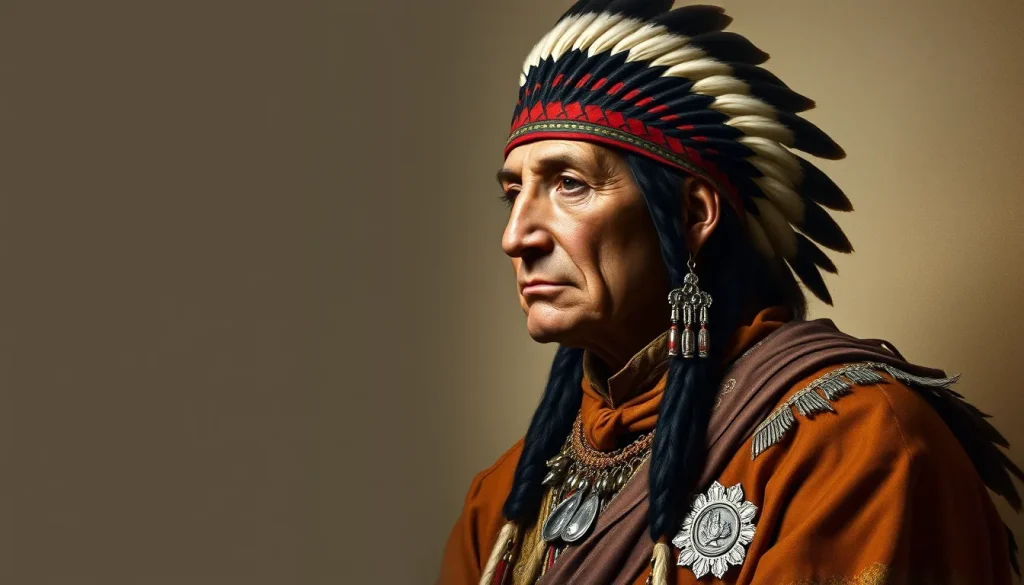
Black Hawk (Makataimeshekiakiak) was a Sauk war leader who lived from 1767 to 1838. He is best known for his resistance to American westward expansion, but he also played a significant role in the War of 1812 as an ally of Great Britain against the United States. His actions during the conflict, including the capture of Fort Mackinac and battles at Fort Meigs and Credit Island, tied him to the broader struggle for the Old Northwest and influenced his later defiance.
Historical Context
In the early 1800s, the Sauk and Fox peoples lived in the upper Mississippi Valley, with their principal village at Saukenuk near present-day Rock Island, Illinois. The 1804 Treaty of St. Louis, negotiated by a small delegation of Sauk leaders with Governor William Henry Harrison, ceded more than 50 million acres to the United States against the wishes of many tribal members. This treaty created deep resentment. When war broke out between Britain and the United States in 1812, British agents in the Northwest actively sought alliances with Indian nations, promising to check American expansion. Black Hawk, whose status as a war leader gave him influence among the Sauk and Fox, saw an opportunity to oppose the Americans.
What Happened
Black Hawk joined a British-led coalition in 1812. He led 200 Sauk warriors in the capture of Fort Mackinac on July 16, 1812, a pivotal British victory. He and his men were placed under the overall command of Captain Charles Roberts. Later that year, Black Hawk also participated in an attack on Fort Madison on the Mississippi. In 1813, he fought at the sieges of Fort Meigs and the assault on Fort Stephenson. After the British setbacks at Lake Erie and the Battle of the Thames, Black Hawk continued to operate west of the Great Lakes. In 1814, he helped capture Fort Shelby and defeated an American force under Zachary Taylor at the Battle of Credit Island. His participation was consistent and marked by coordination with British officers.
Why It Matters
The War of 1812 reinforced Black Hawk’s anti-American stance and gave him military experience and alliances that he would later rely on. For the British, the Indian allies were crucial in holding territory in the Northwest. For American historians, Black Hawk’s role exemplifies the wider involvement of Indigenous peoples in the conflict, which was not simply a white man’s war. Moreover, the British alliance did not end at the Treaty of Ghent; Black Hawk and others continued to hope for British support, which would later lead to the Black Hawk War in 1832.
Early Life
Black Hawk was born in 1767 at Saukenuk, a Sauk village at the confluence of the Rock and Mississippi Rivers. He was reputed to be a descendant of Thunder (Nanamakee), a legendary ancestor. As a young man, he fought against the Osages in the 1780s, earning the title of war chief. His father was killed in battle against the Cherokees. Black Hawk’s early life, as recounted in his autobiography, was filled with warfare typical of the period.
Role Before the War
Prior to the War of 1812, Black Hawk had already become a leading opponent of the 1804 treaty. He and other chiefs rejected its legitimacy, arguing that Quashquame did not have authority to cede land. In 1809, he was involved in an attack on Fort Madison, which was a U.S. trading post and fort. This early resistance foreshadowed his later alliance with Britain.
Role During the War
When war was declared, Black Hawk quickly sided with the British. He joined forces with Robert Dickson, a British agent who had assembled a large coalition of Indigenous warriors from various nations, including Lakota, Potawatomi, Winnebago, and Ottawa. Black Hawk was given a temporary commission as a captain in the British Army and commanded about 200 Sauk warriors. He took part in the capture of Fort Mackinac, the sieges of Fort Meigs, and the Battle of Credit Island. His leadership was crucial in these operations, and he was even promoted by Dickson to brevet rank of brigadier general, though this was not officially recognized by the British military hierarchy.
Major Actions
Black Hawk’s most significant military action was the capture of Fort Mackinac in July 1812. Later, he participated in the sieges of Fort Meigs in May and July 1813, and the attack on Fort Stephenson. In 1814, he joined British Lieutenant Colonel William McKay in capturing Fort Shelby and then ambushed American forces under Zachary Taylor at the Battle of Credit Island. These engagements demonstrated his tactical skill and his ability to coordinate with British regulars.
Contemporary Accounts
Black Hawk’s own account of his life, dictated to interpreter Antoine LeClaire and published in 1833, provides a first-hand view of his actions and motivations. In it, he describes cutting down the American flag at Fort Madison, a symbolic act of defiance. His narrative is a valuable but biased source; it was edited by John B. Patterson, who aimed to present Black Hawk sympathetically. British military reports also note his contributions, though they often downplay his role relative to British officers.
Later Life
After the Treaty of Ghent, Black Hawk refused to accept American authority. He fought a skirmish at the Battle of Sinkhole in May 1815, but eventually signed a treaty in 1816 that reaffirmed the 1804 cession. However, he continued to resist American settlement on Sauk lands. In 1832, he led a band back across the Mississippi to reclaim Saukenuk, sparking the Black Hawk War. The rebellion was crushed, and Black Hawk was captured and taken on a tour of eastern cities by the U.S. government. He lived out his final years in Iowa, where he died on October 3, 1838.
Historical Legacy
Black Hawk is remembered as a symbol of Indigenous resistance to American expansion. His role in the War of 1812 helped cement his reputation as a warrior and a leader. The conflict also established the pattern of British-Indian alliances that, while not fully successful, would be remembered by both sides. Historically, scholars view Black Hawk’s participation as part of the broader Indigenous struggle to maintain sovereignty in the Great Lakes and Mississippi regions. His autobiography remains a crucial source for historians studying Native American perspectives on the war and its aftermath.
Primary Sources
The most important primary source is Black Hawk’s autobiography, Life of Ma-ka-tai-me-she-kia-kiak (1833), dictated to Antoine LeClaire and edited by J.B. Patterson. This work gives Black Hawk’s own description of his war experience, including his motivation for joining the British. However, it must be used critically, as Patterson likely polished the prose and shaped the narrative. British military records, such as those from Fort Mackinac and Amherstburg, also document his movements and contributions, though they tend to reflect British priorities. United States military reports from the era, particularly those involving battles like Credit Island, provide another perspective.
Further Reading
- Jackson, Donald. “Black Hawk: The Man and His Times.” The Palimpsest (1962).
- Jung, Patrick J. “Toward the Black Hawk War: The Sauk and Fox Indians and the War of 1812.” Michigan Historical Review 38, no. 1 (2012).
- Davis, D.S. “Black Hawk.” The Canadian Encyclopedia (online).
- Britannica, eds. “Black Hawk.” Encyclopaedia Britannica (online).
References
- Black Hawk, Autobiography of Ma-ka-tai-me-she-kia-kiak, Project Gutenberg, 2009. https://www.gutenberg.org/files/7097/7097-h/7097-h.htm
- Britannica, “Black Hawk,” Encyclopaedia Britannica. https://www.britannica.com/biography/Black-Hawk-Sauk-and-Fox-leader
- D.S. Davis, “Black Hawk,” The Canadian Encyclopedia. https://thecanadianencyclopedia.ca/en/article/black-hawk
- Patrick Jung, “Toward the Black Hawk War: The Sauk and Fox Indians and the War of 1812,” Michigan Historical Review 38, no. 1 (2012). doi:10.5342/michhistrevi.38.1.0027
- Donald Jackson, “Black Hawk: The Man and His Times,” The Palimpsest (1962). https://doi.org/10.17077/0031-0360.25428
FAQ
Why did Black Hawk join the British in the War of 1812?
Black Hawk saw the British as allies against American expansion, especially after the controversial 1804 treaty that ceded tribal lands. He sought to preserve Sauk territory and sovereignty.
What were Black Hawk's key battles in the War of 1812?
He participated in the capture of Fort Mackinac (1812), the sieges of Fort Meigs and Fort Stephenson (1813), and the capture of Fort Shelby and the Battle of Credit Island (1814).
How did the War of 1812 affect Black Hawk's later life?
The war reinforced his anti-American stance and military experience. He continued resistance, leading to the Black Hawk War of 1832, after which he was captured and toured the United States before dying in 1838.
Leave a Reply