
Short Answer
The Battle of New Orleans, fought on January 8, 1815, is often seen as a postscript to the War of 1812 because a peace treaty had already been signed in Europe. Yet the treaty—the Treaty of Ghent—had not been ratified by either government, and the war legally continued. This article examines whether the American victory at New Orleans influenced the U.S. Senate’s approval of that treaty on February 16, 1815, which brought the war to an official end.
Historical Context
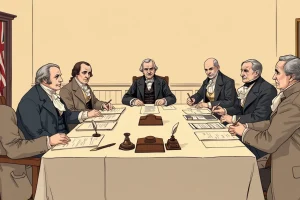
By late 1814, both the United States and Great Britain were weary of a costly conflict that had yielded no decisive advantage. The Napoleonic Wars in Europe were drawing to a close, allowing Britain to shift more military resources to North America, while the United States faced economic hardship and internal dissent, including the Hartford Convention. Peace negotiations opened in Ghent, Belgium, in August 1814. The American delegation—John Quincy Adams, Albert Gallatin, Henry Clay, Jonathan Russell, and James A. Bayard—faced British negotiators who initially demanded territorial concessions, a Native American buffer state, and acknowledgment of British maritime rights. However, after British reverses at Plattsburgh and Baltimore, and with the Congress of Vienna underway, London softened its demands. The Treaty of Ghent was signed on December 24, 1814, restoring prewar boundaries and providing for commissions to settle disputes. Crucially, the treaty stipulated that hostilities would cease only after both governments ratified it.
What Happened
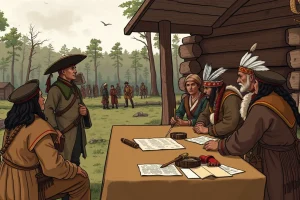
The British government ratified the treaty on December 27, 1814, but the American ratification process had not yet begun. The document had to be transported across the Atlantic, a journey that could take weeks. Unaware of the treaty’s existence, British forces under Major General Sir Edward Pakenham launched an attack on New Orleans on January 8, 1815. Major General Andrew Jackson, commanding a mixed force of U.S. regulars, militia, free African Americans, Choctaw allies, and Jean Lafitte’s Baratarian pirates, defeated the British in a decisive engagement that inflicted more than 2,000 British casualties against fewer than 100 American losses. The news of this victory reached Washington in early February, around the same time as the treaty text. On February 15, President James Madison sent the treaty to the Senate, which approved it unanimously the next day, February 16. Formal ratification was exchanged on February 17, and the war officially ended. The Battle of New Orleans thus occurred after the signing but before the American ratification.
Why It Matters
The Battle of New Orleans’ influence on the treaty ratification is a subject of historical debate. The treaty itself contained no provisions that the battle altered, and the British insistence that the Senate approve without amendment stood regardless of the military outcome. However, the victory had a powerful psychological effect. It restored national pride after defeats such as the burning of Washington, and it gave senators political cover to approve a treaty that accomplished none of the war’s stated goals, including an end to impressment. Some historians argue that the battle’s timing created a euphoria that facilitated unanimous approval, while others contend that the Senate would have ratified anyway, given the desire for peace. The episode also shaped the war’s legacy, making New Orleans a symbol of American resilience even though it was fought after peace was signed.

Definition
The canonical question—whether the Battle of New Orleans influenced the ratification of the Treaty of Ghent—is best understood as a counterfactual inquiry into the causal relationship between a military victory and a political process. It asks if the battle altered the timing, manner, or outcome of the Senate’s decision, rather than whether the battle was ‘necessary’ to the treaty’s existence.
Background
The Treaty of Ghent was signed on December 24, 1814, but its terms required ratification by both the British Crown and the U.S. Senate. The British government ratified on December 27, 1814, but deliberately did not stop military operations, fearing the Americans would seek revisions. They sent the treaty to Washington with instructions to exchange ratifications only if the Senate accepted it without amendment. The battle occurred during this window, when the treaty was still pending.
How It Worked
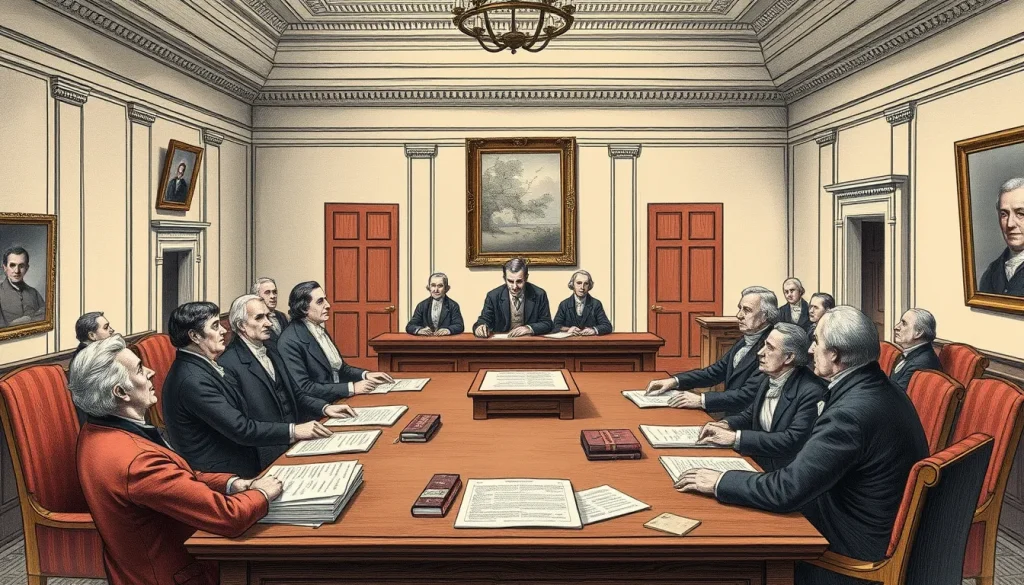
The U.S. Constitution requires the President to obtain the Senate’s advice and consent for treaty ratification. President Madison submitted the treaty on February 16, 1815. The Senate, meeting in executive session, debated the terms and, on the same day, voted unanimously to approve it. The speed of the vote—less than 24 hours—was extraordinary, especially given the treaty’s contentious origins. The British had stipulated that the treaty be approved without amendments, leaving senators with an all-or-nothing choice.
Competing Viewpoints
Historians have divergent views. One school, exemplified by the U.S. Senate’s own historical office, argues that the victory at New Orleans provided a ‘psychological boost’ that propelled senators to approve immediately and unanimously. Another view, common among some military historians, holds that the battle was strategically irrelevant because the treaty’s terms were already fixed and the British had no intention of renegotiating. A middle position, articulated by National Park Service historians, notes that the battle reinforced American negotiating prestige but did not alter the treaty’s substance. The timing of the victory and the treaty’s arrival in Washington certainly created a narrative of triumph, but evidence from Senate debates is sparse, and no direct record exists of any senator citing the battle as a reason for approval.
Role in the War of 1812
The Battle of New Orleans was the last major engagement of the war. It secured the Gulf Coast and prevented a British capture of the Mississippi River, but its military effect was nullified by the treaty, which restored the status quo ante bellum. The battle’s role is often exaggerated in American memory, yet it cemented Andrew Jackson’s national reputation and contributed to a sense that the United States had won the war—a sentiment that shaped subsequent diplomacy and domestic politics.
Consequences and Historical Interpretation
The battle’s influence on ratification, while probable in psychological terms, is impossible to quantify. The Senate’s unanimous vote may have been motivated by war-weariness, the lack of viable alternatives, and the treaty’s acceptable terms, rather than euphoria. However, the coincidence of the battle’s news with the treaty’s arrival created a celebratory atmosphere that eased the treaty’s acceptance. In the broader historical interpretation, the battle is often cited as an example of how a late victory can shape public memory and political decisions, even if it does not change the underlying diplomatic reality.
Primary Sources
Key primary sources include the Treaty of Ghent itself, which outlines the ratification process; the Senate’s executive journal for February 16, 1815, recording the unanimous vote; and Andrew Jackson’s dispatch to Secretary of War James Monroe, dated January 9, 1815, describing the battle. The British envoy, Henry Goulburn, also wrote of the potential impact of the battle on American ratification, though his letters emphasize his own government’s position. The NPS notes that the British had instructed their envoy to withhold ratification if the Senate amended the treaty, indicating that the battle did not alter British terms. Each source offers insight but must be read critically: Jackson’s report is a victory claim, while British correspondence reflects diplomatic caution.
Further Reading
- Donald R. Hickey, The War of 1812: A Forgotten Conflict (University of Illinois Press, 1989).
- Robert V. Remini, The Battle of New Orleans (Viking, 1999).
- J.C.A. Stagg, Mr. Madison’s War: Politics, Diplomacy, and Warfare in the Early American Republic, 1783–1830 (Princeton University Press, 1983).
- U.S. Senate Historical Office, “The Senate Approves for Ratification the Treaty of Ghent,” available at senate.gov.
- National Park Service, “The Treaty of Ghent,” Jean Lafitte National Historical Park and Preserve, available at nps.gov.
References
- U.S. Senate Historical Office, “The Senate Approves for Ratification the Treaty of Ghent,” accessed [date], https://www.senate.gov/about/powers-procedures/treaties/senate-approves-treaty-of-ghent.htm.
- National Park Service, “The Treaty of Ghent,” Jean Lafitte National Historical Park and Preserve, accessed [date], https://www.nps.gov/jela/learn/historyculture/the-treaty-of-ghent.htm.
- David Vergun, “Army historian corrects myths on Battle of New Orleans’ 200th anniversary,” U.S. Army, January 9, 2015, https://www.army.mil/article/140876.
- American Battlefield Trust, “The Treaty of Ghent: Ending the War of 1812,” updated April 8, 2024, https://www.battlefields.org/learn/articles/treaty-ghent-ending-war-1812.
- Britannica, “War of 1812 – Final stages of the war and the aftermath,” accessed [date], https://www.britannica.com/event/War-of-1812/Final-stages-of-the-war-and-the-aftermath.
FAQ
Was the Battle of New Orleans fought before or after the Treaty of Ghent was signed?
It was fought after the treaty was signed on December 24, 1814, but before the U.S. Senate ratified it. The battle occurred on January 8, 1815, while ratification took place on February 16, 1815.
Did the Battle of New Orleans change the terms of the Treaty of Ghent?
No, the treaty's terms were already fixed when it was signed. The battle did not alter the text, but it may have influenced the Senate's willingness to approve the treaty quickly and unanimously.
Why was the Senate's approval of the treaty significant?
The British had insisted that the Senate approve the treaty without amendment, and ratification was necessary to end the war. The Senate's unanimous vote on February 16, 1815, allowed formal peace to be proclaimed the next day.
Leave a Reply