Short Answer
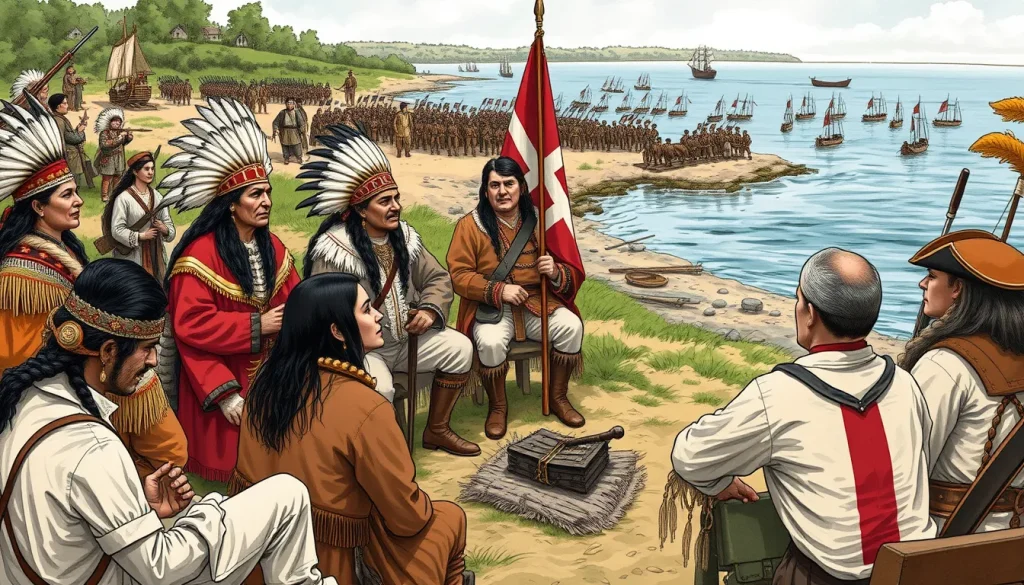
The War of 1812 was a pivotal conflict that profoundly affected Indigenous nations across North America, particularly in the Great Lakes region and the Southeast. Caught between the expansionist United States and British imperial interests, many Indigenous peoples allied with Britain in an attempt to resist American encroachment on their lands. The war’s outcome—marked by the death of Tecumseh and the Treaty of Ghent—hastened the decline of Indigenous power and paved the way for the removal era of the 1830s.
Historical Context
By the early 1800s, Indigenous nations in the Old Northwest and Southeast faced relentless pressure from American settlers and land speculators. Treaty after treaty, often coerced, eroded ancestral territories. The United States, under presidents Thomas Jefferson and James Madison, pursued a policy of westward expansion, while Britain, still holding Canada, maintained alliances with Indigenous nations as buffers against American ambition. This fragile balance was disrupted by rising tensions over trade, impressment, and border disputes. In the years before the war, the Shawnee leader Tecumseh and his brother Tenskwatawa (the Prophet) sought to unify Indigenous peoples into a pan-Indian confederation to resist further land cessions. Their movement centered at Prophetstown on the Wabash River, alarming both American officials and settlers. When the United States declared war on Britain in June 1812, Indigenous nations were already entangled in a larger struggle for survival.
What Happened
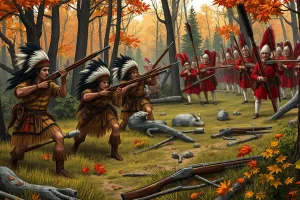
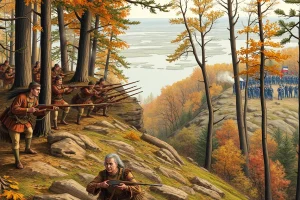
The war brought immediate and catastrophic changes. Indigenous warriors, particularly those allied with Britain, played a vital role in early victories, such as the capture of Fort Detroit in August 1812, where Tecumseh’s forces helped intimidate the American garrison. However, the death of Tecumseh at the Battle of the Thames in October 1813 proved a turning point, shattering the confederation and demoralizing his followers. In the Southeast, the Creek War (1813–1814) split the Creek Nation into factions, with the Red Sticks seeking British aid and a traditionalist resistance. The American forces, led by Andrew Jackson, crushed the Red Sticks at the Battle of Horseshoe Bend, forcing the Creek to cede millions of acres. Meanwhile, other Indigenous nations allied with the United States, such as the Cherokee, provided auxiliary support. The war’s end, marked by the Treaty of Ghent in December 1814, promised to restore all territory, rights, and privileges to Indigenous peoples, but the treaty’s provisions were never enforced by the United States. Instead, postwar demilitarization and American expansion accelerated land seizures.
Why It Matters
The war’s effect on Indigenous nations was immediate and long-lasting. In the short term, the collapse of Tecumseh’s confederation and the Creek defeat ended large-scale military resistance in the Northwest and Southeast. The British, having achieved their main war aims, abandoned their Indigenous allies, leaving them vulnerable to American retribution. Long-term, the war set the stage for the Indian Removal Act of 1830, which forcibly relocated tens of thousands of Indigenous people from the Southeast to west of the Mississippi. Historians argue that the war accelerated a process of dispossession that had been ongoing for decades, but it also galvanized Indigenous communities to form new alliances and adapt to changing circumstances. The war’s legacy is seen in the resilience of Indigenous nations and their ongoing struggles for sovereignty and treaty rights.
Definition
In this context, “affect” refers to the political, territorial, social, and demographic changes that Indigenous nations experienced as a result of the War of 1812. This includes their active participation as allies, the loss of land and life, shifting power dynamics with colonial powers, and the institutionalization of removal policies.
Background
Before the war, Indigenous nations faced a declining land base due to a series of treaties and the influence of the United States’ civilization program. The Pan-Indian movement led by Tecumseh was a direct response to these pressures. At the same time, the British aimed to preserve a buffer state between Canada and the United States, making strategic alliances with Indigenous nations. This pre-existing situation set the stage for the war, as Indigenous peoples saw an opportunity to regain lost ground or at least preserve what remained.
How It Worked
The mechanisms of impact were multifaceted. Military alliances with Britain provided arms, supplies, and support, enabling Indigenous warriors to defend their lands. Conversely, American military campaigns, such as those against the Creek and the Shawnee, devastated villages, destroyed crops, and displaced populations. Treaties, particularly after the war, were used to legitimize land cessions obtained through coercion or military defeat. The absence of British military support after 1815 removed a crucial counterweight to American expansion, and Indigenous nations were left to face the United States alone.
Competing Viewpoints
Historians differ on the degree of agency Indigenous people exercised in the war. Some portray them as pawns of imperial powers, exploited by both Britain and the United States. Others emphasize Indigenous initiatives and the deliberate choice of many nations to ally with Britain as the lesser evil. There is also debate about whether the war was a turning point or a continuation of a longer process of colonization. Some argue that the war actually strengthened Indigenous identity and resistance, as seen in later movements, while others view it as a fatal blow to Indigenous national sovereignty.
Role in the War of 1812
Indigenous nations were not passive bystanders but active participants. Tecumseh’s confederation allied with Britain and fought in the Northwest, while other nations such as the Wyandot, Potawatomi, and Odawa provided essential support. In the Southeast, the Red Stick Creeks fought against the United States, while the Cherokee and some Creek factions sided with the Americans. Indigenous warriors also served as scouts and guides, and their knowledge of the terrain was crucial. The war saw some of the largest Indigenous mobilizations since the American Revolution, but also exposed the deep divisions among Indigenous peoples.
Consequences and Historical Interpretation
The end of the war brought severe consequences. Indigenous nations lost vast territories, and the British protectorate that had been a bulwark against American expansion evaporated. The Treaty of Ghent’s promise to restore lands was unfulfilled, and the U.S. government used the treaty to argue that Indigenous claims were nullified by the war. This led to a series of removal treaties in the 1820s and 1830s, culminating in the Trail of Tears. Historical interpretation has evolved; earlier works often celebrated American “victory” and ignored Indigenous perspectives, while modern scholarship emphasizes the devastating and lasting impact on Indigenous societies. The war is now seen as a watershed moment that set the stage for a century of forced displacement and assimilation.
Primary Sources
Key primary sources include Tecumseh’s speech to the Creek nation in 1811, recorded by British agents, and accounts of the Battle of the Thames by American officers. The Treaty of Ghent itself is crucial for understanding the peace terms and the unresolved issues regarding Indigenous territories. British Indian Department correspondence, such as letters from Indian superintendent Matthew Elliott, provides insight into British-Indigenous relations. These sources must be carefully interpreted, as they were often recorded by non-Indigenous observers with their own biases.
Further Reading
- Hickey, Donald R. The War of 1812: A Short History. Urbana: University of Illinois Press, 1995.
- Stark, Peter. The Death of Tecumseh’s Vision: The War of 1812 and the Great Indian Alliance. Minneapolis: Milkweed Editions, 2010.
- Sugden, John. Tecumseh: A Life. New York: Holt, 1997.
- Calloway, Colin G. The Shawnees and the War for America. New York: Penguin, 2007.
References
- Hickey, Donald R. The War of 1812: A Forgotten Conflict. Urbana: University of Illinois Press, 1989.
- Stark, Peter. The Death of Tecumseh’s Vision. Minneapolis: Milkweed Editions, 2010.
- Sugden, John. Tecumseh: A Life. New York: Holt, 1997.
- Calloway, Colin G. One Vast Winter Count: The Native American West before Lewis and Clark. Lincoln: University of Nebraska Press, 2003.
- Treaty of Ghent, 1814. U.S. National Archives.
FAQ
Why did many Indigenous nations ally with Britain during the War of 1812?
Many Indigenous nations saw Britain as a counterbalance to American expansion, which threatened their lands and sovereignty. They hoped a British victory would preserve their territories.
What happened to Indigenous land after the war?
After the war, the United States ignored the Treaty of Ghent's land guarantee and used military victories and subsequent treaties to force land cessions, leading to mass removals in the 1830s.
How did Tecumseh's death affect Indigenous resistance?
Tecumseh's death at the Battle of the Thames in 1813 shattered his confederation and eliminated the most effective Indigenous leader, significantly weakening armed resistance in the Northwest.


Leave a Reply