
Short Answer
The British Army uniforms worn during the War of 1812 (1812–1815) were the product of longstanding regulations, contemporary military fashion, and the practical demands of campaigning in North America. Though the war was a secondary theatre for Britain, its regular regiments, Canadian militia, and allied Indigenous forces fought in a variety of dress that reflected both the army’s global standards and local adaptation. These uniforms carried symbolic meaning, shaped soldiers’ effectiveness, and remain a rich source for military historians.
Historical Context
At the outbreak of the War of 1812, Britain was locked in the Napoleonic Wars, and its army was stretched across Europe, India, and the Americas. The British government regarded the conflict with the United States as a distraction, yet it still committed regular units and resources to defend Canada and to conduct raids along the American coast. Military dress was governed by royal warrants and the annual Clothing Book, with the most significant regulations issued under the Prince Regent in 1812. These rules standardized the cut, colour, and facing of every regiment, though actual on-the-ground wear varied due to supply shortages, local purchase, and campaign wear.
In North America, the British Army operated alongside Canadian militia, fencible regiments, and Indigenous allies, each with their own clothing systems. The climate demanded practical adaptations, such as woollen trousers and sturdy footwear, that were not always specified in London regulations. The uniforms of the War of 1812 therefore present a study in both regulation and improvisation.
What Happened
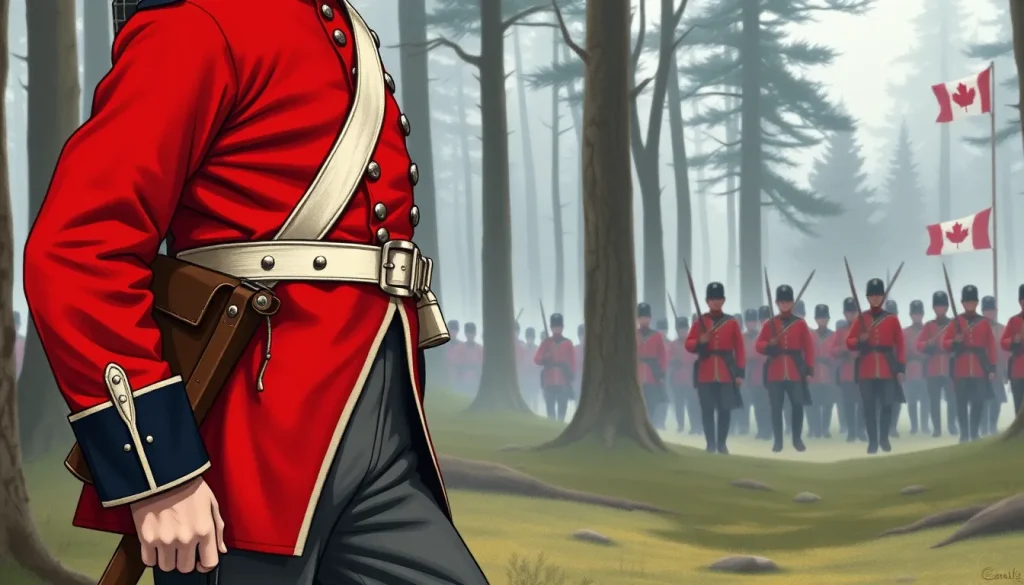
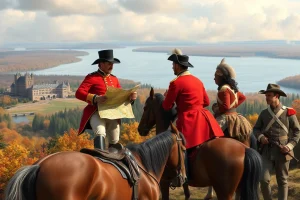
The British Army deployed over forty regular infantry regiments, several cavalry units, artillery, and engineers to North America between 1812 and 1815. These troops fought in major campaigns along the Canadian border, in the Chesapeake Bay region, and at New Orleans. The standard uniform for British infantry was the scarlet coatee, a short-tailed jacket cut in the contemporary silhouette, worn with white breeches or grey trousers, black gaiters, and a stovepipe shako. Each regiment distinguished itself by coloured facings – the collar, cuffs, and lapels – and by the pattern of lace loops on the breast of the coatee.
According to a comprehensive chart compiled by researcher Robert Henderson, based on primary sources including Charles Hamilton Smith’s 1812 illustrations and army clothier records, the British regiments in North America wore scarlet coats with various facing colours. For example, the 1st Regiment (Royal Scots) wore blue facings with flower-pot bastion loops, while the 41st Regiment had black facings with Jew’s-harp bastion loops. The 49th Regiment, distinguished at Queenston Heights, wore green facings. Light infantry and rifle companies wore green jackets, as exemplified by the 95th Rifles. Cavalry, such as the 19th Light Dragoons, wore blue coats with yellow facings and distinctive girdles.
The 1812 regulations, detailed in Ben Townsend’s study Fashioning Regulation, Regulating Fashion, refined the cut of the coatee, raised the shako’s height, and standardized the use of wings for grenadiers and light infantry. These changes reflected the tastes of the Prince Regent, who took a keen interest in military dress. However, in the field, British officers and men often modified their uniforms for comfort, and local tailors produced substitute garments when supply lines from England faltered. The harsh Canadian winters led to the issuance of grey or brown greatcoats, while on the Gulf Coast, troops adopted lighter linen clothing.
Why It Matters
The uniforms of the British Army in the War of 1812 matter for several reasons. They served as a tool of discipline and unit identity, instilling esprit de corps among soldiers far from home. They also affected performance: heavy scarlet coats were not ideal for the American wilderness, but the psychological impact of a line of red-coated infantry was profound. After the war, the uniforms became central to the romantic imagery of the conflict, influencing later paintings, re-enactments, and popular memory. Historians have used surviving uniforms, contemporary accounts, and regimental records to reconstruct the appearance of British forces, revealing both the uniformity and the diversity of the troops that defended British North America.
Definition
The term “British Army uniforms” in the context of the War of 1812 refers to the regulated clothing issued to regular soldiers of the British Army, as well as to auxiliary forces such as Canadian militia and fencible regiments, from 1812 to 1815. This includes the full dress and service dress worn in North America, encompassing the coat, waistcoat, breeches or trousers, headwear, footwear, and accoutrements.
Background
The British Army’s uniform system evolved through royal warrants and the annual Clothing Book, which prescribed the colours, cut, and facings for every regiment. The 1802 regulations, updated in 1812, set the pattern used during the war. The 1812 regulations were notable for increasing the height of the shako and adding a peak, and for refining the cut of the coatee.
The army that served in North America was a component of a larger global force. Many regiments arrived directly from Europe or from previous postings in the West Indies and India, bringing with them the established uniform patterns. Locally raised units, such as the Canadian Fencibles and militia, were often outfitted with simpler versions of the regular uniform or with civilian-inspired clothing.
How It Worked
Uniforms were produced by contractors under the supervision of the Board of Ordnance, and were distributed via regimental colonels, who were responsible for clothing their men. Each soldier received an annual issue, including a coatee, waistcoat, breeches or trousers, shirt, stockings, shoes, and a shako. The coatee was tailored with regimental facing colours and lace patterns. The 1812 regulations specified the spacing and shape of lace loops – squared, bastion, or pointed – and these became distinguishing features on the parade ground and the battlefield.
On campaign, the British troops were often allowed to wear more practical clothing. When a regiment’s official clothing was unserviceable, local purchases or captured American supplies filled the gap. Canadian militia units, such as the Select Embodied Militia, received regular-issue uniforms, while sedentary militia wore homespun capots and sashes, as depicted in Osprey publications.
Competing Viewpoints
There is a scholarly debate over how closely the observed dress matched the official regulations. Some historians, like Ben Townsend, argue that regulation and fashion increasingly diverged as the Napoleonic era progressed, with soldiers and officers adopting personal modifications. Others emphasize the effectiveness of the standard scarlet coat for morale and unit cohesion, despite its impracticality in the wilderness. Contemporary accounts, such as those by officers who served in Canada, often complain about the poor quality of local replacements, suggesting that actual appearance could deviate significantly from the orderly images later produced by artists.
Role in the War of 1812
British uniforms played a defining role in the war’s visible history. The red coats of British regulars were a symbol of imperial power and a target for American riflemen. The specific uniforms of regiments like the 1st (Royal Scots), 8th (King’s), and 89th (now the Royal Irish Fusiliers) are well documented in their engagements–from Fort Detroit to Lundy’s Lane. The presence of Highland regiments, such as the 93rd Sutherland Highlanders at New Orleans, added kilted variations to the British force. Canadian militia, though varied in appearance, contributed a distinctly North American element, with their own regimental distinctions.
Consequences and Historical Interpretation
After the war, the British Army’s uniforms underwent further changes, but the War of 1812 uniforms remained iconic in memory. Historians interpret them as evidence of Britain’s military system and its challenges in a global conflict. The uniforms also highlight the relationship between the regular army and colonial forces. Modern re-enactors and historical illustrators continue to use primary sources like Charles Hamilton Smith’s 1812–1814 plates to reconstruct the appearance of these troops, ensuring that the uniforms remain a gateway to understanding the lived experience of the soldiers.
Primary Sources
Key primary sources include the 1812 Prince Regent’s regulations for the army’s clothing, which are analyzed in detail in Ben Townsend’s two-volume study. Charles Hamilton Smith’s watercolour illustrations, drawn from life between 1812 and 1814, provide visual evidence for the uniforms, and are published in Wellington’s Army: Uniforms of the British Soldier, 1812–1815 with commentary by Philip Haythornthwaite. Regimental returns and clothing issues, held at the National Archives (UK) and the Library and Archives Canada, document the actual supply of uniforms. Memoirs and letters from British officers, such as those of John Le Couteur of the 104th Regiment, describe the adaptation of dress in North America. These sources have limitations: regulations depict an ideal, illustrations may be idealized, and memoirs are subjective.
Further Reading
- Ben Townsend, Fashioning Regulation, Regulating Fashion: The Uniforms and Dress of the British Army 1800–1815, 2 vols. (Helion, 2020–2021).
- René Chartrand, British Forces in North America 1793–1815 (Osprey, 1998).
- Philip Haythornthwaite, Wellington’s Army: Uniforms of the British Soldier, 1812–1815 (Greenhill, 2002).
- L. E. Buckell, “British Uniforms in the American War of 1812,” Journal of the Society for Army Historical Research 28, no. 113 (1950).
- Robert Henderson, “Service and Uniform of the British Regiments During the War of 1812,” warof1812.ca.
- Osprey Publishing, “Soldiers of the War of 1812,” Osprey Blog, September 11, 2015.
References
- Henderson, Robert. “Service and Uniform of the British Regiments During the War of 1812.” warof1812.ca. https://www.warof1812.ca/charts/regts_na.htm.
- Townsend, Ben. Fashioning Regulation, Regulating Fashion: The Uniforms and Dress of the British Army 1800–1815. Helion, 2020–2021.
- Buckell, L. E. “British Uniforms in the American War of 1812.” Journal of the Society for Army Historical Research 28, no. 113 (1950): 29–30.
- Osprey Publishing. “Soldiers of the War of 1812.” Osprey Blog, September 11, 2015. https://www.ospreypublishing.com/ca/osprey-blog/2015/soldiers-of-the-war-of-1812/.
- Haythornthwaite, Philip, and Charles Hamilton Smith. Wellington’s Army: Uniforms of the British Soldier, 1812–1815. Greenhill, 2002.
FAQ
What was the standard colour of British infantry uniforms in the War of 1812?
The standard was scarlet for most line infantry regiments, with green worn by rifle units such as the 95th Rifles. Regiments distinguished themselves by coloured facings on the collar, cuffs, and lapels.
How did uniforms differ between regular British troops and Canadian militia?
Regular troops wore regulated scarlet coatees with regimental facings, while Canadian militia often wore simpler clothing. The Select Embodied Militia received regular-issue uniforms, but sedentary militia frequently wore homespun capots and sashes.
What were the main primary sources for British uniforms of this war?
The 1812 Prince Regent's regulations, Charles Hamilton Smith's watercolour plates, regimental clothing returns, and accounts by officers and soldiers are key sources. Modern studies by Ben Townsend and René Chartrand provide comprehensive analysis.
Leave a Reply