Short Answer
Winfield Scott (1786–1866) was a U.S. Army officer whose service in the War of 1812 transformed him from a controversial junior captain into a national hero and a leading reformer of American military practice. Over the course of the conflict, Scott fought in key engagements on the Niagara frontier, survived capture and severe wounding, and trained one of the most disciplined brigades the American army fielded during the war. His rise exemplified the shift from an officer corps dominated by political appointtees to one that valued competence, discipline, and professional knowledge.
Historical Context
The War of 1812 began on June 18, 1812, when the United States declared war on Great Britain, driven by maritime disputes, impressment of American sailors, and perceived British encouragement of Indigenous resistance on the frontier. The United States was militarily unprepared: the regular army was small, poorly trained, and led by aging officers who often obtained commissions through political connections rather than merit. The British, meanwhile, were occupied with the Napoleonic Wars in Europe and initially committed limited resources to North America, relying on Canadian militia, Indigenous allies, and a small number of regulars.
Winfield Scott, born in Virginia in 1786, was commissioned a captain of light artillery in 1808. After criticizing his superior, General James Wilkinson, he was court-martialed and suspended for a year in 1810. During that time, he studied European military manuals, which would later shape his approach to training and discipline. When war was declared, Scott, only 26, was promoted to lieutenant colonel and assigned to the 2nd Artillery Regiment, soon seeing action on the Niagara frontier.
What Happened
Scott’s wartime career unfolded primarily along the Niagara River and the Canadian side of the Niagara Peninsula. On October 13, 1812, he volunteered to lead an assault at the Battle of Queenston Heights after his commanding officer was wounded. Despite his personal courage, poor coordination between regular and militia forces led to encirclement; Scott and his men were forced to surrender to British and Mohawk forces. He was soon exchanged and promoted to colonel in March 1813.
At the Battle of Fort George (May 27, 1813), Scott served as adjutant to Major General Henry Dearborn and personally led the first brigade ashore under heavy fire, contributing to the capture of the fort. Later that year, he joined Major General James Wilkinson’s failed campaign against Montreal, which collapsed due to poor planning and sickness. Scott returned to Washington to report the army’s dismal state, and in March 1814 he was promoted to brigadier general, becoming the youngest officer of that rank in the army.
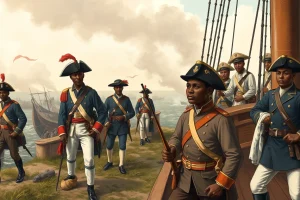
Commanding the 1st Brigade of Jacob Brown’s Left Division, Scott established a rigorous training camp near Buffalo, New York, in the spring of 1814. For ten weeks he drilled his regulars using a modern French infantry manual and enforced strict standards of sanitation and appearance. On July 5, 1814, his brigade achieved a decisive victory at the Battle of Chippawa, where American regulars fought on equal terms with British regulars. On July 25, at the Battle of Lundy’s Lane, Scott’s brigade attacked a strong British position; he was severely wounded in the left shoulder and was forced to leave the field. He received a brevet promotion to major general for his valor but saw no further combat in the war.
Why It Matters
Scott’s performance in the War of 1812 elevated him to prominence and helped restore the reputation of the American regular army after early defeats. His training methods at Buffalo were a landmark in American military professionalism, demonstrating that disciplined and well-led troops could stand up to British veterans. His victories at Chippawa and Lundy’s Lane, alongside fellow officers like Jacob Brown, contributed to a sense of military achievement despite the war’s inconclusive overall outcome. Historians credit Scott’s example with influencing later army reforms, including standard drill regulations and a more merit-based officer corps. For Scott personally, the war launched a career that would make him the commanding general of the United States Army and a leading figure in American military affairs until the Civil War.
Early Life
Winfield Scott was born on June 13, 1786, at Laurel Branch, his father’s plantation in Dinwiddie County, Virginia. His father, a captain in the Revolutionary War, died when Scott was young, and his mother died when he was seventeen. After studying at the College of William and Mary and apprenticing in law, Scott joined a local militia cavalry troop in 1807, drawn to military service after participating in an action against a British vessel. His family connections and ambition led to a commission as captain in the U.S. Army’s Light Artillery in May 1808.
Role Before the War
Before the War of 1812, Scott served in New Orleans under General James Wilkinson, whom he publicly criticized as a traitor and scoundrel. Court-martialed in January 1810, he was suspended for a year. Scott used this time to read European military texts, including drill manuals and works on military organization, which became the foundation of his later professional expertise. By 1812, he had returned to service and was promoted to lieutenant colonel in July, shortly after the declaration of war.
Role During the War
Scott’s war experience was defined by his insistence on discipline and training. He drilled his own regiment, the 2nd Artillery, into one of the best-prepared units in the army. His performance at Queenston Heights, though a loss, earned him recognition from superiors and a promotion to colonel. As a brigade commander in 1814, he conducted the most intensive training program the U.S. Army had yet seen. His leadership at Chippawa and Lundy’s Lane solidified his reputation as a fighting general who also understood the importance of professionalism.
Major Actions
Scott’s key engagements were Queenston Heights (October 13, 1812), where he was captured; Fort George (May 1813), where he led the amphibious assault; Chippawa (July 5, 1814), where his brigade broke a British regular formation; and Lundy’s Lane (July 25, 1814), where he attacked a strong British defensive line and was wounded. After the latter battle, he was brevetted major general for his conduct.
Contemporary Accounts
Contemporary observers often noted Scott’s height (over six feet six inches) and his insistence on military etiquette. British officers expressed respect for the discipline of his brigade at Chippawa. Fellow American officers, including Jacob Brown, praised Scott’s energy and tactical skill. His own reports and letters, later compiled in his memoir, provide a detailed but self-aware account of his role in the war.
Later Life
After the war, Scott continued his military career, serving in various commands and missions, including the Black Hawk War, the Nullification Crisis, the Second Seminole War, and the Mexican-American War, where he commanded the capture of Mexico City. He became commanding general of the U.S. Army in 1841 and remained in that role until 1861. He wrote the army’s first standard drill regulations and helped establish the service’s modern foundations. He died in 1866 at West Point, New York.
Historical Legacy
Historians view Scott as one of the most important American military figures of the early republic. His War of 1812 experience is frequently cited as the moment when the U.S. Army began to professionalize, moving from amateur leadership to a more disciplined and effective force. His victories at Chippawa and Lundy’s Lane are sometimes called the first time American regulars matched British regulars in open battle. Scott’s legacy is also complicated by his later involvement in the enforcement of Indian removal, including the Trail of Tears, which modern historians assess critically.
Primary Sources
The most important primary source is Winfield Scott’s own memoir, Memoirs of Lieut.-General Scott, LL.D. (1864), which covers his wartime experiences in detail. His official letters and reports are held in the National Archives and are reproduced in the collected papers of the War Department. The battle reports of American commanders, such as Jacob Brown and Henry Dearborn, provide contemporary accounts of Scott’s actions. British and Canadian sources, including the orderly books of the British units at Chippawa and Lundy’s Lane, offer perspective on the opposing side. Caution is needed when using Scott’s memoir, as he wrote it decades later with a clear desire to shape his own legacy.
Further Reading
- Hickey, Donald R. The War of 1812: A Forgotten Conflict. University of Illinois Press, 1989.
- Johnson, Timothy D. Winfield Scott: The Quest for Military Glory. University Press of Kansas, 1998.
- Rauch, Steven J. The Campaign of 1812. U.S. Army Center of Military History, 2013.
- American Battlefield Trust. “Winfield Scott in the War of 1812.” Battlefields.org.
- Encyclopedia Virginia. “Winfield Scott (1786–1866).” encyclopediavirginia.org.
References
- American Battlefield Trust. “Winfield Scott in the War of 1812.” Accessed from https://www.battlefields.org/learn/articles/winfield-scott-war-1812.
- Encyclopedia Virginia. “Winfield Scott (1786–1866).” Accessed from https://encyclopediavirginia.org/entries/scott-winfield-1786-1866/.
- Rauch, Steven J. The Campaign of 1812. U.S. Army Center of Military History, 2013. Accessed from https://history.army.mil/Portals/143/Images/Publications/Publication%20By%20Title%20Images/C%20Pdf/CMH_Pub_74-2.pdf.
- WarHistory.org. “Winfield Scott.” Accessed from https://warhistory.org/article/winfield-scott.
- American History Central. “Winfield Scott.” Accessed from https://www.americanhistorycentral.com/entries/winfield-scott/.
FAQ
What was Winfield Scott's role at the Battle of Queenston Heights?
Scott volunteered to lead the assault after his commander was wounded. He fought bravely but was surrounded and forced to surrender to British and Mohawk forces.
How did Winfield Scott train his brigade in 1814?
He established a training camp near Buffalo, New York, where he drilled his regulars using a modern French infantry manual and enforced strict discipline and sanitation.
Why is Scott's victory at Chippawa historically significant?
It was one of the first times American regulars defeated British regulars in a formal battle, demonstrating the effectiveness of Scott's training and professionalism.

Leave a Reply