

Short Answer
Identifying the regiment in which a soldier served during the War of 1812 (1812–1815) is a crucial step for genealogists and historians researching individuals who participated in the conflict. Regiments were the primary organizational units of both the United States Army and the British/Canadian forces, and knowing a soldier’s regiment unlocks access to service records, pension applications, and broader military context. This article explains how to determine that unit using archival sources in the United States, Canada, and the United Kingdom.
Historical Context
When the United States declared war on Great Britain on June 18, 1812, the U.S. Regular Army was a small force of about 10,000 men. Congress quickly authorized a larger force, eventually creating 46 infantry regiments, 4 artillery regiments, 2 dragoon regiments, and a regiment of riflemen. Recruiting for these regular regiments was generally based on state or regional districts; for example, the 12th, 20th, and 35th Infantry were raised primarily from Virginia. In addition to the regulars, hundreds of thousands of volunteers and state militia served for limited periods, many in units that were formally mustered into federal service. On the British side, the conflict was fought by British regular army regiments, Canadian provincial corps, local militia, and Indigenous allies. Each of these forces maintained its own records, which are dispersed across archives in the U.S., Canada, and the UK.
What Happened
During and after the war, military authorities generated a variety of records that today allow researchers to tie a soldier to a specific regiment. For the U.S. Regular Army, soldiers received discharge certificates upon completion of service, which typically listed their unit. The National Archives holds these certificates in the series Discharge Certificates and Miscellaneous Records Relating to the Discharge of Soldiers from the Regular Army, 1792–1815 (microfilm publication M1856). For volunteer and militia soldiers, the War Department later compiled service records from muster rolls, pay rolls, and descriptive rolls. These Compiled Military Service Records (CMSRs) exist for volunteer soldiers and are indexed by name in NARA’s M602, with state-specific indexes for Louisiana, North Carolina, and South Carolina. Pension applications, which were filed by veterans or their widows under a series of congressional acts, also contain unit information and often include supporting affidavits and discharge papers. Additionally, state archives hold militia rolls, pay lists, and correspondence that may document service in state units that never entered federal service.
Why It Matters
Knowing a soldier’s regiment is more than a biographical detail; it enables researchers to place that individual within the larger military narrative. A regiment’s identity determines which battles and campaigns the soldier likely participated in, what routes and theaters he may have traveled, and which commanders he served under. For genealogists, the regiment is often the key that unlocks a pension file, which can contain family relationships, birth dates, and other personal details. For historians, regimental rosters help analyze recruitment patterns, casualty rates, and the social composition of armies. Thus, identifying the regiment is an essential step in both individual-level and broad historical research.
Definition
In the context of the War of 1812, a regiment was a permanent military administrative unit typically comprising ten companies and commanded by a colonel. In the U.S. Regular Army, each infantry regiment had a specific numeric designation (e.g., 1st Infantry, 25th Infantry) and was often recruited from a particular state or region. Volunteer and militia regiments were usually numbered by state or local designation (e.g., “2nd New York Militia” or “1st Regiment of Ohio Volunteers”). For British and Canadian forces, regiments were regular line infantry units (e.g., 41st Foot, 49th Foot) or local provincial corps such as the Glengarry Light Infantry Fencibles and the Incorporated Militia of Upper Canada.
Background
The U.S. Army began the war with only ten infantry regiments, but by 1813 it had expanded to more than forty. Recruiting districts were assigned to each regiment, so that recruiters drew enlistees from defined geographic areas—though a regiment could contain men from other states as well. Volunteers and militia were raised by state governors under federal requisitions, and these units were often organized as infantry battalions or regiments. British forces in North America included both British regulars and Canadian militia. British regular regiments had long histories and were deployed to Canada from Britain; Canadian militia units were raised locally for defense. Understanding these distinctions helps researchers know where to look for records.
How It Worked
To identify a soldier’s regiment, begin with the known name and any biographical clues (place of residence, age, dates). Then follow these steps:
- Search published indexes and databases. The National Archives’ M602 index covers volunteer soldiers; the M313 index covers pension applications. FamilySearch and Ancestry have searchable databases for service and pension records. For British and Canadian soldiers, use the Library and Archives Canada’s online indexes, such as the Upper Canada Returns, Nominal Rolls and Paylists.
- Consult compiled service records. For U.S. volunteer soldiers, the CMSR can be obtained by providing NARA with the soldier’s name and the state in which he served. For regulars, discharge certificates (M1856) list the regiment and company.
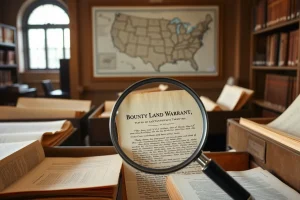
- Examine pension and bounty land files. Pension applications often state the soldier’s regiment, company, and period of service. These are available through NARA or on Fold3.
- Check state and local archives. Many state archives have militia rolls, pay lists, and correspondence. For example, the New York Public Library guide points to state repositories for militia never federalized.
- For British/Canadian service, search British records. The National Archives (UK) holds muster books and pay lists for British regular regiments, and the Royal Hospital Chelsea pension records include regiment information. Library and Archives Canada holds records of Canadian militia units and provincial corps.
If a soldier’s records are not found, consider that he may have served in a unit that was never formally mustered, or that records were lost. The National Archives’ War of 1812 discharge certificates page notes that many discharge certificates were given to the soldier and not retained by the War Department, so family papers may be the only source.
Competing Viewpoints
There is no scholarly dispute over the methods of genealogical identification, but historians and genealogists sometimes differ on the reliability of certain records. For example, compiled service records were created decades after the war and may contain errors or omissions. Pension files, while rich in detail, were generated decades later and may contain memory lapses or deliberate exaggeration. Militia rolls, which were local in origin, may not have been forwarded to federal authorities. Because of these discrepancies, researchers are advised to corroborate information from multiple sources. The FamilySearch wiki emphasizes that “all soldiers who served in the War of 1812 will be recorded in service records,” but warns that indexes are not complete and that some records are not online.
Role in the War of 1812
The regimental system structured the war’s manpower. American regulars formed the core of the army and fought in the major campaigns on the Niagara frontier and along the Atlantic coast. Volunteer and militia units provided the bulk of troops for short-term operations and local defense. British and Canadian regulars, militia, and allied Indigenous warriors together defended Canada and launched offensives into American territory. Without knowing the regiment, one cannot understand where a soldier was or what actions he likely witnessed. For instance, a soldier in the 25th U.S. Infantry, which was recruited from Pennsylvania and Maryland, would have fought at the Battle of Lundy’s Lane in 1814, whereas a member of the 41st British Foot saw action at Detroit and the Thames.
Consequences and Historical Interpretation
The ability to identify a soldier’s regiment has shaped modern historical writing on the War of 1812. By analyzing regimental rosters, historians have traced the movement of troops, the integration of volunteers and regulars, and the experiences of African American and Indigenous soldiers. For genealogists, this identification is often the first step toward recovering personal stories from pension files and other documents. The availability of digital indexes and records has made such research more accessible than ever, while also highlighting the limitations of existing records. Ongoing efforts to preserve and digitize state and local records will likely reveal more about the thousands of men who served outside of the federal archives.
Primary Sources
Key primary sources include the Discharge Certificates and Miscellaneous Records Relating to the Discharge of Soldiers from the Regular Army, 1792–1815 (NARA M1856), which provides unit lists for regular soldiers. The Compiled Military Service Records of Volunteer Soldiers Who Served During the War of 1812 (NARA M602) indexes volunteer service. Pension application files, indexed in M313, contain unit and personal data. For British/Canadian service, the War Office Muster Books and Pay Lists (WO 17) and the Library and Archives Canada’s Militia Records (RG 9) are essential. Each source has limitations: discharge certificates may lack details if the soldier did not keep them; compiled service records rely on incomplete original rolls; pension files are decades removed from service. Nevertheless, these records collectively allow for the identification of most soldiers’ regiments.
Further Reading
- Hickey, Donald R. The War of 1812: A Forgotten Conflict. University of Illinois Press, 1989.
- Schweitzer, George K. War of 1812 Genealogy. 1983.
- National Archives of the United States. “War of 1812 Discharge Certificates.” Accessed 2023. link
- National Archives of the United States. “Volunteer Military Service during the War of 1812 (1812–1815).” Genealogy Fair handout, 2010. PDF
- “Military Records for Genealogy Research: War of 1812.” New York Public Library Research Guides. link
- “Beginning War of 1812 Research.” FamilySearch Wiki. link
References
- National Archives. “War of 1812 Discharge Certificates.” https://www.archives.gov/research/military/war-of-1812/1812-discharge-certificates/discharge-certificates.html
- National Archives. “War of 1812 Discharge Certificates: List of Units and Subunits.” https://www.archives.gov/research/military/war-of-1812/1812-discharge-certificates/units-subunits.html
- National Archives. “Volunteer Military Service during the War of 1812 (1812–1815).” https://www.archives.gov/files/dc-metro/know-your-records/genealogy-fair/2012/handouts/war-of-1812-volunteer.pdf
- New York Public Library. “Military Records for Genealogy Research: War of 1812.” https://libguides.nypl.org/military-genealogy/1812
- FamilySearch. “Beginning War of 1812 Research.” https://www.familysearch.org/en/wiki/Beginning_War_of_1812_Research
FAQ
What is the fastest way to find a soldier's regiment?
Search the National Archives' M602 index for volunteer soldiers or M313 pension index. Both are available online at NARA and often on genealogy websites. For regulars, the M1856 discharge certificates microfilm can be searched by name.
Are there records for Canadian militia soldiers?
Yes. Library and Archives Canada holds muster rolls, pay lists, and nominal rolls for Upper Canada, Lower Canada, and other provincial corps. These are searchable online or in person.
What if a soldier has the same name as many others?
Use additional information such as residence, age, enlistment date, or known family members to narrow the search. Pension files often include affidavits from neighbors or comrades that help confirm identity.
Do all War of 1812 soldiers have discharge certificates?
No. Many soldiers served in volunteer or militia units and never received a formal discharge certificate. Compiled service records and pension files are the best evidence for them.


Leave a Reply