
Short Answer
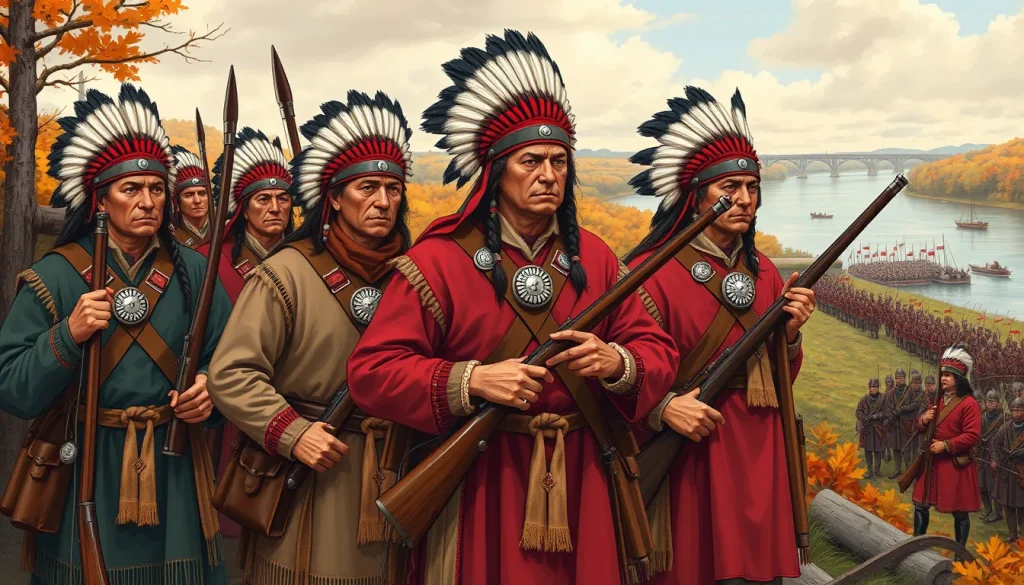
Grand River Warriors refers to the Indigenous fighters from the Six Nations of the Grand River, a confederacy of Haudenosaunee peoples who settled along the Grand River in Upper Canada after the American Revolution. During the War of 1812 (1812–1815), these warriors, under leaders such as John Norton and John Brant, fought as key allies of the British Crown, contributing decisively to several major engagements and the defense of the Niagara Peninsula. Their participation was both a continuation of longstanding alliances and a reflection of their own strategic interests against American expansion.
Historical Context
The Six Nations of the Grand River were descendants of the Haudenosaunee (Iroquois) Confederacy who had supported the British during the American Revolution. After Britain’s defeat, they migrated to Canada and were granted land along the Grand River by the Crown as recognition of their loyalty. This settlement created a powerful Indigenous community with strong ties to British authorities, formalized through the Covenant Chain alliance. The War of 1812 erupted from unresolved tensions between the United States and Britain, including British impressment of American sailors, trade restrictions, and American expansionist desires for Canadian territory. For the Grand River Warriors, the war represented an opportunity to defend their lands and sovereignty against American encroachment, while also fulfilling their treaty obligations to the British. Their decision to fight, however, was complicated by divisions within the Haudenosaunee, as some nations in the United States chose to ally with the Americans.
What Happened
When war was declared in June 1812, the British Indian Department, led by Colonel William Claus, actively recruited Grand River warriors. John Norton, a Mohawk chief of Scottish-Cherokee descent, and John Brant, son of Joseph Brant, emerged as prominent military leaders. Norton was commissioned as a captain by the British and raised a force of about 80 warriors initially, later expanding. The warriors saw their first major action at the Battle of Queenston Heights on October 13, 1812. After British General Isaac Brock was killed, Norton and his men, along with other Six Nations and Delaware warriors, held the American advance at bay for hours, allowing British reinforcements to arrive and secure victory. This engagement proved pivotal.
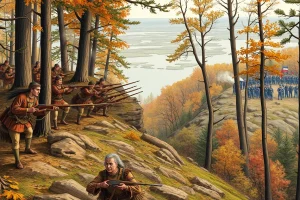
In 1813, Grand River warriors were active in raids and scouting along the Niagara frontier. They covered the British retreat to Burlington Heights after the fall of Fort George and provided critical intelligence prior to the successful night attack at the Battle of Stoney Creek. Their most celebrated success came at the Battle of Beaver Dams on June 24, 1813, where combined forces of Grand River, Kahnawake, and other Indigenous warriors ambushed and captured an American column, effectively ending American offensive operations in the Niagara Peninsula for that year. The warriors also participated in raids on American settlements, including the burning of Buffalo in December 1813, an action often attributed to warriors like John Smoke Johnson. Throughout the war, they served as scouts, skirmishers, and flankers, adapting their traditional warfare to the North American theater.
Why It Matters
The involvement of Grand River Warriors was strategically essential to the British defense of Upper Canada. Their knowledge of terrain, guerrilla tactics, and ability to intimidate American forces gave the outnumbered British regulars a critical edge. Without their contributions, key battles like Queenston Heights and Beaver Dams might have turned American victories, potentially altering the outcome of the war. The warriors also shaped the war’s societal impact: they reinforced Indigenous military power and reminded both the British and Americans of the importance of Indigenous alliances. For the Six Nations themselves, the war was a test of their resilience and a reaffirmation of their distinct status as allies, not subjects. In the long term, their participation strengthened their claim to land rights, though the subsequent peace at Ghent and American expansion would ultimately undermine Indigenous sovereignty. Historians increasingly recognize that the War of 1812 was not simply a conflict between Britain and the United States, but a war in which Indigenous peoples fought for their own survival and futures.
Definition
Grand River Warriors were the Indigenous fighters from the Six Nations of the Grand River, a confederacy of Mohawk, Oneida, Onondaga, Cayuga, Seneca, and Tuscarora peoples living on a large tract of land in southern Ontario. They were a distinct military and political force that operated as semi-autonomous allies of the British, often coordinating through the British Indian Department.
Background
The Six Nations of the Grand River had a history of military alliance with Britain dating back to the colonial era. After the American Revolution, they were exiled from their New York homelands and granted a landbase along the Grand River by Governor Haldimand in 1784. Their community, centered around villages like Brantford and Ohsweken, maintained strong ties to British authorities and missionaries. The leadership of Joseph Brant, and later his son John Brant, kept the alliance active. When war came in 1812, many Grand River warriors felt that supporting Britain was a natural extension of their treaty obligations and a means of resisting American encroachment. However, their loyalty was not monolithic; some Haudenosaunee on the American side, such as the Senecas at Buffalo Creek, allied with the United States, creating a divided Confederacy.
How It Worked
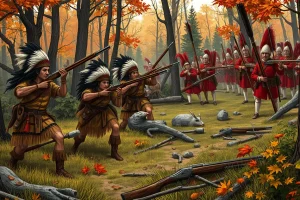
Grand River Warriors operated under their own war chiefs, such as John Norton and John Brant, while also receiving British commissions and direction. They were integrated into British military operations through the Indian Department, which served as a liaison. Recruitment was often by personal persuasion and clan ties. These warriors used traditional tactics—ambushes, flanking maneuvers, and psychological intimidation—rather than formal European-style linear formations. They traveled light, lived off the land, and served as excellent scouts and skirmishers. They were often deployed in conjunction with British regulars, militiamen, and other Indigenous allies, forming a combined-arms force. The British provided arms, ammunition, and supplies, while the warriors retained their autonomy and were not subject to the same discipline as regular troops.
Competing Viewpoints
Historical interpretation of the Grand River Warriors’ role varies. British and Canadian sources, especially in the 19th and early 20th centuries, often romanticized them as loyal subjects and brave defenders of Canada. They were seen as essential to victory, with some observers claiming they saved the day at Queenston Heights. American sources, by contrast, often portrayed them as savage enemies, emphasizing brutality and alleged atrocities, such as the burning of Buffalo. More recent scholarship, from Indigenous and academic perspectives, emphasizes the warriors’ agency: they were not mere auxiliaries but were fighting for their own lands, sovereignty, and survival. This view highlights the complex internal divisions within the Haudenosaunee, where relatives on opposite sides of the border found themselves in opposing armies. Additionally, questions about the warriors’ treatment by the British after the war—whether their services were adequately rewarded—remain a critical point of analysis, with some historians arguing that British promises were ultimately broken.
Role in the War of 1812
Grand River Warriors were engaged in almost every major campaign on the Niagara frontier from 1812 to 1814. Their most significant contributions included the Battle of Queenston Heights (October 1812) where they held the American advance; the Battle of Stoney Creek (June 1813) where they provided critical scouting and flanking; and the Battle of Beaver Dams (June 1813) where they captured an American force, a victory that was almost entirely due to Indigenous tactics. They also participated in the capture of Fort Niagara in December 1813, and the raids across the Niagara River. In 1814, they fought at Chippawa and Lundy’s Lane, facing Haudenosaunee warriors from Buffalo Creek on the American side. Throughout the war, they acted as scouts early in campaigns, screened British movements, and launched harassment attacks that kept American forces on edge. Their presence also inflated the apparent size of British forces, affecting American decision-making.
Consequences and Historical Interpretation
The immediate consequence of Grand River Warriors’ participation was the preservation of British control over Upper Canada and the failure of American invasion attempts. Their victories, especially at Beaver Dams, boosted British morale and demonstrated the effectiveness of Indigenous-led guerrilla warfare. However, the Treaty of Ghent (1814) returned territory to pre-war boundaries, and the British, focused on European affairs, increasingly abandoned their Indigenous allies. The Grand River community faced loss of land and influence in the post-war era. Long-term historical interpretation recognizes the war as a pivotal moment in Indigenous–settler relations. The warriors’ legacy is commemorated today through monuments, a national war memorial banner, and the survival of community memories. Historians now stress that the Grand River Warriors were not fighting for Britain alone but for their own future, and their wartime sacrifices helped define the distinct existence of the Six Nations of the Grand River within Canada.
Primary Sources
Primary sources for the Grand River Warriors include British military correspondence, reports from the Indian Department, and personal accounts. Notably, the Six Nations Legacy Consortium has produced a series of pamphlets, including War of 1812 Series (2): Grand River War Leaders (2012), which lists principle warriors. The exhibit Indigenous Contributions to the War of 1812 by Crown-Indigenous Relations and Northern Affairs Canada provides a detailed timeline and descriptions of battles. The Canadian Encyclopedia article on John Norton offers biographical details and battle accounts. Additionally, the National Museum of the American Indian’s magazine article Choosing Sides: Divided Loyalties in the War of 1812 by Rick Hill offers contemporary Indigenous perspectives. These sources, while secondary in some respects, draw on contemporary documents and oral traditions. Researchers may also consult the Six Nations Public Library and its digital archive for further material.
Further Reading
- Six Nations Legacy Consortium, War of 1812 Series (2): Grand River War Leaders, 2012. Available at Six Nations Public Library Digital Archive.
- Crown-Indigenous Relations and Northern Affairs Canada, Indigenous Contributions to the War of 1812, 2012. Online exhibit.
- Anthony Wilson-Smith, “John Norton and the War of 1812,” The Canadian Encyclopedia, 2016.
- Rick Hill, “Choosing Sides: Divided Loyalties in the War of 1812,” American Indian Magazine, Winter 2012.
References
- Six Nations Legacy Consortium, War of 1812 Series (2): Grand River War Leaders, Ohsweken: Six Nations Public Library, 2012. https://vitacollections.ca/sixnationsarchive/2690030/data
- Anthony Wilson-Smith, “John Norton and the War of 1812,” The Canadian Encyclopedia, December 5, 2016. https://thecanadianencyclopedia.ca/en/article/john-norton-and-the-war-of-1812
- Crown-Indigenous Relations and Northern Affairs Canada, “Exhibit: Indigenous Contributions to the War of 1812,” 2012. https://rcaanc-cirnac.gc.ca/eng/1348771334472/1607906032957
- Rick Hill, “Choosing Sides: Divided Loyalties in the War of 1812,” American Indian Magazine, Winter 2012. https://www.americanindianmagazine.org/story/choosing-sides-divided-loyalties-war-1812
- Crown-Indigenous Relations and Northern Affairs Canada, “Indigenous Contributions to the War of 1812: Theatres of War Map,” 2012. https://www.rcaanc-cirnac.gc.ca/eng/1338906996435/1607905615872
FAQ
Why did Grand River Warriors fight for the British?
They were motivated by longstanding alliances (Covenant Chain) and the desire to protect their lands from American expansion, as the United States sought to incorporate their territories.
What was the most important engagement for the Grand River Warriors?
The Battle of Beaver Dams in June 1813, where they, with other Indigenous warriors, ambushed and captured an American force, halting the American advance in the Niagara Peninsula.
Were there Haudenosaunee fighting on the American side?
Yes, some Haudenosaunee from New York, such as the Senecas, allied with the United States, leading to divisions within the Confederacy and instances of relatives fighting each other.

Leave a Reply