
Short Answer
The War of 1812, fought between the United States and Great Britain, is often remembered as a military stalemate. Yet for the Indigenous peoples of North America, particularly those of the Great Lakes and Ohio Valley, the conflict was an epochal catastrophe. They lost their principal leader, Tecumseh, their confederacy, and the land that had sustained them for generations. This article explains why Indigenous peoples were among the biggest losers of the war.
Historical Context
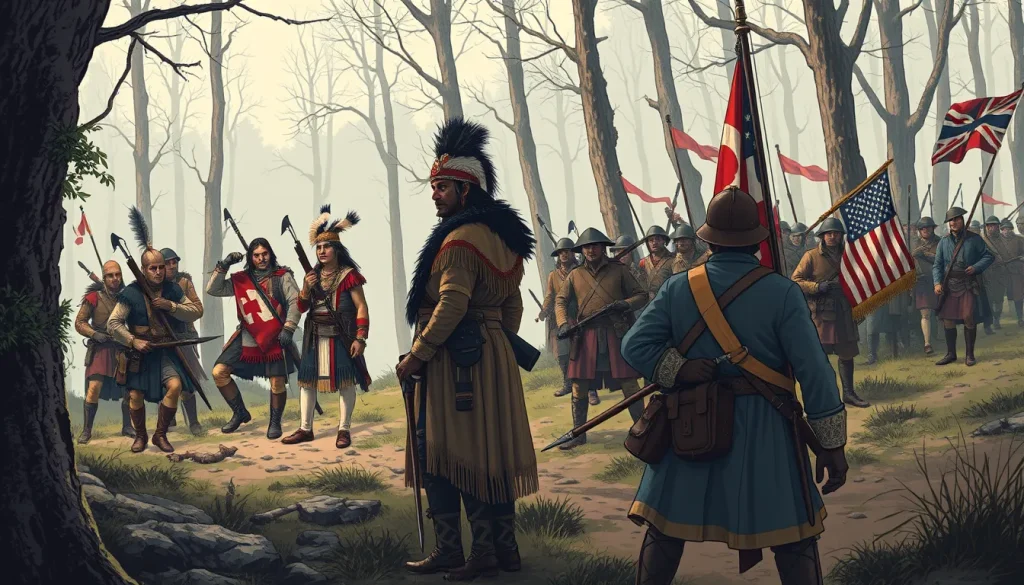
By the early nineteenth century, the United States was aggressively expanding westward, encroaching on Indigenous lands in the Ohio Valley and beyond. The Northwest Indian War had already demonstrated American willingness to dispossess Native peoples. In response, the Shawnee leader Tecumseh and his brother Tenskwatawa, known as the Prophet, built a pan-Indian confederacy aimed at collective resistance. They established a capital at Prophetstown on the Wabash River. The British, who controlled Canada, saw Indigenous nations as essential allies to defend their sparsely populated colony against American invasion. This mutual need created an alliance that would shape the war’s course.
What Happened
When the United States declared war on Britain in June 1812, Tecumseh immediately allied with the British. Indigenous warriors played pivotal roles in early British successes. At the surrender of Detroit in August 1812, Tecumseh’s warriors helped intimidate American general William Hull. At the Battle of Beaver Dams in June 1813, Caughnawaga and Mohawk warriors defeated an American force largely by themselves. The alliance, however, was fragile. On October 5, 1813, at the Battle of the Thames in Upper Canada, Tecumseh was killed fighting alongside the British. His death shattered the confederacy. In the South, the Creek War (1813–1814) saw internal divisions among the Creek nation, with the Red Sticks faction attacking American settlements. General Andrew Jackson retaliated, culminating in the Battle of Horseshoe Bend and the Treaty of Fort Jackson, which forced the Creek to cede over 20 million acres—about half of present-day Alabama. The Treaty of Ghent, signed in December 1814, technically promised to restore Indigenous lands to their pre-war status, but the provision was never enforced. The United States ignored Article IX, and Britain, having secured its own objectives, did not press the matter.
Why It Matters
The immediate consequence was the collapse of organized Indigenous resistance east of the Mississippi. Tecumseh’s confederacy was never rebuilt. The British abandoned their Native allies after the war, ceasing efforts to restrict American expansion. Within 35 years, the U.S. government forcibly removed many of the same nations involved in the war—including the Shawnee, Creek, Cherokee, and others—to lands west of the Mississippi. The Indian Removal Act of 1830 and the Trail of Tears were direct descendants of the military and diplomatic realities established at the war’s end. Historians agree that while the war is often called a draw between Britain and America, Indigenous peoples were unequivocal losers.
Definition
When we say Indigenous peoples were “the biggest losers” of the War of 1812, we mean that they suffered the greatest proportional losses in land, autonomy, and lives. Unlike the U.S. or Britain, which could claim strategic victories or at least salvage their interests, Indigenous nations lost the political and military means to resist American expansion. Their sovereignty was eroded, their populations displaced, and their futures fundamentally altered.
Background
Indigenous nations had been losing territory to American settlers since the colonial era. The Treaty of Greenville (1795), after the Battle of Fallen Timbers, ceded much of modern Ohio. Tecumseh argued that land was held in common by all Indigenous peoples, so no single nation could cede it. His confederacy, formed in the early 1800s, was the most ambitious effort to stop this trend. The War of 1812 provided a brief opportunity to enlist British support. However, the British alliance was built on mutual interest, not on a guarantee of Indigenous independence. When that interest faded, so did the support.
How It Worked
The alliance functioned through a series of local agreements. British commanders supplied arms, ammunition, and provisions to Indigenous warriors in exchange for military service. Indigenous leaders, in turn, used the British alliance to project military power against American settlements. The arrangement worked well in the early war years, as seen at Detroit and Queenston. But the partnership was unequal. British priorities were defensive—protecting Canada—while Indigenous peoples sought to halt American expansion permanently. This divergence became critical after the Battle of the Thames when British troops retreated and Tecumseh’s forces were overwhelmed. The death of Tecumseh removed the one figure capable of holding the confederacy together.
Competing Viewpoints
Historians generally agree that Indigenous peoples were the war’s principal losers, but they interpret the causes and implications differently. Some emphasize the British betrayal, arguing that the British used Indigenous allies as pawns and abandoned them once peace was made. Others focus on the internal divisions among Indigenous nations, such as the Creek civil war or the Mohawk split between pro-British and pro-American factions. A third viewpoint highlights American expansionism and the treaty system that followed, which legally rationalized land seizures. Regardless of emphasis, there is consensus that the war marked the end of credible Indigenous military resistance east of the Mississippi, making it a turning point in American westward expansion.
Role in the War of 1812
Indigenous peoples were not passive bystanders but active participants. Over two dozen nations fought in the conflict, from the Great Lakes to the Gulf Coast. Warrior bands provided critical reconnaissance, conducted raids, and often fought with greater effectiveness than their British allies. They helped secure victories such as Detroit, Beaver Dams, and the defense of Mackinac. In the South, the Red Sticks’ uprising drew American troops away from the Canadian front. Yet their contributions were often downplayed in contemporary accounts and later histories, which focused on white commanders. This neglect helped obscure the magnitude of their participation and later loss.
Consequences and Historical Interpretation
The most significant consequence was the rapid expansion of the United States into the Northwest and Southwest. After the war, the U.S. government negotiated over two hundred treaties with Indigenous nations, most of which resulted in massive land cessions. The Treaty of Ghent’s promise to restore Indigenous lands was never honored, and British indifference was a key factor. Later historians, such as Alan Taylor, have described the war as a “civil war” on the frontier, with Indigenous peoples as the clearest losers. The Indian Removal Act of 1830 and the Trail of Tears are seen as the direct legacies of Tecumseh’s defeat. The war’s outcome also shaped American national identity, as victories like New Orleans and the Thames were celebrated as proof of U.S. sovereignty, while the removal policies were justified as progress.
Primary Sources
Contemporary sources include the correspondence between Tecumseh and British officials, such as General Isaac Brock’s letters. The Treaty of Ghent itself, particularly Article IX, is central evidence of the promises made to Indigenous nations and the later violation of those promises. William Henry Harrison’s dispatches after the Battle of the Thames provide a U.S. perspective. Indigenous perspectives are rarer; however, the speeches of Tecumseh and his allies were recorded and circulated. The limitations of these sources include biases from Euro-American chroniclers, which makes it difficult to access Indigenous intentions and experiences without careful interpretation.
Further Reading
- Taylor, Alan. The Civil War of 1812: American Citizens, British Subjects, Irish Rebels, & Indian Allies. New York: Alfred A. Knopf, 2010.
- Sugden, John. Tecumseh: A Life. New York: Henry Holt, 1997.
- Edmunds, R. David. The Shawnee Prophet. Lincoln: University of Nebraska Press, 1983.
- National Park Service. “Indigenous Peoples – War of 1812.” https://www.nps.gov/subjects/warof1812/indigenous-peoples.htm.
- Fixico, Donald. “Tippecanoe and the Aftermath.” WETA, 2012. https://weta.org/sites/default/files/press/1812-Essay-NativeREDUCED.pdf.
References
- National Park Service. “Indigenous Peoples – War of 1812.” Accessed 2024. https://nps.gov/subjects/warof1812/indigenous-peoples.htm.
- The War of 1812.org. “The Indigenous Experience – War of 1812.” Accessed 2024. https://thewarof1812.org/indigenous/.
- Fixico, Donald. “Tippecanoe and the Aftermath.” WETA, 2012. https://weta.org/sites/default/files/press/1812-Essay-NativeREDUCED.pdf.
- Taylor, Alan. The Civil War of 1812. New York: Knopf, 2010 (as referenced in source 2).
FAQ
What role did Indigenous peoples play in the War of 1812?
Indigenous nations fought on both sides, but the majority allied with Britain. They provided essential military support, including at Detroit, Queenston, Beaver Dams, and Mackinac. Their participation was crucial to early British successes but ultimately led to catastrophic losses.
Why did the Treaty of Ghent fail to protect Indigenous lands?
Article IX of the Treaty of Ghent promised to restore Indigenous peoples to their pre-war status, but it lacked any enforcement mechanism. The United States ignored it, and Britain, having achieved its primary goal of defending Canada, did not press the issue, effectively abandoning its Native allies.
How did the War of 1812 lead to the Trail of Tears?
The defeat of Tecumseh's confederacy and the collapse of British support removed the last significant obstacle to American westward expansion. Post-war treaties and removal policies, culminating in the Indian Removal Act of 1830, forced many eastern nations—including those who fought in the war—to relocate west, with tragic results like the Trail of Tears.


Leave a Reply