Short Answer
The War of 1812 tested the limits of press freedom in the young United States, as partisan newspapers clashed over the conflict with Great Britain. Censorship and news control during this period came less from formal government edicts than from mob violence, state-level obstruction, and the fierce political rivalry between Federalists and Democratic-Republicans. President James Madison, despite facing intense criticism from opposition newspapers, declined to revive the Sedition Act of 1798, allowing a contentious and at times violent public debate to unfold.
Historical Context
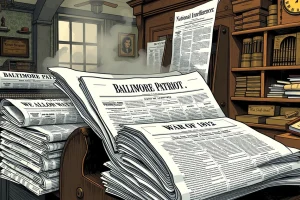
The First Amendment to the U.S. Constitution, ratified in 1791, protected freedom of the press from federal abridgment. Yet the Sedition Act of 1798, passed under Federalist President John Adams, had criminalized criticism of the government. That act expired in 1801, and the Democratic-Republican Party, which rose to power under Thomas Jefferson and James Madison, championed a broad reading of free expression. Madison himself had argued against the Sedition Act in the Virginia Resolution of 1798, calling it a violation of the First Amendment. By the time the United States declared war on Britain on June 18, 1812, the press was deeply entrenched in partisan politics, with newspapers like the Federalist Federal Republican and the Republican National Intelligencer serving as powerful voices for their respective camps.
What Happened
The war brought intense public debate, particularly in New England, where Federalists opposed the conflict almost unanimously. Newspapers such as the Boston Gazette and the Connecticut Mirror printed scathing attacks on President Madison and his war policy, using language that modern scholars have characterized as politically charged and often personally insulting. These newspapers argued that the war was unnecessary, unjust, and ruinous to American commerce. They also served as organs for state-level resistance, including the refusal of some New England governors to call out militia for federal service.
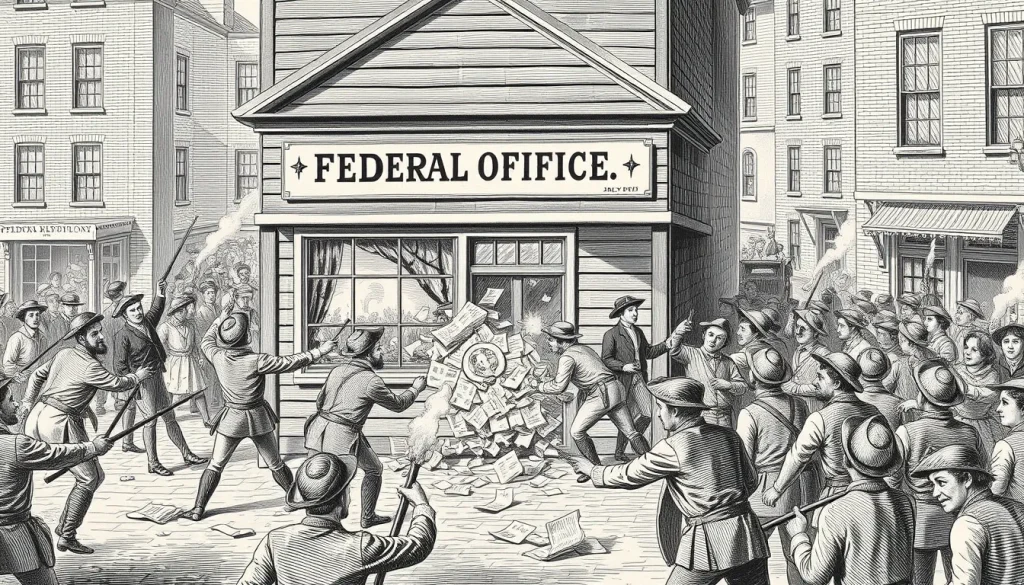
The most violent incident occurred in Baltimore in July 1812. Alexander Hanson, editor of the Federal Republican, had published an editorial denouncing the declaration of war as “unnecessary” and warning against intimidation. On July 27, a mob of war supporters destroyed the paper’s office. Hanson and a group of Federalist supporters, including Revolutionary War veteran Henry “Light Horse Harry” Lee, attempted to resume publication in a new building, but they were again attacked. The besieged defenders fired into the crowd, killing a man, and eventually surrendered to cavalry. Later that night, a mob broke into the jail where they were held, killing one defender and brutally beating others. Henry Lee was crippled for life, and James Lingan, another veteran, died. Hanson survived but was permanently injured. The riots shocked the nation and became a rallying point for Federalists, who blamed Republicans for inciting mob rule.

While no federal censorship law was enacted during the war, there were incidents of state and military interference. In New Orleans in 1815, after the Battle of New Orleans (fought after the peace treaty was signed), General Andrew Jackson declared martial law and suppressed a newspaper, the Louisiana Courier, whose editor criticized him. Jackson also had a state legislator arrested for seditious remarks. These actions, however, were taken without direct authorization from President Madison and were later condemned as excessive.
President Madison, despite his frustration with the Federalist press, resisted calls to suppress it. In letters to Thomas Jefferson and others, he complained of “the seditious opposition in Massachusetts and Connecticut” and accused Federalist leaders of seeking power, but he took no formal steps to censor them. This restraint is often credited with strengthening the tradition of press freedom in the United States.
Why It Matters
The censorship and news control controversies of the War of 1812 had immediate effects on public opinion and wartime policy. Federalist opposition, amplified in the press, contributed to logistical difficulties in raising troops and supplies in New England and encouraged British hopes of a divided United States. The violence in Baltimore became a symbol of partisan excess and a warning about the dangers of war fever. In the longer term, Madison’s decision not to reinstate sedition laws set a precedent for tolerating wartime dissent, influencing later debates during the Civil War and World War I. Historians have also noted that the intense press partisanship of the era actually contributed to a more informed and engaged citizenry, as newspapers provided detailed coverage of battles, policies, and political debates.
Definition
In the context of the War of 1812, censorship refers to the suppression or restraint of expression, whether through laws, military orders, or extralegal actions. News control encompasses the deliberate shaping, restriction, or manipulation of information by governments, elites, or mobs. During this period, censorship was practiced primarily through intimidation, property destruction, and occasional military decrees, rather than through federal legislation.
Background
The legal and political framework for press freedom in the early republic was still being defined. The Sedition Act had lapsed but its memory loomed large. Jefferson’s election in 1800 was partly a reaction to Federalist overreach, and Madison’s administration inherited a strong presumption against prior restraints. Newspapers were highly partisan, often subsidized by political parties or individual politicians, and their influence was felt in elections and public discourse. The war heightened these tensions, as Federalists in New England saw the conflict as a Republican scheme to ruin their trade with Britain.
How It Worked
Censorship operated through several mechanisms. State governments, particularly in Federalist New England, used their constitutional powers to obstruct federal war measures, which indirectly stifled Republican propaganda. Mobs, often incited by local politicians, destroyed opposition printing presses, as in Baltimore. Economic pressure was also common: advertisers and subscribers could withdraw support from papers deemed unpatriotic. On a few occasions, military authorities imposed direct censorship, as Jackson did in New Orleans. However, there was no systematic national policy, and the federal government generally allowed even the most virulent attacks to be published.
Competing Viewpoints
Federalist editors argued that their criticism of the war was a patriotic duty, grounded in the First Amendment and the tradition of English liberty. They attacked Madison as a tyrant and accused Republicans of trying to destroy dissent. Republicans, in turn, saw Federalist opposition as tantamount to treason, arguing that the war was necessary to defend American sovereignty against British impressment and restrictions on trade. Some Republicans even celebrated the destruction of the Federal Republican as a legitimate act of popular justice. President Madison, however, maintained that the remedy for harmful speech was more speech, not government suppression. Later historians have viewed Madison’s restraint as a crucial precedent for civil liberties during wartime.
Role in the War of 1812
The partisan press directly influenced the war effort. Federalist newspapers in New England discouraged enlistment, questioned the legality of the war, and even suggested secession. This opposition hampered recruitment and made the Madison administration’s task more difficult. Conversely, Republican papers celebrated American naval victories and rallied support for the war in other regions. The press also shaped international perceptions, as British officials monitored American newspapers to gauge public morale. The news control debates forced the administration to justify its policies publicly, contributing to a more robust democratic discourse.
Consequences and Historical Interpretation
The War of 1812’s experience with censorship and news control left a lasting legacy. It demonstrated that popular passions, not just government power, could suppress dissent. The absence of federal censorship during the war strengthened the idea that the First Amendment protected even unpopular speech. Scholars have argued that Madison’s restraint, in contrast to the Sedition Act era, helped institutionalize a culture of free expression. The Baltimore riots, meanwhile, became a cautionary tale about mob rule. Historians have also noted that the period’s partisan press was, in its own way, a model of engaged citizenship, as newspapers aggressively debated the most important issues of the day.
Primary Sources
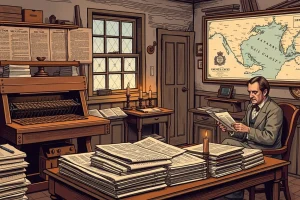
Key primary sources include the Federal Republican (Baltimore), which published Hanson’s editorials and accounts of the riots; the Boston Gazette and Connecticut Mirror for Federalist opposition; and the National Intelligencer for the administration’s perspective. James Madison’s personal letters, especially those to Thomas Jefferson and Wilson Cary Nicholas, reveal his views on the “seditious” opposition in New England. Maryland’s state archives also preserve many newspaper issues and court records from the period. These sources are invaluable for understanding the interplay between press and policy during the war.
Further Reading
- Brookhiser, Richard. “Fighting Words Flew When the Nation Was New.” HistoryNet, 2017.
- Rudanko, Juhani. “Attacks on the Madison Administration in Federalist Newspapers during the War of 1812.” Journal of Historical Pragmatics, 2011.
- Wittes, Benjamin, and Ritika Singh. “Executive Power, Civil Liberties, and the War of 1812.” Lawfare, 2012.
- Maryland State Archives. “Glorious News!: How Maryland Newspapers Reported the War of 1812.”
References
- EBSCO Research Starters, “Censorship and the War of 1812.” https://www.ebsco.com/research-starters/military-history-and-science/censorship-and-war-1812/
- Rudanko, Juhani. “[T]his most unnecessary, unjust, and disgraceful war”: Attacks on the Madison Administration in Federalist newspapers during the War of 1812. Journal of Historical Pragmatics 12:1/2 (2011). https://benjamins.com/catalog/jhp.12.1-2.04rud
- Wittes, Benjamin, and Ritika Singh. “Executive Power, Civil Liberties, and the War of 1812.” Lawfare, March 29, 2012. https://www.lawfaremedia.org/article/executive-power-civil-liberties-and-war-1812
- Maryland State Archives. “Glorious News!: How Maryland Newspapers Reported the War of 1812.” https://msa.maryland.gov/msa/speccol/sc5500/sc5572/000001/000000/000191/images/glorious_news_msa.pdf
- Brookhiser, Richard. “Fighting Words Flew When the Nation Was New.” HistoryNet, September 29, 2017. https://historynet.com/fighting-words-flew-nation-new/
FAQ
Did President Madison censor the press during the War of 1812?
No, Madison did not enact formal censorship laws. He resisted calls to suppress Federalist newspapers, despite their harsh attacks on his policies.
What happened during the Baltimore riots of 1812?
Mobs destroyed the offices of the Federalist newspaper Federal Republican, and later attacks on the editor and his supporters led to several deaths and serious injuries.
How did the Federalist press oppose the War of 1812?
Federalist newspapers in New England and elsewhere published editorials denouncing the war as unnecessary and ruinous, argued against federal war measures, and called for peaceful resistance.


Leave a Reply