
Short Answer
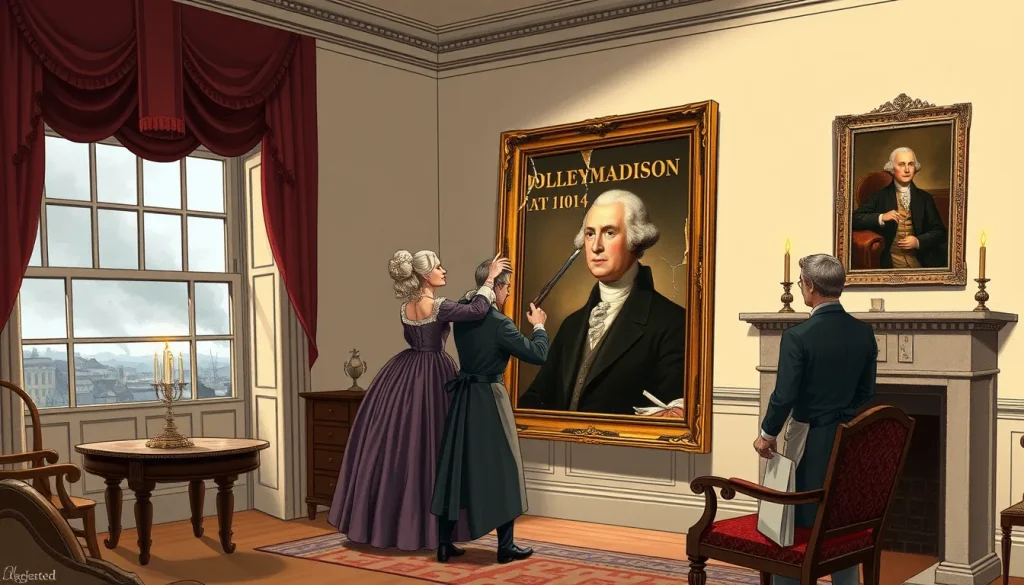
Dolley Madison, the wife of President James Madison, is historically celebrated for her role during the Burning of Washington on August 24, 1814, when British forces captured and set fire to the capital city of the United States. Her actions in saving a Gilbert Stuart portrait of George Washington became a symbol of American resilience and defined her legacy as a courageous first lady. This article examines the events of that day, her personal account, and the broader context of the War of 1812.
Historical Context
The Burning of Washington occurred during the War of 1812, a conflict between the United States and Great Britain arising from issues such as impressment of American sailors, trade restrictions, and British support for Indigenous resistance. By 1814, the war had reached a critical stage. A British force, having defeated Napoleon in Europe, was able to deploy troops to North America. Rear Admiral George Cockburn and Major General Robert Ross led a naval and military expedition that sailed into the Chesapeake Bay, and after defeating American forces at the Battle of Bladensburg, Maryland, on August 24, 1814, they marched into Washington, D.C. The city was unprepared for defense, and government officials, including President Madison, were forced to flee.
What Happened
On the morning of August 24, 1814, Dolley Madison remained at the White House (then called the President’s House) while her husband, President James Madison, had gone to the front near Bladensburg. She had received word that the British were approaching and instructions to leave if necessary. As American forces retreated, she oversaw the packing of cabinet papers and valuable items. With the help of servants and others, she saved a life-sized portrait of George Washington by Gilbert Stuart, ordering the frame to be broken to remove the canvas. Shortly thereafter, she departed the city. British troops arrived and set fire to the White House, Capitol, and other public buildings. Dolley Madison later wrote a letter to her sister describing the events, which has become a primary source for the episode.
Why It Matters
The capture and burning of Washington was a humiliating defeat for the United States, yet Dolley Madison’s actions transformed the narrative from disaster to defiant courage. The rescue of the Washington portrait became a celebrated act of preservation, linking the first president’s legacy to the survival of the young republic. The event also prompted discussions about the location of the capital and fueled American determination to continue the war. In historical memory, Dolley Madison is often memorialized as a heroine who saved national treasures, though scholars also note the complexity of her position as an enslaver and the contributions of the enslaved individuals who assisted her.
Early Life
Dolley Payne was born on May 20, 1768, in Greensboro, North Carolina, into a Quaker family. She moved to Philadelphia as a child. She married John Todd in 1790, and they had two sons. In 1793, her husband and younger son died of yellow fever. A widow with a young son, she met and married James Madison in 1794.
Role Before the War
James Madison served as Secretary of State under Thomas Jefferson, and Dolley Madison acted as hostess for the widowed Jefferson. She became well known in Washington society. When Madison became president in 1809, Dolley established the role of first lady as a public figure, hosting social events and managing the President’s House.
Role During the War
During the War of 1812, Dolley Madison remained in Washington while her husband led the government. As British forces approached in August 1814, she organized the evacuation of valuable items and documents from the President’s House. Her determination to save the Washington portrait has become legendary.
Major Actions
Dolley Madison’s most significant act was saving the Gilbert Stuart portrait of George Washington. According to her account and later recollections, she ordered the frame to be broken and the canvas rolled and handed to two New Yorkers for safekeeping. She also packed other valuables and cabinet papers into trunks and a wagon. She refused to leave until the portrait was secured, and finally departed when American troops filled the roads.
Contemporary Accounts
Dolley Madison wrote a letter to her sister Anna describing the events. The letter, dated August 23-24, 1814, details the tension and her actions. Also, Paul Jennings, an enslaved man who worked in the White House, later wrote a memoir in 1865 that corroborated the rescue, noting that the steward and gardener assisted in breaking the frame.
Later Life
After the war, the Madisons returned to Montpelier, their Virginia plantation. James Madison died in 1836. Dolley Madison returned to Washington, D.C., where she lived until her death on July 12, 1849. She remained a beloved public figure.
Historical Legacy
Dolley Madison’s legacy is tied to the rescue of the portrait and her role in defining the first lady position. Historians recognize her courage but also address the contributions of the enslaved people who helped her. The portrait, now in the National Portrait Gallery, and the White House itself, serve as reminders of the burning of Washington and its place in American memory.
Primary Sources
The most direct primary source is Dolley Madison’s letter to her sister Anna, written on August 23-24, 1814. This letter is reproduced in the PBS educational resource and describes the events in her own words. Another account is the memoir of Paul Jennings, “A Colored Man’s Reminiscences of James Madison,” published in 1865. Also, British accounts exist, such as those by Lieutenant George Robert Gleig, who took part in the expedition.
Further Reading
- National Park Service, “Dolley Madison,” https://nps.gov/people/dolley-madison.htm
- George Washington’s Mount Vernon, “Dolley Madison Comes to the Rescue,” https://www.mountvernon.org/george-washington/artwork/dolley-madison-comes-to-the-rescue
- Anthony Pitch, The Burning of Washington (2000)
- Paul Jennings, A Colored Man’s Reminiscences of James Madison (1865)
References
- PBS, “1812EdGuide_V3” (PDF), https://bento.cdn.pbs.org/hostedbento-prod/filer_public/Warof1812/Classroom/Elementary/WhatWouldYouSave/DolleyLetter.pdf
- National Park Service, “Dolley Madison,” accessed 2023, https://nps.gov/people/dolley-madison.htm
- George Washington’s Mount Vernon, “Dolley Madison Comes to the Rescue,” https://www.mountvernon.org/george-washington/artwork/dolley-madison-comes-to-the-rescue
- National Women’s History Museum, “The First Ladies: Dolley Madison,” https://www.womenshistory.org/articles/first-ladies-dolley-madison
FAQ
What did Dolley Madison save from the White House fire?
She saved a large portrait of George Washington by Gilbert Stuart, known as the Lansdowne portrait, along with cabinet papers and other valuables.
Why did Dolley Madison stay at the White House so long?
She waited for her husband, President Madison, to arrive, and insisted on securing the Washington portrait before leaving when the British were imminent.
Who helped Dolley Madison rescue the portrait?
White House steward Jean-Pierre Sioussat and gardener Thomas McGaw, along with two New Yorkers, Jacob Barker and Robert G.L. De Peyster, assisted in removing the painting.
Leave a Reply