

Short Answer
War of 1812 pension applications are federal records created when veterans, widows, and heirs applied for benefits based on military service during the 1812–1815 conflict. These files often include personal details such as age, residence, marriage dates, and service history, making them invaluable for genealogical and historical research. This article explains the nature of these records and the step-by-step process to locate and access them, both online and at the National Archives.
Historical Context
The United States government authorized pensions for disabled veterans and the widows and orphans of men killed in service during the War of 1812 under acts of 1813 and 1816, modeled on earlier Revolutionary War provisions. However, these early benefits required proof of service-connected injury or death, and few claims were filed. Broad pension legislation came later: the Act of February 14, 1871 (16 Stat. 411) granted pensions to surviving veterans who had served at least 60 days and received an honorable discharge, and to their widows if the marriage occurred before the Treaty of Ghent ratification on February 17, 1815. The Act of March 9, 1878 (20 Stat. 27) extended eligibility to those who served 14 days or in any engagement, and removed the marriage-date restriction for widows. Between 1871 and the early 1900s, nearly 100,000 applications were submitted, creating a rich archival resource.
What Happened
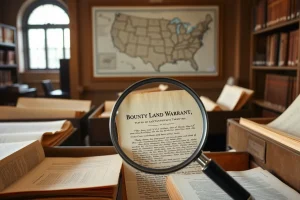
Applicants submitted pension claims to the U.S. Pension Office, providing proof of service through muster rolls, affidavits, and sometimes family records. Each file was given a claim number and placed in an envelope with the veteran’s name, widow’s name if applicable, and service details. The files, now held in Record Group 15 at the National Archives and Records Administration (NARA), contain not only the application forms but also supporting documents: marriage certificates, birth records, death notices, family letters, and witness affidavits. For widows, the file often includes the widow’s maiden name, marriage date, and children’s names. For veterans, it may include dates and places of enlistment and discharge, rank, and unit. Some files were consolidated with bounty land warrant applications, which were separate but related claims for land grants authorized by acts of 1811, 1812, 1842, 1850, 1852, and 1855.
Why It Matters
These applications are a primary source for documenting the service of more than 450,000 volunteer soldiers and regular army personnel. They provide personal details often missing from official military records, which were incomplete for the War of 1812. For family historians, they can break through genealogical brick walls by revealing female ancestors, migration patterns, and family relationships. For historians, they illuminate the demographics of the American military, the long-term effects of the war on veterans, and the administrative history of federal pension policy. The records also reflect the changing social and political context of the late nineteenth century, when the aging veterans finally received recognition.
Definition
War of 1812 pension applications are the formal requests for federal financial support submitted by veterans, their widows, or heirs based on military or naval service during the War of 1812. They include evidence of eligibility and are distinct from bounty land warrant applications, though the two are sometimes combined. The files are indexed and searchable by veteran’s name.
Background
Before 1871, pensions were only for service-connected disability or death, as provided by acts of 1813 and 1816. Many veterans never applied because they were not disabled or their families did not qualify. The 1871 and 1878 acts opened pensions to all veterans and widows, leading to a surge of applications. The Pension Office created a systematic filing system, with each application assigned a file number. The index to these applications, known as National Archives Microfilm Publication M313, Index to War of 1812 Pension Application Files (102 rolls), reproduces the faces of the envelopes and cross-reference cards, allowing researchers to identify the correct file.
How It Worked
To find a pension application, researchers first consult the M313 index, either online or in microform. The index lists the veteran’s name, widow’s name if applicable, claim numbers, and service details. Once the file numbers are identified, the researcher can request the full file from NARA or access digitized copies. A significant portion of the pension files have been digitized through a partnership between NARA, the Federation of Genealogical Societies, and Ancestry/Fold3. As of 2024, about 86% of the files are available on Fold3.com, free to search and view. FamilySearch.org also provides online indexes and some images. For files not digitized, researchers can order copies using NATF Form 85 or the online ordering system at eservices.archives.gov. In-person research is possible at the National Archives Building in Washington, DC.
Competing Viewpoints
Historians and genealogists sometimes debate the reliability of the information in pension files. Because applicants had to prove their service, they sometimes exaggerated or misremembered details. Affidavits from comrades could be biased. Widows’ applications required proof of marriage, which might be lacking if records were lost; they might use testimony that was not always accurate. Additionally, the records are one-sided—they represent only those who applied, not all veterans. Some researchers caution that the absence of a file does not mean a person did not serve. However, cross-referencing with compiled military service records and bounty land warrants can verify most claims.
Role in the War of 1812
These applications document the service of the diverse American forces: regular army, state militia, volunteers, and naval personnel. They provide evidence of enlistment and discharge dates, units, and sometimes specific battles or campaigns. They also illuminate the home front, as widows and children sought benefits. For the war itself, the files are a retrospective record created years later; they are not contemporary accounts, but they preserve the memories of participants and their families.
Consequences and Historical Interpretation
The pension files have shaped historical understanding of the War of 1812 by offering personal narratives from the rank and file. They have been used to study soldier health, migration, veteran mortality, and the economic impact of the war. The late nineteenth-century pension legislation also reflects the political power of veterans’ organizations and changing attitudes toward military service. The files remain a cornerstone for scholars and genealogists, with new digitization projects making them more accessible.
Primary Sources
The primary sources for finding pension applications are the index and the application files themselves. The index is available as NARA microfilm publication M313, now digitized on Ancestry, FamilySearch, and the National Archives Catalog. The application files, ca. 1871–1900, are in Record Group 15, Records of the Veterans Administration, and are available for many veterans on Fold3.com. For veterans who received bounty land, the related bounty land warrant application files and surrendered warrant files can provide additional evidence. Compiled military service records in Record Group 94 (M602 index) corroborate service details. These records are useful but should be evaluated critically for biases and omissions.
Further Reading
- War of 1812 Pension and Bounty Land Warrants by Lloyd deWitt Bockstruck (2021) – a comprehensive guide to the records.
- National Archives and Records Administration, “War of 1812 Military Service, Bounty Land, and Pension Records: A Step-by-Step Guide to Basic Federal Sources” by Claire Kluskens (2020).
- FamilySearch Research Wiki, “War of 1812 Pension Records.”
- Fold3 blog, “What Can You Learn From the War of 1812 Pension Files” (2024).
- The National Archives Catalog online at catalog.archives.gov for M313 and digitized files.
References
- National Archives and Records Administration, “Pre-World War I U.S. Army Pension and Bounty Land Applications,” accessed from https://www.archives.gov/research/military/army/pensions.
- FamilySearch, “How to Use War of 1812 Pension Files” (2018), accessed from https://www.familysearch.org/en/blog/how-to-use-war-of-1812-pension-files.
- National Archives, “Index to War of 1812 Pension Application Files,” M313 descriptive pamphlet (1960), accessed from https://www.archives.gov/files/research/military/army/dc/m313.pdf.
- Fold3, “What Can You Learn From the War of 1812 Pension Files” (2024), accessed from https://www.fold3.com/blog/what-can-you-learn-from-the-war-of-1812-pension-files/.
- Claire Kluskens, “War of 1812 Military Service, Bounty Land, and Pension Records: A Step-by-Step Guide to Basic Federal Sources,” NARA, 2020, accessed from https://twelvekey.com/wp-content/uploads/2020/05/war_of_1812_basic_guide_2020_05_19.pdf.
FAQ
Where can I find War of 1812 pension applications online?
The easiest way is to search the M313 index on FamilySearch or Ancestry, then view the digitized files on Fold3.com, which is free to search and view. Many files have been digitized by NARA and are also available in the National Archives Catalog.
What information is in a pension application file?
Files typically contain the veteran's name, age, place of residence, service dates, unit, and rank. Widow's applications include her maiden name, marriage date, and sometimes children's names. Supporting documents may include birth, marriage, and death records, affidavits, and family letters.
How do I request a pension file that is not digitized?
You can order copies using NATF Form 85 or online through NARA's eservices portal. Provide the veteran's name and any file number from the index. There is a fee for reproduction.


Leave a Reply