
Short Answer
Winfield Scott’s post–War of 1812 career transformed the American military and extended across four decades, from 1815 to his retirement in 1861. Having earned distinction during the Niagara campaigns, Scott leveraged his wartime experience to modernize the U.S. Army, command the victory in the Mexican War, and shape the strategy that guided the Union in the Civil War. His long service as Commanding General and his innovations in training, regulations, and tactics left an enduring imprint on American defense and foreign policy.
Historical Context
The War of 1812 exposed severe deficiencies in United States military organization: inadequate training, inexperienced officers, and poor logistic and tactical coordination. After the war, Congress reduced the Army and focused on coastal defense, but reformers like Scott pressed for a more professional standing force. The nation also faced internal challenges, including Indian resistance in the South and West, sectional tensions over tariffs, and border disputes with British North America. Scott’s post-war career must be understood within this environment of institutional rebuilding and territorial expansion, where the regular army increasingly became an instrument of national policy.
What Happened
Immediately after the war, Scott supervised the preparation of the Army’s first standardized drill regulations, published as Rules and Regulations for the Field Exercise and Maneuvers of Infantry (1815). He then traveled to Europe to study French military methods, and upon his return he helped establish schools for artillery and infantry and advocated for a professional officer corps. In 1817 he married Maria Mayo and settled in New Jersey, while commanding the Eastern Department.
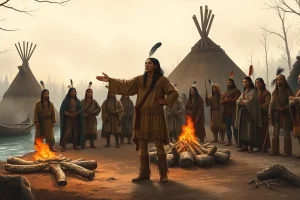
In the 1820s and 1830s, Scott’s duties broadened. He served on multiple Boards of Tactics, oversaw the development of army regulations, and in 1828 attempted to resign when passed over for overall command; the resignation was refused. During the Black Hawk War (1832) he moved troops but arrived after the decisive fighting. In 1832 he was dispatched to South Carolina during the Nullification Crisis, where he helped maintain federal authority without armed conflict. In 1836 he commanded federal forces in the Second Seminole War, an unsuccessful campaign that led to a court of inquiry; he was exonerated but remained controversial. In 1838 Scott supervised the forced removal of the Cherokee Nation from the southeastern states to present-day Oklahoma, an operation later known as the Trail of Tears, which involved significant suffering and death.
In 1839 Scott peacefully settled the Aroostook War border dispute between Maine and New Brunswick. In 1841 he became Commanding General of the United States Army, the highest military post. During the Mexican–American War (1846–1848), Scott conceived and led the amphibious landing at Veracruz and the subsequent march to Mexico City, capturing the capital in September 1847. The campaign is considered a masterpiece of military planning and execution. After the war, Scott returned to administrative duties, promoting professional education and modernizing the army. In 1852 he ran as the Whig Party’s presidential candidate, losing to Franklin Pierce. In 1859 he helped resolve the San Juan Island dispute with Britain.
When the Civil War broke out in 1861, Scott, aged 74 and in poor health, remained at the head of the army. He proposed the Anaconda Plan, a strategy to blockade Southern ports and control the Mississippi River to gradually suffocate the Confederacy. Though initially criticized, the plan was eventually adopted in broad outline. Physically unable to take the field, Scott resigned in November 1861 and was succeeded by George B. McClellan.
Why It Matters
Scott’s post–War of 1812 career was pivotal in converting the U.S. Army from an amateur force into a professional institution. His drill regulations remained in use through the Civil War, and his emphasis on discipline, education, and European methods shaped generations of officers, including Robert E. Lee, Ulysses S. Grant, and McClellan. The Mexican War campaign demonstrated his strategic and operational skill and elevated the United States’ international standing.
His role in the Trail of Tears is a morally complex legacy, illustrating how military power enforced federal Indian removal policies. His Anaconda Plan, although initially derided, became the strategic foundation for Union victory. Historians acknowledge Scott’s brilliant achievements but also his flaws—vanity, political ambition, and at times questionable judgment—making his legacy richly debated.
Early Life
Winfield Scott was born on June 13, 1786, at Laurel Branch in Dinwiddie County, Virginia. Orphaned as a teenager, he studied law at the College of William and Mary and in a Petersburg law office. In 1807, he enlisted in a cavalry troop and in 1808 was commissioned a captain in the regular artillery. His early career was marked by a court-martial for insubordination in 1810, leading to a one-year suspension.
Role Before the War
Scott served on staff duty in New Orleans before the war and was promoted to lieutenant colonel in July 1812. His pre-war experience was limited and marked by conflict with superiors, but it gave him a foundation in artillery and army administration.
Role During the War
During the War of 1812, Scott fought on the Niagara frontier. He was captured at Queenston Heights (October 1812), exchanged, and then participated in the capture of Fort George (May 1813), where he was wounded. Promoted to brigadier general in March 1814, Scott trained his brigade rigorously at Buffalo. He led it in the victories at the battles of Chippawa (July 1814) and Lundy’s Lane (July 1814), where he was severely wounded. He was brevetted major general for his actions. The war forged his belief in professional training and discipline.
Major Actions
After the war, Scott’s principal achievements included authoring the 1815 drill regulations, visiting Europe (1815–1816) to study military institutions, and commanding various departments. He served on the Board of Tactics multiple times and produced General Regulations for the Army; or Military Institutes (1821). Later, he handled the Nullification Crisis (1832–1833), led the Second Seminole War campaign (1836), and enforced Cherokee removal (1838). He peacefully resolved the Aroostook War (1839). As Commanding General from 1841, he developed a professional staff and advocated for the Military Academy at West Point. His crowning military achievement was the Mexican War campaign from Veracruz to Mexico City (1847). In 1852 he ran for president, and in 1859 he settled the San Juan Island boundary dispute.
Contemporary Accounts
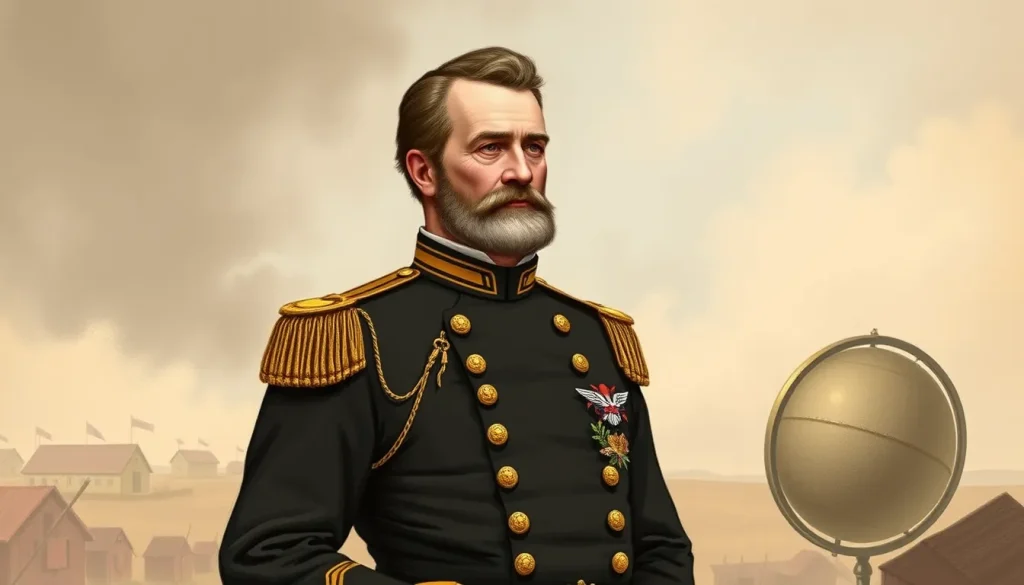
Scott’s insistence on strict discipline, elaborate uniforms, and ceremonial pomp earned him the nickname “Old Fuss and Feathers,” coined by his soldiers and the press. Contemporaries often portrayed him as brilliant but vain. Andrew Jackson and other political opponents criticized his aristocratic pretensions and his distrust of volunteers. However, his military skill was universally acknowledged. Officers who served under him praised his tact and organizational abilities, while Mexicans during the occupation reportedly offered him the dictatorship, which he declined.
Later Life
After retiring in 1861, Scott wrote his memoir, Memoirs of Lieut.-General Scott (1864), and resided at West Point. He died on May 29, 1866, and was buried at West Point National Cemetery. He had served under fourteen presidents and was the first U.S. soldier since George Washington to be promoted to lieutenant general, receiving that brevet in 1855.
Historical Legacy
Historians view Scott as the foremost American military figure between the War of 1812 and the Civil War. His professionalization efforts, the Mexican War campaign, and the Anaconda Plan are widely studied. Timothy D. Johnson’s biography portrays him as a “flawed genius” whose contributions shaped the army and the nation. At the same time, his role in Indian removal remains a subject of moral condemnation. His lasting impact is seen in the generation of Civil War generals who learned their craft under his tutelage.
Primary Sources
Key primary sources for Scott’s post-war career include:
- Rules and Regulations for the Field Exercise and Maneuvers of Infantry (1815), the official drill manual Scott authored.
- General Regulations for the Army; or Military Institutes (1821), a comprehensive system of army administration.
- Scott’s official letters and reports, particularly those from the Mexican War, preserved in the U.S. National Archives.
- His memoir, Memoirs of Lieut.-General Scott (1864), covering his life and career, though written from memory and with an eye to defending his reputation.
- Correspondence and court-martial records from 1810 and 1836 that illuminate his controversies.
Further Reading
- Timothy D. Johnson, Winfield Scott: The Quest for Military Glory (University Press of Kansas, 2014).
- John S. D. Eisenhower, Agent of Destiny: The Life and Times of General Winfield Scott (University of Oklahoma Press, 1997).
- Thomas G. Clemens, “Winfield Scott (1786–1866)” in Encyclopedia Virginia.
- American Battlefield Trust, “Winfield Scott” biography online.
- National Park Service, “Winfield Scott” page.
References
- American Battlefield Trust, “Winfield Scott,” https://www.battlefields.org/learn/biographies/winfield-scott.
- Timothy D. Johnson, Winfield Scott: The Quest for Military Glory (Lawrence: University Press of Kansas, 2014).
- National Park Service, “Winfield Scott,” https://www.nps.gov/people/winfield-scott.htm.
- WarHistory.org, “Winfield Scott,” https://warhistory.org/article/winfield-scott.
- Thomas G. Clemens, “Winfield Scott (1786–1866),” Encyclopedia Virginia, https://encyclopediavirginia.org/entries/scott-winfield-1786-1866/.
FAQ
What were Winfield Scott's main contributions after the War of 1812?
Scott standardized army drill, wrote regulations, professionalized the officer corps, led the Mexican War's decisive campaign, and devised the Anaconda Plan for the Civil War.
Did Winfield Scott participate in the Indian Removal policies?
Yes, in 1838 he oversaw the removal of the Cherokee Nation, a tragic event known as the Trail of Tears, carrying out orders from President Martin Van Buren.
Why is Scott called 'Old Fuss and Feathers'?
The nickname arose from his insistence on military discipline, meticulous regulations, and ornate uniforms, which some soldiers found excessive.

Leave a Reply