
Short Answer
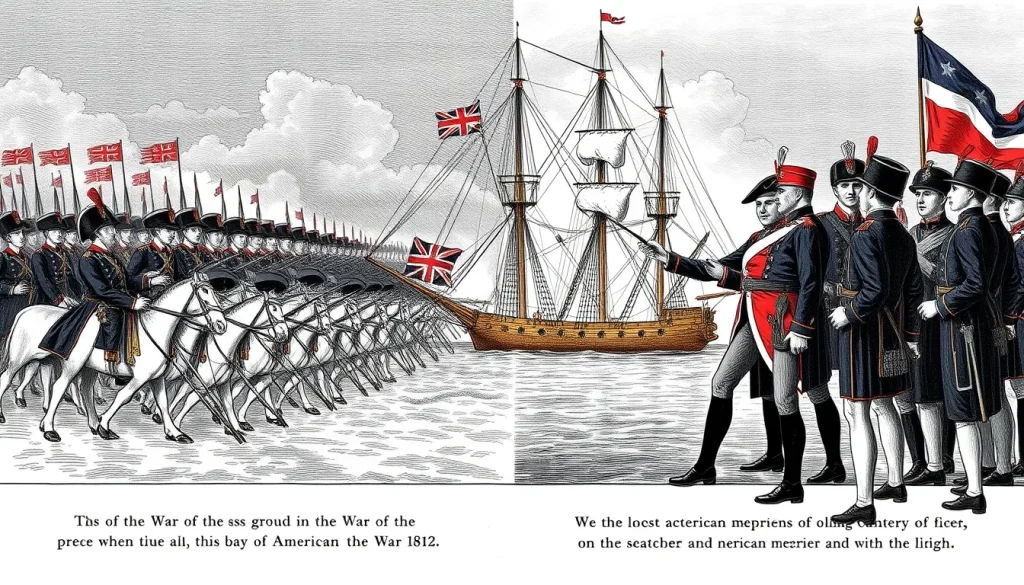
The War of 1812 (18 June 1812 – 17 February 1815) was a military conflict between the United States and Great Britain that coincided with the final years of the Napoleonic Wars (1803–1815). It was not formally part of the European coalition wars, but it was a direct outgrowth of Britain’s maritime policies adopted to wage economic warfare against Napoleonic France. This article examines the close relationship between the two conflicts and how historians have interpreted it.
Historical Context
The Napoleonic Wars were the final round of a century-long Anglo-French rivalry often called the Second Hundred Years’ War (1689–1815). After the Battle of Trafalgar (1805), Britain commanded the seas; after the Battle of Austerlitz (1805), France dominated the continent. With each power supreme in its element, they could only attack each other through trade warfare. This economic conflict ensnared neutral nations, especially the United States, which had become the leading neutral carrier in the Atlantic.
France issued the Berlin Decree (1806) and Milan Decree (1807), forbidding neutral trade with Britain. Britain responded with Orders-in-Council (1807, 1809) that required neutral ships to obtain licenses and call at British ports before trading with Europe. The Royal Navy also enforced a blockade of the European coast and practiced impressment—seizing sailors, many of them American citizens, from U.S. merchant vessels to man its fleet. Between 1803 and 1812, it is estimated that around 6,000 Americans were impressed.
These maritime policies were designed to weaken Napoleon, but they violated American neutral rights and sovereignty. The Chesapeake–Leopard Affair (1807) nearly brought war, and the U.S. retaliated with economic embargoes and non-intercourse acts, but these failed to change British policy. By 1811, tensions reached a boiling point, leading President James Madison to call Congress into session to prepare for war.
What Happened
From 1806 to 1812, the United States attempted to navigate the European trade war. Congress passed the Non-Importation Act (1806), the Embargo Act (1807), and the Non-Intercourse Act (1809), all to pressure Britain and France. Macon’s Bill No. 2 (1810) reopened trade with both belligerents but promised re-imposition of non-intercourse against whichever nation failed to respect neutral rights. Napoleon announced the revocation of the Berlin and Milan Decrees (though with conditions), leading Madison to re-impose non-intercourse against Britain in November 1810.
On 18 June 1812, after months of debate, the United States declared war on Great Britain. The declaration came just after the British government, under pressure from economic distress, had revoked the Orders-in-Council on 23 June 1812—news that had not yet reached America. The war was fought along the U.S.-Canadian frontier, the Atlantic coast, and the Gulf of Mexico. The Napoleonic Wars were at a critical juncture: Napoleon was invading Russia in 1812, and the British were fully engaged in Europe. The American declaration forced Britain to divert resources, but the main theater remained Europe.
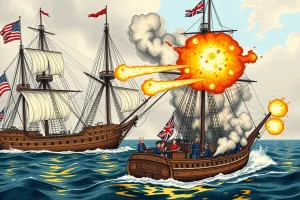
The war in North America saw invasions of Canada, naval battles on the Great Lakes and the Atlantic, and a British counterattack that burned Washington in 1814. By late 1814, both sides were exhausted and willing to negotiate. The Treaty of Ghent, signed on 24 December 1814, restored the status quo ante bellum. The treaty was ratified and took effect in February 1815, just weeks before Napoleon’s final defeat at Waterloo.
Why It Matters
The War of 1812 is often called the “second war of independence” in the United States, but it was also a sideshow to the Napoleonic Wars. Its causes were rooted in European conflicts, yet its consequences were unique to North America. For the United States, it affirmed national sovereignty and opened the era of the Monroe Doctrine. For Canadian colonies, it fostered a sense of unity against invasion. For Indigenous peoples, it was catastrophic, leading to the loss of land and British support. The war also influenced American politics and military policy for decades.
Historians interpret the war’s place in the Napoleonic Wars along a spectrum: some see it as a direct byproduct of European events, while others emphasize American expansionist motives. The majority view, supported by evidence from primary documents, is that the maritime disputes stemming from the Napoleonic Wars were the immediate catalysts. The peace negotiations, mediated in part by Russia, also tied the war’s end to European diplomacy. The timing—ending almost exactly with Napoleon’s final defeat—reinforces the connection.
Definition
The Napoleonic Wars were a series of conflicts between France, under Napoleon Bonaparte, and a shifting coalition of European states, including Britain, from 1803 to 1815. The War of 1812 was a separate Anglo-American conflict, but it arose from the same maritime policies that Britain used against France. To define the War of 1812 as “part of” the Napoleonic Wars means acknowledging that its causes and timing were deeply influenced by the larger European struggle, even though it was not a formal coalition war.
Background
The Anglo-French conflict had been underway for a century before the War of 1812. The French Revolutionary Wars (1792–1802) gave way to the Napoleonic Wars in 1803. Britain’s dominance at sea and France’s dominance on land forced a strategy of economic blockade. The United States, as the largest neutral trading nation, became a crucial supplier to both sides, but also a target of their decrees. The background includes the Louisiana Purchase (1803), which was motivated by Napoleon’s need for funds, and the U.S. desire to expand westward—a factor that added to American resentment against British support for Indigenous resistance.
How It Worked
The maritime warfare between Britain and France operated through blockades, decrees, and enforcement mechanisms. The British Orders-in-Council required neutral ships to obtain a license before trading with Europe, effectively controlling American commerce. The French decrees similarly attempted to seize British goods. British impressment served the immediate need for sailors, but it also asserted Britain’s view that seamen remained British subjects regardless of naturalization. These policies directly affected American ships, trade, and national pride. The U.S. government tried to negotiate and use economic coercion, but ultimately resorted to war to enforce its neutral rights.
Competing Viewpoints
Historians do not all agree on the extent to which the War of 1812 was “part of” the Napoleonic Wars. Some, like Donald Hickey, call it a “sideshow” in the Second Hundred Years’ War, emphasizing that American grievances were secondary to the main European theater. Others argue that the war was a distinct expression of American expansionism, citing the desire to annex Canada and Indian lands. A third view stresses the mutual interdependence: the war cannot be understood without reference to the Napoleonic conflict, and its outcome (Treaty of Ghent) was shaped by the European balance of power. The dominant consensus is that the maritime causes were primary, making the war a byproduct of the Napoleonic Wars.
Role in the War of 1812
The Napoleonic Wars were the immediate cause of the War of 1812. Impressment and the Orders-in-Council were direct consequences of Britain’s economic war against France. American efforts to remain neutral and trade freely were undermined by both belligerents, but British actions were perceived as more offensive because they occurred off American shores and involved seizure of American citizens. The war also affected the course of the Napoleonic Wars: the American declaration added pressure on Britain, forcing it to divert naval resources to protect Canada and its colonies, though the impact was limited. The War of 1812 ended as Napoleon was falling, and the Treaty of Ghent was negotiated with an eye to the European settlement.
Consequences and Historical Interpretation
Historically, the War of 1812 contributed to a growing sense of American national identity and the myth of victory, even though the outcome was a stalemate. For Canada, it inspired a nascent nationalism. For Indigenous peoples, it was a turning point in their loss of territory. In the broader context of the Napoleonic Wars, the war was a distraction for Britain but never shifted the balance in Europe. Modern historians use the relationship to explain both the causes and the timing of the war, and to show how global conflicts can have local repercussions.
Primary Sources
Key contemporary documents include: President James Madison’s War Message to Congress (1 June 1812), which cited impressment, neutral rights, and British involvement with Indigenous peoples as causes. The British Orders-in-Council (1807, 1809) and the French Berlin and Milan Decrees (1806–1807) are essential for understanding the trade restrictions. The Treaty of Ghent (24 December 1814) ended the war and returned to the status quo. Additionally, private diaries and letters from diplomats such as Albert Gallatin and John Quincy Adams illuminate the peace negotiations. These sources, while biased toward each nation’s position, provide a factual basis for the historical analysis.
Further Reading
- Hickey, Donald R. The War of 1812: A Forgotten Conflict. University of Illinois Press, 1989.
- Berton, Pierre. The Invasion of Canada and Flames Across the Border. McClelland & Stewart, 1980.
- Dudley, William S., ed. The Naval War of 1812: A Documentary History. Naval Historical Center, 1985.
- Stagg, J.C.A. Mr. Madison’s War: Politics, Diplomacy, and Warfare in the Early American Republic. Princeton University Press, 1983.
- U.S. Department of State, Office of the Historian. “War of 1812–1815”. history.state.gov.
References
- Hickey, Donald R. “1812: A sideshow in the ‘Second Hundred Years’ War?'” U.S. National Park Service. https://www.nps.gov/articles/1812-sideshow.htm
- U.S. Department of State, Office of the Historian. “War of 1812–1815”. https://history.state.gov/milestones/1801-1829/war-of-1812
- Marsh, James H. and Pierre Berton. “War of 1812”. The Canadian Encyclopedia. https://thecanadianencyclopedia.ca/en/article/war-of-1812
- “Causes of the War of 1812”. Smithsonian American Experience. https://americanexperience.si.edu/wp-content/uploads/2014/10/Causes-of-the-War-of-1812_.pdf
- “War of 1812”. Encyclopedia.com. https://www.encyclopedia.com/history/united-states-and-canada/us-history/war-1812
FAQ
Was the War of 1812 officially part of the Napoleonic Wars?
No. The War of 1812 was a separate conflict between the United States and Great Britain. However, it was caused by Britain's maritime policies during the Napoleonic Wars and ended almost simultaneously with Napoleon's defeat.
How did the Napoleonic Wars cause the War of 1812?
Britain's economic warfare against France, including the Orders-in-Council and the practice of impressment, directly violated American neutral rights. These actions, along with British support for Indigenous resistance to American expansion, drove the U.S. declaration of war in 1812.
Why do historians call it a 'sideshow'?
Many historians, such as Donald Hickey, describe the War of 1812 as a 'sideshow' because, from the British perspective, it was a secondary conflict with the United States, while their primary focus was on defeating Napoleonic France. The American maritime grievances were rooted in the European war but held little strategic consequence for Britain.

Leave a Reply