
Short Answer
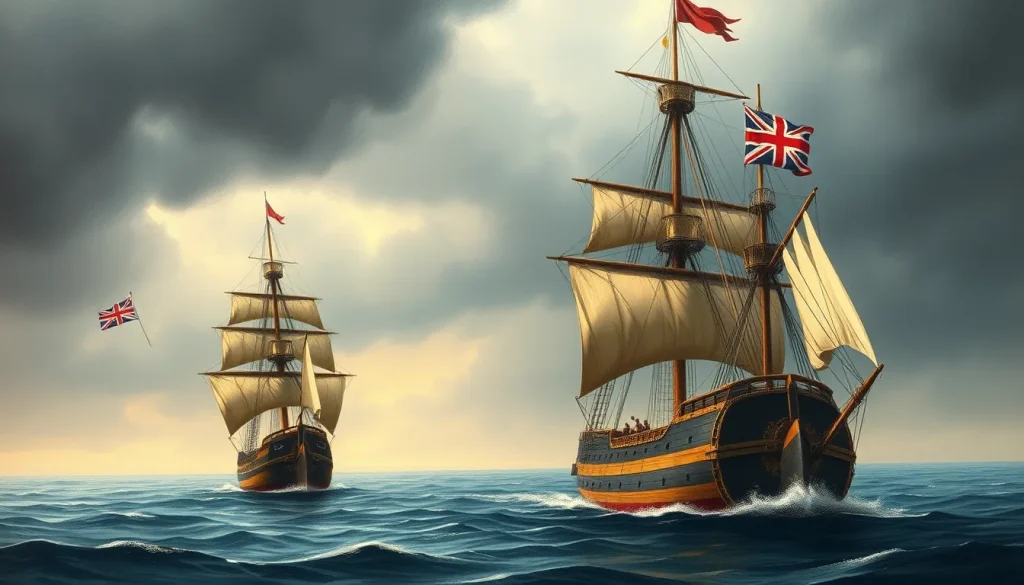
Neutral shipping during the Napoleonic Wars (1803–1815) refers to the maritime commerce carried on by nations not directly involved in the conflict, with the United States as the most prominent neutral. Both Britain and France, seeking to strangle each other’s trade, imposed restrictions that violated the rights of neutral vessels, leading to seizures, impressment, and economic warfare. This disruption of neutral trade became a central diplomatic grievance that culminated in the United States’ declaration of war against Britain in 1812.
Historical Context
The Napoleonic Wars were not only a military struggle but also an economic contest. Britain’s Royal Navy controlled the seas, while Napoleon sought to undermine Britain’s economy through the Continental System, a blockade designed to close European ports to British goods. Neutral nations, particularly the United States, profited by carrying goods between the belligerents and their colonies, but they also became targets of restrictive measures. The principle that a neutral could trade freely with any nation unless in contraband of war was challenged by belligerent interpretations, leading to legal and diplomatic conflicts. The United States, as a young republic reliant on trade, was especially vulnerable.
What Happened
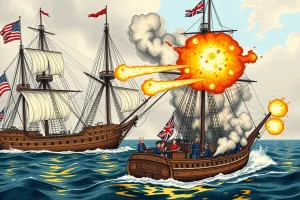
From 1803 onward, Britain and France issued a series of decrees and orders that escalated restrictions on neutral shipping. The British Essex decision (1805) and the Orders in Council (1806 and 1807) mandated that neutral ships trading with France or its allies were liable to seizure unless they had first called at a British port. In response, Napoleon issued the Berlin Decree (1806) and the Milan Decree (1807), declaring that any neutral ship that submitted to British search or touched at a British port would be subject to confiscation by France. American merchants, caught between these conflicting edicts, saw their ships and cargoes seized by both sides. The United States attempted to protect its rights through diplomatic negotiation, but also through economic coercion, such as the Embargo Act of 1807, which banned all American trade with foreign nations. The embargo proved detrimental to the American economy and was replaced by the Non-Intercourse Act (1809) and Macon’s Bill No. 2 (1810), but the underlying issue remained unresolved. Maritime grievances, including the impressment of American sailors into the Royal Navy and the disruption of neutral commerce, were among the main American justifications for declaring war on Britain on June 18, 1812.
Why It Matters
The immediate effects of neutral shipping disputes were economic loss, diplomatic crisis, and the breakdown of Anglo-American relations. The long-term consequences included the War of 1812 itself, which, while ending in a stalemate, affirmed the United States’ independence and led to a period of improved Anglo-American trade. Historians have debated the relative importance of maritime issues versus other factors such as frontier expansion and Indian policy in causing the war. For neutral maritime states like Sweden and Denmark, the same conflicts shaped their early-modern neutrality and later legal doctrine. The episode also contributed to the development of international law regarding neutrality, particularly the principle that free ships make free goods, though it was not fully codified until later treaties.
Definition
Neutral shipping is the carriage of goods and passengers by vessels flying the flag of a state that is not party to a war. Under international law, neutral ships have the right to trade with belligerents, subject to rules on contraband, blockade, and neutral duties. During the Napoleonic Wars, these rights were frequently violated as Britain and France attempted to use economic warfare to force each other into submission.
Background
The legal foundation for neutral commerce rested on customary maritime law and bilateral treaties. The 1756 Rule, established during the Seven Years’ War, held that a neutral could not trade in wartime with a belligerent’s colonies if that trade was closed in peacetime. The British Orders in Council extended this principle, requiring neutral ships to stop at British ports before proceeding to enemy destinations—a practice known as the break of voyage. France, lacking naval supremacy, used decrees to threaten any ship that cooperated with Britain. The United States, a major neutral carrying trade to Europe, the Caribbean, and the Mediterranean, sought to profit from the wartime expansion of commerce but also faced the risk of seizure, detention, and impressment.
How It Worked
Neutral shipping operated within a framework of treaties, prize courts, and naval enforcement. Ships carried documentation proving their national identity and cargo manifests. British warships and privateers stopped and searched neutral vessels, often seizing them if the cargo was deemed contraband or if the ship was suspected of trading with the enemy. Prize courts in Britain and France adjudicated these seizures, but the process was costly and slow. To mitigate losses, neutral nations sometimes resorted to conveying their merchant ships with naval escorts, though this did not always deter belligerent searches. The system was chaotic and often depended on the local commander’s interpretation of orders, leading to widespread abuses and diplomatic protests.
Competing Viewpoints
Britain argued that its Orders in Council were a legitimate response to Napoleon’s Continental System and necessary to prevent France from using neutrals to circumvent the blockade. Napoleon contended that neutrals who traded with Britain abetted the enemy and thus forfeited their rights. The United States maintained that neutral ships had the right to trade freely and that belligerent restrictions were illegal under international law. American officials also protested the impressment of sailors, which they saw as an attack on national sovereignty. These differing interpretations created a legal deadlock. Historians have since noted that both belligerents were equally guilty of violating neutral rights, but the United States ultimately held Britain accountable, seeing its maritime policies as a more direct threat to American interests.
Role in the War of 1812
Neutral shipping was central to the American decision to declare war. The United States, as a neutral carrier, had suffered hundreds of ship seizures and the loss of cargoes worth millions of dollars. The impressment of around 6,000 American sailors into the Royal Navy further inflamed public opinion. While other factors, such as border disputes with British Canada and conflicts with Indigenous nations, also drove the desire for war, the maritime grievances were among the “free trade and sailors’ rights” slogans that rallied support. During the war itself, the American navy and privateers attacked British merchant shipping, while the British blockade crippled the American economy. The Treaty of Ghent (1814) did not explicitly address neutral rights, but the war’s end coincided with the fall of Napoleon and a subsequent relaxation of restrictions.
Consequences and Historical Interpretation
In the short term, the war resolved little: neutral shipping remained vulnerable until the end of the Napoleonic Wars. In the long term, the conflict reinforced American economic independence and stimulated domestic manufacturing. The legal principles established in the late eighteenth century continued to influence maritime law, leading to the Declaration of Paris (1856), which abolished privateering and recognized the superiority of the flag in protecting neutral goods. Historians such as Silvia Marzagalli have argued that neutral shipping significantly mitigated the economic effects of the Napoleonic Wars, allowing both neutrals and belligerents to sustain trade that would otherwise have collapsed. Others, like Leos Müller, emphasize the interplay between commercial, diplomatic, and legal practices in shaping neutral policy. The War of 1812 is still interpreted as a consequence of the failure of economic warfare to respect neutral rights.
Primary Sources
The most relevant primary sources include the British Orders in Council (1806, 1807), the French Berlin and Milan Decrees (1806–1807), and the U.S. Embargo Act of 1807. Also important are the reports of American diplomats such as James Monroe and Thomas Pinckney in London, and the records of prize cases in courts. The correspondence of Thomas Jefferson and James Madison discusses the economic and diplomatic challenges. These documents illustrate the legal and political arguments surrounding neutral shipping, but they are necessarily biased toward the national perspectives of their authors.
Further Reading
- Marzagalli, Silvia. “Sea Power and Neutrality: The American Experience in Europe during the French Wars, 1793–1812.” In War, Trade and the Sea, Liverpool University Press, 2020.
- Marzagalli, Silvia, and Leos Müller. “In apparent disagreement with all law of nations in the world: Negotiating neutrality for shipping and trade during the French Revolutionary and Napoleonic Wars.” International Journal of Maritime History 28, no. 1 (2016): 1–14.
- Hickey, Donald R. The War of 1812: A Forgotten Conflict. University of Illinois Press, 1989.
- Müller, Leos. “Sweden’s Early-Modern Neutrality: Neutral Vessels, Prize Cases and Diplomatic Actors in London in the Late Eighteenth Century.” Journal of Early Modern History 23, no. 5 (2019): 475–498.
References
- Marzagalli, Silvia. “Sea Power and Neutrality: The American Experience in Europe during the French Wars, 1793–1812.” War, Trade and the Sea. Liverpool University Press, 2020. doi:10.3828/liverpool/9781789621594.003.0006.
- Marzagalli, Silvia, and Leos Müller. “In apparent disagreement with all law of nations in the world: Negotiating neutrality for shipping and trade during the French Revolutionary and Napoleonic Wars.” International Journal of Maritime History 28, no. 1 (2016). doi:10.1177/0843871415624167.
- Müller, Leos. “Sweden’s Early-Modern Neutrality: Neutral Vessels, Prize Cases and Diplomatic Actors in London in the Late Eighteenth Century.” Journal of Early Modern History 23, no. 5 (2019): 475–498. doi:10.1163/15700658-12342591.
- Andersen, Dan H., and Hans-Joachim Voth. “The grapes of war: Neutral shipping and the Danish economy.” Scandinavian Economic History Review 48, no. 1 (2000): 47–65. doi:10.1080/03585522.2000.10419821.
- Hickey, Donald R. The War of 1812: A Forgotten Conflict. University of Illinois Press, 1989.
FAQ
What caused neutral shipping disputes during the Napoleonic Wars?
Britain and France both tried to use economic warfare to weaken each other, imposing restrictions on neutral ships' trade. These restrictions, such as the Continental System and Orders in Council, violated traditional neutral rights and led to seizures and conflicts.
How did neutral shipping contribute to the War of 1812?
American neutral ships were seized by both Britain and France, and American sailors were impressed into the Royal Navy. These violations of American rights became a leading cause of the U.S. declaration of war against Britain in 1812.
What were the consequences for neutral shipping after the Napoleonic Wars?
The end of the wars brought an end to the extreme restrictions. Later, the Declaration of Paris of 1856 codified principles like 'free ships make free goods' and abolished privateering, partly as a response to the conflicts over neutral shipping.


Leave a Reply