
Short Answer
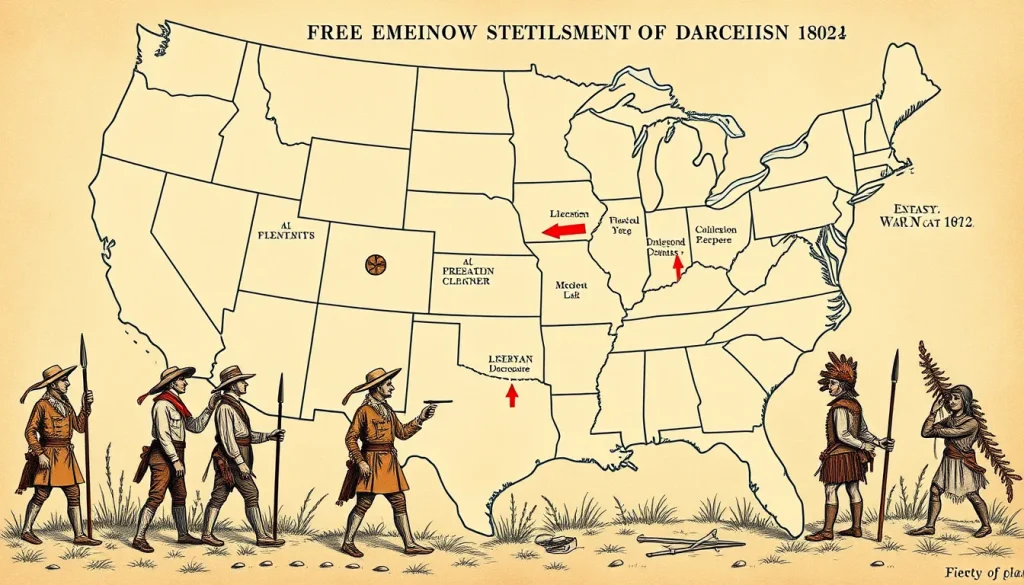
American expansionism before the War of 1812 refers to the territorial growth and imperial ambitions of the United States from the end of the Revolution to the outbreak of the conflict with Britain. This period saw the nation’s boundaries extend to the Mississippi River and beyond through treaties and land purchases, while American leaders also eyed British North America as a potential addition. This expansionism was a key factor in the tensions that led to the War of 1812, as the United States sought to secure its western territories and stop alleged British interference. The subject is historically significant because it shaped the young republic’s identity and its relations with Indigenous nations and European powers.
Historical Context
After the American Revolution, the Treaty of Paris (1783) granted the United States generous boundaries extending from the Atlantic to the Mississippi River. The new nation faced a complex situation: it held claims to vast western lands but lacked effective authority over them. Additionally, the British retained military posts in the Northwest Territory (present-day Ohio, Indiana, etc.), which they used to maintain influence over the fur trade and Indigenous nations. During the 1790s, U.S. military campaigns such as the Northwest Indian War (1790-1794) and the diplomatic Jay Treaty (1794) aimed to secure the frontier. Meanwhile, European powers, particularly Spain and France, held territories that the United States desired. In 1803, the Louisiana Purchase from France doubled the size of the nation. This expansionist drive was also directed northward: many American leaders, including Thomas Jefferson and later war hawks, coveted British-held Canada as a natural extension of the republic. The period before 1812 also saw the growth of American settlements in the Northwest and the displacement of Indigenous peoples. These tensions over territory and influence contributed directly to the outbreak of war.
What Happened
American expansionism before 1812 unfolded on several fronts. The initial phase involved consolidating control over the region between the Appalachians and the Mississippi. The Northwest Ordinance of 1787 established a framework for the creation of new states out of the territory north of the Ohio River. The U.S. government encouraged settlement through land sales, which provided revenue and also served to dispossess Native American nations. The defeat of the Western Confederacy at the Battle of Fallen Timbers (1794) and the subsequent Treaty of Greenville (1795) ceded much of present-day Ohio to the United States. The Louisiana Purchase of 1803 added a vast territory from the Mississippi to the Rocky Mountains, opening new lands for American settlers. However, this acquisition heightened tensions with Spain and Britain, which disputed boundaries. Simultaneously, American officials and settlers increasingly looked toward Canada. The idea of annexing Canada was discussed in Congress and newspapers, and some historians argue it was a major goal of the War of 1812. The U.S. also sought to end British influence among Indigenous nations in the Northwest, believing that Britain was arming them and encouraging resistance. These factors created a climate of expansionist ambition.
Why It Matters
The expansionist policies of the early republic directly influenced the causes of the War of 1812. The United States declared war on Britain in 1812, citing impressment, trade restrictions, and British support of Indigenous nations. However, western and southern expansionists also hoped to secure and expand U.S. territory, possibly including Canada. The war, in turn, had significant consequences for expansion: it reaffirmed U.S. sovereignty over the Northwest, reduced British influence among Indigenous nations, and solidified American control over the Gulf Coast after the Battle of New Orleans. Scholars debate the degree to which expansionism was a central motive; some argue it was a major factor, while others emphasize maritime issues. The war also marked a turning point in Indian-American relations, as Indigenous power declined drastically after 1815. Thus, expansionism before 1812 set the stage for the conflict and its aftermath.
Definition
American expansionism before the War of 1812 refers to the territorial growth and imperial ambitions of the United States from the end of the American Revolution to the outbreak of the war. It includes both the settlement and acquisition of lands within the boundaries set by the Treaty of Paris, as well as aspirations to annex additional territories, particularly Canada.
Background
The expansionist drive emerged from a combination of factors: the desire for land and economic opportunity, a belief in American exceptionalism, and competition with European empires and Indigenous nations. After independence, the U.S. government prioritized the expansion of white settlement and the sale of public lands to generate revenue. The Northwest Ordinance of 1787 and later land laws facilitated this process. Additionally, many political leaders, including Thomas Jefferson, envisioned an “empire of liberty” based on agrarian republicanism.
How It Worked
Expansionism operated through multiple mechanisms. The federal government negotiated treaties with European powers (e.g., Louisiana Purchase) and with Indigenous nations (often under duress) to acquire land cessions. Settlement was encouraged through federal land sales and military campaigns that removed Indigenous resistance. The establishment of territories with a path to statehood, as outlined in the Northwest Ordinance, provided a political structure. In the case of Canada, expansionist ambitions were expressed through rhetoric, proposals for invasion, and, ultimately, military campaigns during the War of 1812.
Competing Viewpoints
Historians have interpreted American expansionism in different ways. A traditional view saw it as the fulfillment of a providential destiny, while a more critical perspective emphasizes the dispossession of Indigenous peoples and the central role of imperialism. Similarly, the motivation for the War of 1812 is debated: some stress maritime and trade issues, while others argue expansionist desires, especially toward Canada, were pivotal. Richard W. Maass (2015) explores how expansionism shaped the war, noting that territorial ambitions were often subordinated to strategic considerations. Mark Joy’s survey discusses the concept of “manifest destiny” and the internal opposition to expansion.
Role in the War of 1812
Expansionism directly contributed to the outbreak of the war. The War Hawks in Congress, representing western and southern interests, pushed for war to end British influence among Indigenous nations in the Northwest and to secure lands for white settlement. Many also hoped to conquer Canada. The U.S. military campaigns in 1812 and 1813 aimed to invade Canada, but these efforts ultimately failed. However, the war’s outcome reinforced American control over its western territories and weakened Indigenous resistance, allowing further expansion.
Consequences and Historical Interpretation
The consequences of pre-1812 expansionism were far-reaching. The war reaffirmed U.S. boundaries and reduced British influence in the Northwest. By the end of the war, Indigenous nations lost much of their power and land, leading to forced removals in the following decades. Expansionism also contributed to the sectional debates over slavery, as new territories were added. Historians now view this period as crucial to understanding American empire-building, with some comparing it to European colonialism. The failed attempts to annex Canada nonetheless shaped American identity and relations with Britain and Canada.
Primary Sources
Key primary sources include the Treaty of Paris (1783), the Northwest Ordinance (1787), the Louisiana Purchase Treaty (1803), and the declaration of war message by President James Madison in 1812. Additionally, congressional debates, military orders, and memoirs such as those of William Henry Harrison and Tecumseh provide insights. The Journal of the House of Representatives and the American State Papers contain relevant documents. The limitation of these sources is that they reflect official perspectives, and many Indigenous voices are not directly recorded.
Further Reading
- Maass, Richard W. “Difficult to Relinquish Territory Which Had Been Conquered: Expansionism and the War of 1812.” Diplomatic History 39, no. 1 (2015): 70-97.
- Joy, Mark. American Expansionism, 1783-1860: A Manifest Destiny? Routledge, 2014.
- Taylor, Trent DeWolf. “From Empire to Empire: The Collapse of British America and the Rise of Imperial Republicanism, 1773-1812.” PhD diss., University of Oxford, 2019.
- Broschart, Christopher M. “Thus the Cry for Canada: How the Desire for Canada Shaped the Early American Empire, 1774-1815.” PhD diss., Drew University, 2020.
- Encyclopedia.com. “Claiming the Near West: Territorial Expansion to 1812.”
References
- Maass, Richard W. “Difficult to Relinquish Territory Which Had Been Conquered: Expansionism and the War of 1812.” Diplomatic History 39, no. 1 (2015): 70-97. doi:10.1093/dh/dht132.
- Joy, Mark. American Expansionism, 1783-1860: A Manifest Destiny? Routledge, 2014.
- Taylor, Trent DeWolf. “From Empire to Empire: The Collapse of British America and the Rise of Imperial Republicanism, 1773-1812.” PhD diss., University of Oxford, 2020. https://ora.ox.ac.uk/objects/uuid:2rr1g7dp0.
- Broschart, Christopher M. “Thus the Cry for Canada: How the Desire for Canada Shaped the Early American Empire, 1774-1815.” PhD diss., Drew University, 2020.
- Encyclopedia.com. “Claiming the Near West: Territorial Expansion to 1812.”
FAQ
What role did expansionism play in causing the War of 1812?
Expansionist desires, particularly for Canadian territory and the end of British support for Indigenous nations in the Northwest, were significant causes. Many War Hawks sought to secure these lands.
How did the Louisiana Purchase affect U.S. expansion?
It doubled the size of the nation and opened vast new areas, but also created disputes with Spain and Britain over boundaries.
Why did American leaders want to annex Canada?
They saw Canada as a natural extension of the republic, a source of land and a way to end British influence, and a means to secure the continent.

Leave a Reply