
Short Answer
The Battle of Tallushatchee (also spelled Tallusahatchee or Tallasseehatchee) was fought on November 3, 1813, in what is now Calhoun County, Alabama, during the Creek War of 1813–14, a conflict that overlapped with the wider War of 1812. It was the first significant American military victory of that campaign, as a force of Tennessee volunteers under Brigadier General John Coffee surrounded and destroyed the Red Stick Creek town of Tallushatchee, killing 186 inhabitants. The battle is remembered for its one-sided carnage, the participation of Davy Crockett and other famed frontiersmen, and its role in propelling Andrew Jackson’s military career.
Historical Context
The Creek War of 1813–14 began as a civil war within the Creek Confederacy, dividing the traditionalist faction known as the Red Sticks from those Creeks who sought accommodation with the United States. The Red Sticks, angered by land cessions and the influence of white settlers, received encouragement and arms from the Spanish in Florida and from Tecumseh’s prophetic message of resistance. The conflict exploded into a confrontation with the United States after the Red Stick attack on Fort Mims on August 30, 1813, in present-day Baldwin County, Alabama. An estimated 700 Red Stick warriors killed roughly 250 defenders and civilians, including women and children. The Fort Mims massacre galvanized the American frontier and led to retaliation by state militias, particularly from Tennessee.
General Andrew Jackson, commanding the Tennessee militia, assembled an army of about 2,500 volunteers and marched south into the Mississippi Territory (now Alabama). His objective was to crush the Red Stick strongholds. In late October 1813, Jackson and his forces crossed the Tennessee River and, after difficult movement, established Fort Strother on the Coosa River at a site known as Ten Islands, about 30 miles south of present-day Gadsden. From this staging point, Jackson planned to strike Red Stick towns.
What Happened
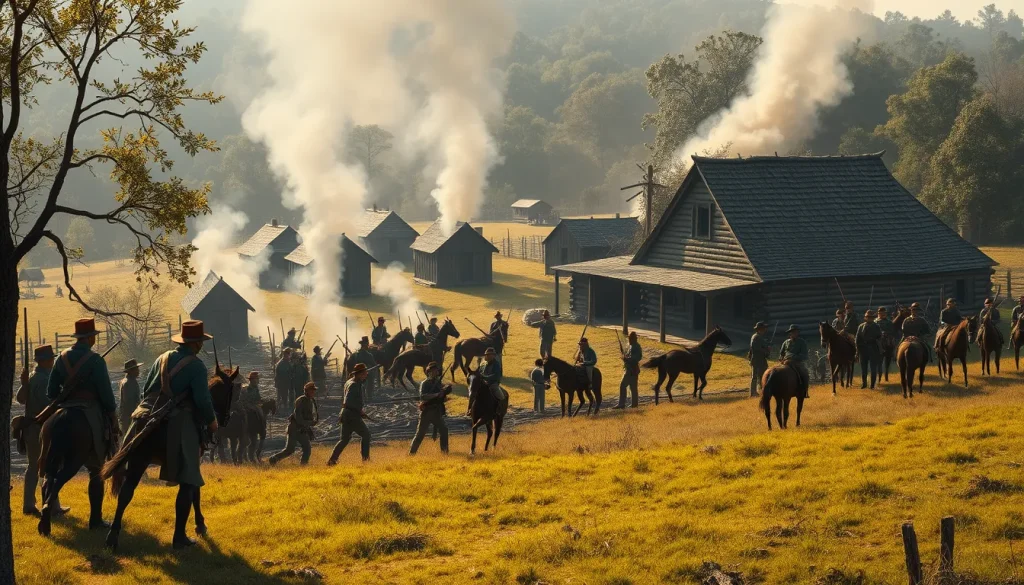
On November 3, 1813, Brigadier General John Coffee led a detachment of about 900 mounted Tennessee troops, accompanied by friendly Creek and Cherokee warriors, to attack the town of Tallushatchee, located roughly 13 miles east of Fort Strother. The town was known as a gathering place for Red Stick warriors. Coffee’s force surrounded the village at sunrise and divided into two columns to encircle it completely. Two companies of scouts were sent into the village to draw the warriors out, which they did. The Red Stick men rushed toward the encircling troops, but were met by heavy gunfire and driven back into the town’s structures. Coffee’s forces tightened the ring, and the fighting continued until the last warrior was killed.
The result was a near-total destruction of the town. According to the official report, 186 Red Sticks were killed, including a number of women and children who were caught in the crossfire or killed when buildings were set ablaze. Coffee’s troops took 84 women and children prisoner and lost only 5 killed and 41 wounded. Among the American participants was Davy Crockett, then a scout in the Tennessee militia, who later wrote about the battle and described shooting the Indians “like dogs.” He also recounted an incident where a house containing 46 warriors was set on fire, resulting in their deaths. The American victory was attributed to overwhelming numbers and the Red Sticks’ shortage of gunpowder, which forced many to fight with bows and arrows.
One poignant consequence of the battle was the fate of a ten-month-old Creek infant found in the aftermath. The baby, later named Lyncoya, was taken to Fort Strother, where Andrew Jackson, who had recently lost his adopted son, arranged for the child to be sent to Huntsville and eventually adopted him into his family.
Why It Matters
The Battle of Tallushatchee was not only the first American victory in the Creek War but also a turning point in the campaign. It avenged, at least in frontier perception, the Fort Mims massacre and boosted the morale of the Tennessee army, which had been suffering from supply shortages and desertion. The destruction of Tallushatchee sent a powerful message to the Red Sticks and encouraged Creek towns that had hesitated to shift allegiance to the American side. It also established Jackson’s reputation as a firm and ruthless leader, a theme that would be amplified in later engagements, including the Battle of Horseshoe Bend.
The battle’s historical memory has been shaped by the accounts of participants, particularly Davy Crockett and Richard K. Call, who recorded vivid and disturbing descriptions of the carnage. Over time, historians have debated the degree to which the killing of women and children was intentional or incidental. Coffee claimed that the warriors had taken refuge in houses alongside their families, making civilian casualties unavoidable. Critics of the American campaign point to the complete destruction of the town as evidence of a total-war policy against the Creeks. The battle also foreshadowed Jackson’s later removal policies toward Indigenous peoples.
Prelude
Following the Fort Mims massacre, General Jackson and his Tennessee forces moved south in late October 1813. After establishing a supply depot and crossing the mountains, Jackson learned that a sizeable force of Red Stick warriors had gathered at Tallushatchee, only 13 miles from his new camp at Fort Strother. He dispatched Coffee with approximately 900 mounted troops, instructing him to destroy the town and its inhabitants. Coffee’s force included some friendly Creek and Cherokee scouts, identifiable by white feathers and deer tails in their hair.
Forces and Commanders
The American force was under Brigadier General John Coffee, a trusted subordinate and friend of Andrew Jackson. Coffee commanded about 900 to 1,000 tennessee militia dragoons and mounted infantry. The Red Stick defenders were led by unknown local war leaders; their numbers are not precisely recorded, but they were heavily outnumbered. They were also short of gunpowder, relying in part on traditional weapons.
Battlefield and Map Context
Tallushatchee was a Creek town located in the Mississippi Territory, near present-day Alexandria, Alabama, in Calhoun County. The site lay on the southeast side of the Coosa River, about 13 miles east of Fort Strother. The terrain was typical of the Piedmont region, with wooded hills and clearings. The town consisted of wooden houses, which offered little protection against the American gunfire. Today, no substantial remains of the town exist, and the battlefield is not a formally preserved historical site. A historical marker may indicate the general area, but the exact location is on private land.
Battle Chronology
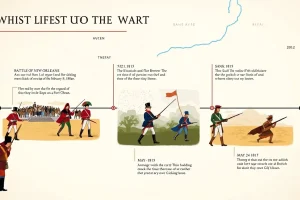
Early on November 3, 1813, Coffee’s column approached within a mile of Tallushatchee. He divided his force into two columns and sent them to surround the town, covering all exits. At dawn, two companies were sent into the village as decoys to draw out the warriors. The Red Sticks rushed out and were met from all sides by the Americans. The warriors fell back into the houses, and the Americans closed in, shooting through walls and setting fire to some buildings. The fighting lasted until the last warrior had fallen. By midday, the town was destroyed, and Coffee’s force returned to Fort Strother that evening.
Casualties and Losses
American casualties were remarkably low: 5 killed and 41 wounded. The Red Sticks lost 186 killed, according to the official after-action count. Among the dead were women and children, though the exact number of non-combatant fatalities is not specified. The Americans took 84 women and children prisoner. Eyewitness accounts, such as that of Richard K. Call, described scenes of dead mothers clasping their children and burned bodies in smoldering cabins.
Result
The battle was a decisive American victory, resulting in the complete destruction of Tallushatchee and the elimination of a significant Red Stick force. It was the first major success in Andrew Jackson’s Creek campaign, coming just days before his victory at the Battle of Talladega on November 9, 1813.
Strategic Consequences
Beyond the tactical victory, Tallushatchee demonstrated Jackson’s intention to wage a war of annihilation against the Red Sticks. The defeat forced many Creek towns to either align with the United States or remain neutral, weakening the Red Stick alliance. It also emboldened the Tennessee militia and helped secure Jackson’s supply line. The battle’s psychological impact was profound, as the Red Sticks realized they faced a merciless enemy. In the longer term, the defeat at Tallushatchee and subsequent battles contributed to the eventual Red Stick defeat at Horseshoe Bend in March 1814, which opened Alabama to American settlement.
Primary Accounts
Several contemporary accounts survive. Davy Crockett’s memoir, A Narrative of the Life of David Crockett (1834), includes his description of the battle, although he mistakenly recalled the location as “Tallusahatchee.” Richard K. Call, a young Tennessee officer, wrote a detailed and harrowing eyewitness account in his journal, published later. Coffee’s official report to Jackson, which is summarized in Andrew Jackson’s correspondence, provides the casualty figures. The early history by Albert James Pickett (1851) offers a detailed narrative based on interviews with participants.
Battlefield Today
The site of the Battle of Tallushatchee is located near Alexandria, Alabama, in Calhoun County. There is no national park or preserved battlefield; the area is largely private farmland and forest. A historic marker, erected by the state of Alabama, commemorates the battle along a local road. The town of Tallushatchee itself has disappeared, and the landscape has been significantly altered.
Primary Sources
The most important primary sources include John Coffee’s official battle report to Andrew Jackson, which is reproduced in Jackson’s papers; the memoirs of Davy Crockett, which offer a participant’s perspective; and the journal of Richard K. Call, which provides a vivid, reflective account of the carnage. Additionally, Albert James Pickett’s History of Alabama (1851) compiles oral histories and records from veterans. Each source must be evaluated for memory bias and personal perspective.
Further Reading
- Borneman, Walter R. 1812: The War That Forged a Nation. New York: Harper Perennial, 2004.
- Waselkov, Gregory A. Conquering Spirit: Fort Mims and the Redstick War of 1813-14. Tuscaloosa: University of Alabama Press, 2006.
- Halbert, H. S., and T. H. Ball. The Creek War of 1813 and 1814. 1895. Reprint, Tuscaloosa: University of Alabama Press, 1969.
- Griffith, Jr., Benjamin W. McIntosh and Weatherford: Creek Indian Leaders. Tuscaloosa: University of Alabama Press, 1988.
References
- Encyclopedia of Alabama, “Battle of Tallushatchee,” https://encyclopediaofalabama.org/article/battle-of-tallushatchee/.
- American Battlefield Trust, “Tallussahatchee Battle Facts and Summary,” https://www.battlefields.org/learn/war-1812/battles/tallussahatchee.
- Wikipedia, “Battle of Tallushatchee,” https://en.wikipedia.org/wiki/Battle_of_Tallushatchee.
- National Park Service, “The Creek Indian War of 1813-1814 Site Bulletin,” https://www.npshistory.com/publications/ocmu/brochures/creek-indian-war.pdf.
- Pickett, Albert James. History of Alabama, Chapter 39. Online transcription at USGenWeb Archives, http://files.usgwarchives.net/al/statewide/history/books/pickett/chaptr39.txt.
FAQ
What was the significance of the Battle of Tallushatchee?
It was the first major American victory of the Creek War, demonstrating Andrew Jackson's total-war approach and boosting the morale of Tennessee volunteers. It also helped shift some Creek towns to the American side.
Who commanded the American forces at Tallushatchee?
Brigadier General John Coffee, a close ally of Andrew Jackson, led approximately 900 Tennessee mounted troops and some friendly Creek and Cherokee warriors.
How many casualties were there at Tallushatchee?
American forces suffered 5 killed and 41 wounded. The Red Sticks lost 186 killed, including women and children, with 84 women and children taken prisoner.
Leave a Reply