
Short Answer
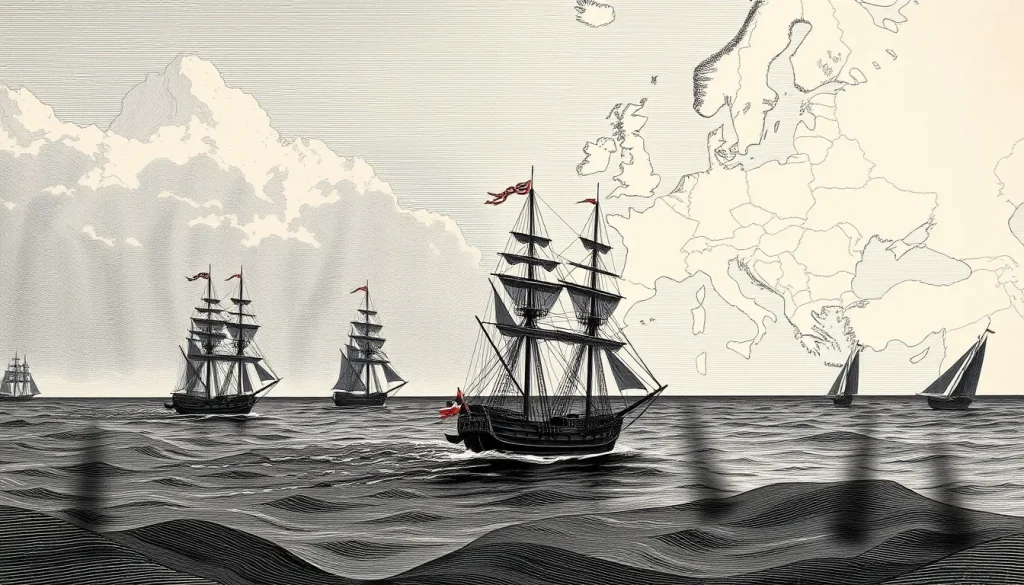
Napoleon Bonaparte’s first abdication as Emperor of the French in April 1814 ended the Napoleonic Wars in Europe and fundamentally changed the course of the War of 1812 between the United States and Great Britain. With the European conflict over, Britain could divert military and naval resources to North America, while both sides recognised that the international situation had shifted the basis for negotiations. This article examines the effects of Napoleon’s defeat on the war’s conduct, diplomacy, and eventual peace settlement.
Historical Context
The War of 1812 was fought while Britain was heavily engaged in the Napoleonic Wars. The American declaration of war in June 1812 came when Britain was preoccupied with the European struggle against France. Britain had to maintain large armies in the Peninsula and elsewhere, and its Royal Navy was stretched across the Atlantic and the Mediterranean. The American war was, from the British perspective, a secondary conflict, often called a “sideshow.” The United States sought to address grievances such as impressment of American sailors, trade restrictions, and British support for Indigenous nations in the Northwest. However, as long as the Napoleonic Wars continued, Britain could not devote full attention to North America.
Napoleon’s disastrous invasion of Russia in 1812 and the subsequent campaigns of the Sixth Coalition weakened the French Empire. By early 1814, allied forces were closing in on Paris. Napoleon abdicated on 6 April 1814, and the Treaty of Paris, signed on 30 May 1814, ended the war between France and the Sixth Coalition. This treaty set France’s borders to those of 1792 and restored the Bourbon monarchy under Louis XVIII. The allied powers, including Britain, Russia, Prussia, and Austria, agreed to meet at the Congress of Vienna to settle the broader European order. This dramatic shift in the European balance of power had immediate and far-reaching implications for the conflict in North America.
What Happened
The immediate change after Napoleon’s defeat was that Britain could now transfer large numbers of troops, ships, and commanders to North America. The British had previously relied on a defensive strategy in Canada and limited raids along the American coast. With the European war over, the British began planning and executing more aggressive operations. In the summer of 1814, British forces defeated American forces at Bladensburg and occupied Washington, D.C., burning the Capitol and the White House. A subsequent attack on Baltimore saw the bombardment of Fort McHenry, which inspired the American national anthem. Meanwhile, a British expeditionary force under Sir George Prevost invaded New York, but was turned back at Plattsburgh on Lake Champlain in September 1814.
Diplomatically, the defeat of Napoleon also allowed Britain to approach peace negotiations from a position of strength. Peace talks had begun in Ghent, Belgium, in August 1814. The British initially demanded territorial concessions and a permanent barrier against American expansion into Indigenous lands, but the American defense at Baltimore and Plattsburgh, along with changing strategic priorities, moderated these demands. The Treaty of Ghent, signed on 24 December 1814, ended the war and returned all conquered territory to the status quo ante bellum. It did not resolve the issues of impressment or maritime rights, but those had become less pressing with peace in Europe.
The changes were not limited to the battlefield and negotiators. Napoleon’s fall also affected the economic context. The British blockade of the American coast had been difficult to enforce while Europe was at war, but after 1814, the Royal Navy could concentrate its efforts, tightening the blockade and disrupting American trade. This increased economic pressure contributed to domestic discontent in the United States, but also spurred American manufacturing.
Why It Matters
The defeat of Napoleon in 1814 altered the character and outcome of the War of 1812. It allowed Britain to intensify the war, leading to significant American losses, including the burning of Washington. However, it also provided the diplomatic conditions that made peace possible. Without the European conflict, Britain no longer needed to maintain the Orders in Council that restricted American trade, and impressment – a key American grievance – became less important once the Royal Navy reduced its manpower needs. Thus, both sides could accept a return to the pre-war status quo. The Treaty of Ghent is often described as ending the war with no territorial changes, leaving underlying issues unresolved. Nevertheless, the war had significant consequences for American identity and foreign policy, fostering a sense of nationalism and a willingness to assert independence from Europe. For Britain, the war reaffirmed its naval supremacy and its ability to defend Canada, while also contributing to a long-term improvement in Anglo-American relations.
Definition
For this article, “What Changed After Napoleon’s Defeat in 1814?” refers to the concrete military, naval, diplomatic, and economic shifts in the War of 1812 that occurred as a direct result of Napoleon’s first abdication and the end of the European war. The focus is on the period from April 1814 to the signing of the Treaty of Ghent in December 1814, and the immediate aftermath.
Background
The War of 1812 and the Napoleonic Wars were interconnected. The United States declared war on Britain in 1812 partly because of British maritime practices that were a response to the French continental system. Impressment, the seizure of American sailors, was a byproduct of the Royal Navy’s need for manpower to fight France. The Orders in Council restricted neutral trade to Europe. The British had a global empire, and the war in North America was one of several fronts. Napoleon’s defeat meant that these maritime restrictions were no longer necessary, and the British could focus their entire military might on the United States if they chose to.
How It Worked
The mechanism by which Napoleon’s defeat changed the war was the reallocation of resources. In Europe, the British army and navy were no longer needed to fight France. Troops and warships could be sent to North America. The Royal Navy, which had maintained a close blockade of France, could now devote more ships to the American coast. This tightened the blockade, disrupted American commerce, and allowed for amphibious operations. Army units from the Peninsular War, under experienced commanders like General Robert Ross, were dispatched to Canada and the Atlantic coast. These reinforcements allowed the British to launch offensive campaigns, such as the invasion of Washington and the attack on Baltimore. Furthermore, with the European peace, Britain could more easily negotiate with the United States because its strategic interests had shifted. The Congress of Vienna, which opened in September 1814, also required British diplomats to work closely with other powers, and resolving the American war was a lower priority. This prompted a willingness to accept a moderate peace in Ghent.
Competing Viewpoints
Historians do not fully agree on how Napoleon’s defeat influenced the war’s outcome. Some argue that it prolonged the war by allowing Britain to reinforce and carry the fight into American territory, leading to the near-catastrophic events of 1814. Others contend that the defeat actually shortened the war because it removed the causes of the conflict and made both sides more amenable to peace. Another interpretation emphasizes the American perspective: the successful defense of Baltimore and Plattsburgh against British veterans of the Napoleonic Wars boosted American pride and helped secure more favorable terms. However, the Treaty of Ghent itself was silent on impressment and neutral rights, indicating that those issues were no longer decisive. The broader historical debate revolves around the relative significance of British military pressure versus diplomatic pragmatism, and whether the war ended in a mutual recognition of stalemate or a nascent American victory.
Role in the War of 1812
Napoleon’s defeat had a direct impact on the war’s conduct. In 1814, British forces in North America were reinforced by about 16,000 troops, many of whom were veterans of the Peninsular War. These forces burned Washington, caused the temporary evacuation of the American government, and raided the Chesapeake Bay. At the same time, a British fleet sailed to the Gulf of Mexico, leading to the Battle of New Orleans in January 1815 (after the treaty was signed but before it was ratified). The British also intensified their naval blockade, which crippled American trade and contributed to the Hartford Convention’s talk of secession. On the diplomatic front, the defeat of Napoleon meant that the British could afford to make peace without resolving the original grievances, as those grievances were no longer relevant. Thus, the War of 1812 ended with the Treaty of Ghent, which essentially restored pre-war conditions.
Consequences and Historical Interpretation
The long-term consequences of Napoleon’s defeat and the War of 1812 are intertwined. The end of the Napoleonic Wars allowed Britain and the United States to gradually improve relations, culminating in the Rush-Bagot Agreement of 1817, which demilitarized the Great Lakes. In the United States, the war produced a wave of nationalism, often called the “Second War of Independence.” The nation also became more self-reliant, fostering domestic industry. For British North America (later Canada), the war confirmed British commitment to hold the territory, and the threat of American invasion helped forge a separate identity. Historical interpretation has evolved: nineteenth-century American historians often celebrated the war as a victory, while later scholars have emphasized its limited objectives and the importance of European events. The defeat of Napoleon remains a crucial turning point, because it allowed the War of 1812 to conclude without further escalation and set the stage for a century of relative peace between the United States and Great Britain.
Primary Sources
Key contemporary documents include the Treaty of Paris (30 May 1814), which ended the Napoleonic Wars and confirmed the Bourbon restoration. The Treaty of Ghent (24 December 1814) is the central peace treaty ending the War of 1812. Both are official state documents. For direct accounts, the letters and dispatches of British commanders such as Robert Ross and George Prevost, as well as American leaders like James Madison and Andrew Jackson, provide insight into the strategic rationale. British Admiralty records and American naval registers show the deployment of ships. The London Gazette and American newspapers reported on the battles and the peace negotiations. Each source carries biases: official reports often emphasize success and avoid blame, while newspapers reflect partisan perspectives. Nonetheless, these documents are essential for understanding how contemporaries perceived the changes wrought by Napoleon’s defeat.
Further Reading
- Hickey, Donald R. The War of 1812: A Forgotten Conflict. University of Illinois Press, 1989.
- Borneman, Walter R. 1812: The War That Forged a Nation. HarperCollins, 2004.
- Stagg, J.C.A. Borderlines in Borderlands: James Madison and the Spanish-American Frontier, 1776-1821. Yale University Press, 2009.
- Mahan, Alfred T. Sea Power in Its Relations to the War of 1812. Little, Brown, 1905.
- Bickham, Troy. The Weight of Vengeance: The United States, the British Empire, and the War of 1812. Oxford University Press, 2012.
- Encyclopaedia Britannica. “Treaties of Paris” and “Congress of Vienna.” Accessed 2026.
References
- Britannica, The Editors of Encyclopaedia. “Treaties of Paris.” Encyclopaedia Britannica. Accessed 2026. https://www.britannica.com/event/Treaties-of-Paris-1814-1815
- Britannica, The Editors of Encyclopaedia. “Congress of Vienna.” Encyclopaedia Britannica. Accessed 2026. https://www.britannica.com/event/Congress-of-Vienna
- Wikipedia. “Treaty of Paris (1814).” Accessed 2026. https://en.wikipedia.org/wiki/Treaty_of_Paris_(1814)
- Infoplease. “Vienna, Congress of.” Accessed 2026. https://www.infoplease.com/encyclopedia/history/modern-europe/treaty-alliance/vienna-congress-of
FAQ
How did Napoleon's defeat affect the War of 1812?
Napoleon's defeat freed British troops and ships, allowing Britain to mount more aggressive operations against the United States, such as the burning of Washington. It also altered the diplomatic context, making peace negotiations more likely to end the conflict.
Did the Treaty of Ghent settle the original causes of the war?
No, the treaty did not address impressment or neutral rights. Those issues became moot because the end of the Napoleonic Wars removed the need for such policies.
What was the most significant military change after Napoleon's fall?
The British transferred experienced Peninsular War veterans to North America, who participated in the burning of Washington and the attack on Baltimore, and also reinforced Canada, leading to campaigns like the Battle of Plattsburgh.



Leave a Reply