
Short Answer
The War of 1812, fought between the United States and Great Britain from June 1812 to February 1815, is often remembered for iconic symbols like the Star-Spangled Banner and the USS Constitution. Yet its most significant legacies were not military victories or territorial gains—indeed, the Treaty of Ghent restored the pre-war status quo—but rather profound political, social, and economic changes that reshaped the American nation. The war solidified American independence, accelerated westward expansion, altered domestic politics, and set the stage for the country’s emergence as a continental power.
Historical Context
Following the American Revolution, the United States remained entangled in European conflicts, particularly the Napoleonic Wars. Great Britain’s enforcement of Orders in Council restricted American trade, and the Royal Navy’s impressment of American sailors violated U.S. sovereignty. These grievances, combined with British support for Indigenous resistance against American expansion in the Northwest, led President James Madison and Congress to declare war on June 18, 1812. The nation, however, was deeply divided: Federalists in New England opposed the war as economically ruinous and pro-French, while Democratic-Republicans, especially from the South and West, championed it as a defense of national honor and a means to secure frontier interests. The U.S. military was small and poorly prepared, while Britain, though distracted by Napoleon, possessed the world’s most powerful navy and experienced army.
What Happened
The war unfolded across several theaters. American invasions of Canada in 1812 and 1813 failed, with notable defeats at Detroit and Queenston Heights. The U.S. Navy, however, won significant single-ship duels, such as the USS Constitution’s victory over HMS Guerriere, boosting American morale. In 1813, U.S. forces secured control of Lake Erie at the Battle of Put-in-Bay and defeated British and Indigenous forces at the Battle of the Thames, where Tecumseh was killed. The Creek War in the South culminated in Andrew Jackson’s victory at Horseshoe Bend in 1814. Following Napoleon’s defeat, Britain launched a counteroffensive in 1814, burning Washington, D.C., but failing to take Baltimore; the defense of Fort McHenry inspired Francis Scott Key’s poem. British attacks on Lake Champlain and Plattsburgh were repulsed, and General Jackson’s stunning victory at the Battle of New Orleans on January 8, 1815, occurred after the Treaty of Ghent had been signed (December 24, 1814) but before word reached the combatants.
Why It Matters
The Treaty of Ghent restored pre-war boundaries and made no mention of impressment or maritime rights, suggesting the war achieved few stated American goals. But its consequences were substantial. The war’s end marked a turning point: the Federalist Party, discredited by the Hartford Convention and perceived as unpatriotic, collapsed as a national force. The nation experienced a wave of nationalism, known as the “Era of Good Feelings,” with a renewed sense of unity and confidence. Domestically, the war revealed the need for internal improvements—roads, canals, and a stronger military—spurring economic growth and territorial expansion. It also opened the door for aggressive westward settlement, which had dire consequences for Indigenous peoples, who lost British allies and were subjected to removal and land cessions. Additionally, the war contributed to the rise of the Cotton Kingdom in the South, as Jackson’s campaigns secured territory that became part of the slaveholding empire.
Definition
In the context of U.S. history, the “change” wrought by the War of 1812 refers to the transformative effects it had on American politics, society, economy, and foreign policy. It did not alter the map, but it altered the nation’s trajectory, shifting it from a fragile republic to a confident, expansionist state.
Background
Before the war, the United States was plagued by political factionalism, economic dependence on European trade, and unresolved tensions with Great Britain over maritime rights and frontier security. Many Americans felt the Revolution’s promises of sovereignty and freedom had not been fully realized. The war arose from these unresolved issues and from the broader Napoleonic conflict.
How the War Produced Changes
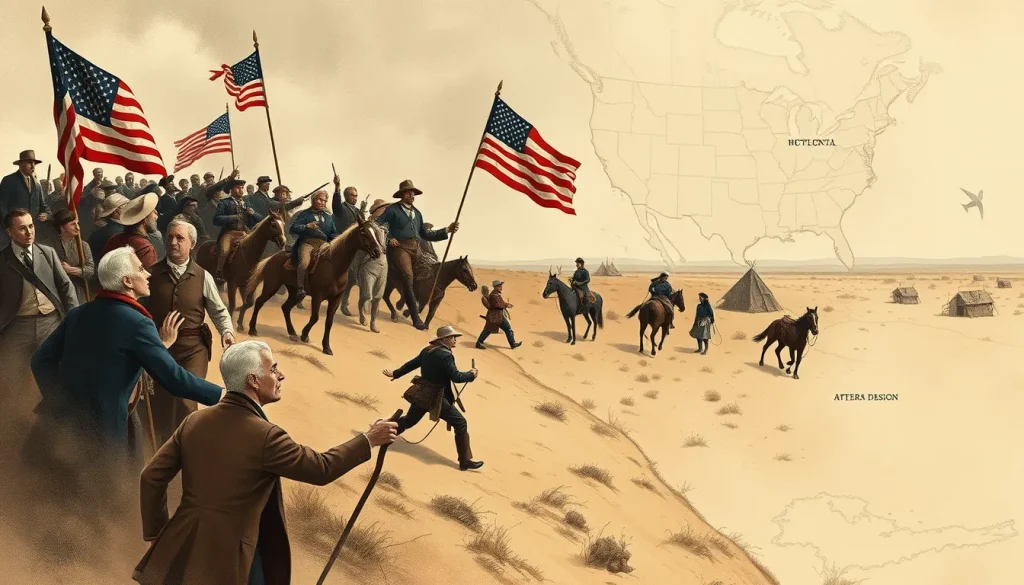
The war’s actual fighting—its victories, defeats, and diplomatic aftermath—served as a catalyst for change. The failure of American invasions exposed military weakness and led to reforms. Naval successes and the defense of Baltimore fostered national pride and gave rise to enduring symbols. The burning of Washington and the subsequent defense of Baltimore galvanized a sense of shared identity. The peace treaty, while preserving territorial integrity, allowed the United States to claim a moral victory, having stood up to the world’s mightiest power. These experiences translated into policy shifts: tariff protection for infant industries, federal investment in transportation, and a stronger army and navy. Moreover, the war effectively ended British influence over the interior, enabling westward expansion under the aegis of the U.S. government.
Competing Viewpoints
Historians debate the war’s significance. Some, like Donald R. Hickey, emphasize that the war achieved few strategic objectives and was essentially a stalemate, but they acknowledge its transformative domestic effects. Others, such as J.C.A. Stagg, argue that President Madison successfully navigated the conflict to secure national sovereignty. James M. Banner contends the war broke the back of Indigenous resistance and set the stage for continental expansion, while also fostering Canadian nationalism. The war is also interpreted as a “Second War of Independence” that conclusively established the United States’ place among nations. Critics point out that it failed to secure Native American rights and perpetuated slavery through territorial expansion.
Role in the War of 1812
The war’s outcomes were central to effecting change. The military leadership of figures like Andrew Jackson and Winfield Scott provided models for future American martial prowess. The war’s financial challenges led to the creation of the Second Bank of the United States in 1816. The Hartford Convention’s radical suggestions, while discrediting Federalists, also signaled a stronger central government. The war also ended the British alliance with Indigenous nations east of the Mississippi, removing a major obstacle to expansion. The Treaty of Ghent, though silent on impressment, opened an era of improved Anglo-American relations marked by the Rush-Bagot Agreement (1817) and the Monroe Doctrine (1823).
Consequences and Historical Interpretation
The long-term consequences of the War of 1812 were profound. The United States entered a period of rapid westward expansion, culminating in the acquisition of Florida, the Louisiana Purchase’s full settlement, and the later Mexican Cession. This expansion intensified debates over slavery, ultimately leading to the Civil War. The war also cemented a distinct American culture, as seen in Emerson’s call for intellectual independence and the rise of Jacksonian democracy. The Monroe Doctrine, a direct outgrowth of wartime confidence and post-war security, declared the Western Hemisphere closed to European colonization, asserting U.S. hegemony. For Indigenous peoples, however, the war marked the beginning of a tragic era of forced removal from ancestral lands. Historians now view the war as a watershed that shaped both the United States and Canada, and its ambiguous legacy continues to inform debates about American exceptionalism and expansionism.
Primary Sources
Key primary sources include the Treaty of Ghent (December 24, 1814), which formally ended the war, and President James Madison’s war message to Congress (June 1, 1812) citing British depredations. Andrew Jackson’s official report on the Battle of New Orleans (January 1815) offers a firsthand account of that victory. The Hartford Convention’s proceedings (December 1814 – January 1815) reveal Federalist opposition and their proposed constitutional amendments. For naval engagements, Captain Isaac Hull’s after-action report on the USS Constitution’s victory over HMS Guerriere (August 1812) is essential. The Star-Spangled Banner, Francis Scott Key’s poem written after the defense of Fort McHenry, provides a contemporary reflection of the war’s emotional impact. These documents are available from the National Archives and the Library of Congress, but users should note each source’s inherent bias—official reports often exaggerate victories, while political documents reflect partisan interests.
Further Reading
- Donald R. Hickey, The War of 1812: A Forgotten Conflict (University of Illinois Press, 1989).
- J.C.A. Stagg, The War of 1812: Conflict for a Continent (Cambridge University Press, 2012).
- Troy Bickham, The Weight of Vengeance: The United States, the British Empire, and the War of 1812 (Oxford University Press, 2012).
- Alan Taylor, The Civil War of 1812: American Citizens, British Subjects, Irish Rebels, & Indian Allies (Alfred A. Knopf, 2010).
- National Park Service, “Legacies of the War of 1812,” https://www.nps.gov/subjects/warof1812/legacies-of-the-war-of-1812.htm.
- American Battlefield Trust, “Outcomes of the War of 1812,” https://www.battlefields.org/learn/articles/outcomes-war-1812.
References
- “Legacies of the War of 1812,” National Park Service, accessed 2023, https://www.nps.gov/subjects/warof1812/legacies-of-the-war-of-1812.htm.
- “War’s Impact,” Star-Spangled Banner National Historic Trail, National Park Service, https://www.nps.gov/stsp/learn/historyculture/war-s-impact.htm.
- “Outcomes of the War of 1812,” American Battlefield Trust, https://www.battlefields.org/learn/articles/outcomes-war-1812.
- James M. Banner Jr., “The Legacy of the War of 1812 Is With Us Still,” Origins, September 2014, https://origins.osu.edu/history-news/legacy-war-1812-us-still.
- Donald R. Hickey, “Small War, Big Consequences,” Foreign Affairs, November/December 2012, https://www.foreignaffairs.com/reviews/small-war-big-consequences.
FAQ
Did the War of 1812 end with America gaining territory?
No. The Treaty of Ghent restored all borders to their pre-war status. The United States gained no territory from Britain, but the war's outcome secured American claims to its own borders and opened the way for westward expansion.
What was the biggest political change after the War of 1812?
The collapse of the Federalist Party, which had strongly opposed the war. Its decline left the Democratic-Republicans dominant, leading to the Era of Good Feelings and a one-party system for a time.
How did the War of 1812 affect Native American peoples?
The war broke the power of Indigenous confederations allied with Britain. With British support ended, tribes east of the Mississippi lost leverage, leading to massive land cessions and ultimately forced removal under the Indian Removal Act of 1830.



Leave a Reply