
Short Answer
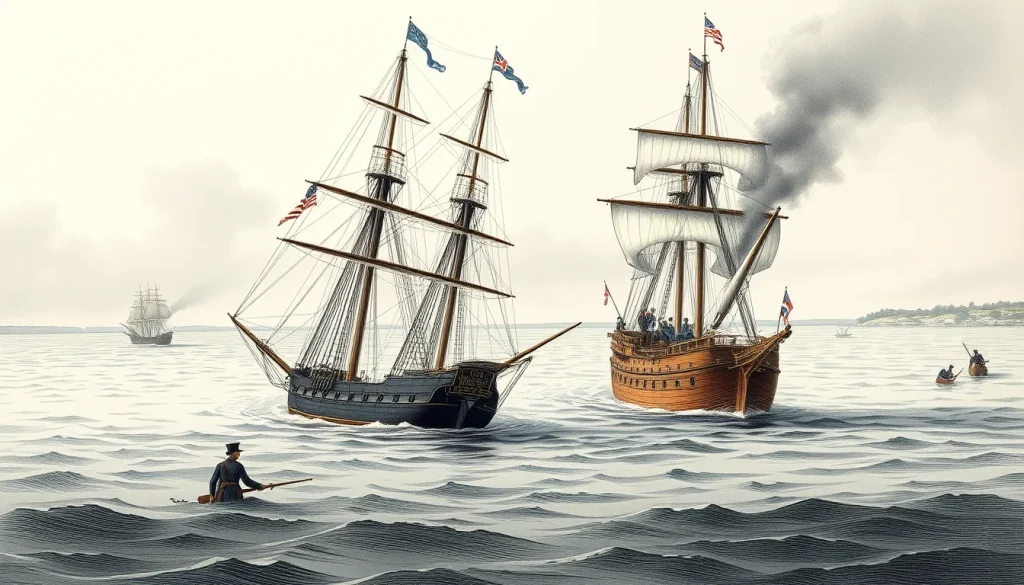
The Chesapeake-Leopard Affair was a naval incident on June 22, 1807, off Norfolk, Virginia, in which the British fourth-rate HMS Leopard attacked and boarded the United States frigate USS Chesapeake while searching for Royal Navy deserters. The encounter killed and wounded members of the Chesapeake’s crew, humiliated the United States, and produced an Anglo-American diplomatic crisis. It is often described as a spark of the War of 1812 because it intensified American anger over impressment, neutral rights, and national honor, even though war did not break out for another five years.
Historical Context
During the Napoleonic Wars, Britain and France imposed competing maritime restrictions on neutral trade. The Royal Navy faced chronic manpower shortages and relied on impressment—forcing men, often British subjects, into naval service—as well as on the recovery of deserters. British warships routinely stopped merchant vessels and sometimes boarded American ships in search of men they claimed were British. The United States, as a neutral carrier, objected that such searches violated sovereignty and endangered American sailors, including naturalized citizens and native-born Americans mistaken for British subjects.
By 1807, several Royal Navy vessels were stationed on the North American Station, blockading French warships in Chesapeake Bay. Desertion had become a local flashpoint around Norfolk, Virginia. One deserter, Jenkin Ratford, a Londoner and former Royal Navy sailor, had joined the crew of USS Chesapeake and reportedly boasted of his escape in Norfolk. British authorities wanted to make an example of him. The British consul also demanded the return of three men alleged to have deserted from HMS Melampus and enlisted in the U.S. Navy.
Vice-Admiral Sir George Berkeley, commanding the British squadron, ordered HMS Leopard to board and search USS Chesapeake for deserters. The American frigate, commanded by Commodore James Barron, was preparing for a Mediterranean cruise. The United States was militarily unprepared: much of its small navy was deployed in the Mediterranean against the Barbary states, and the army had been reduced by Republican spending cuts. President Thomas Jefferson’s administration preferred diplomacy and economic pressure over war.
What Happened
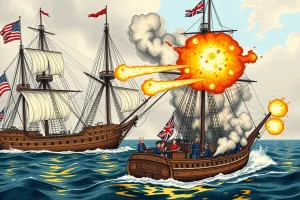
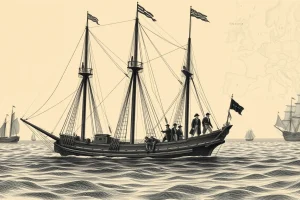
On June 22, 1807, HMS Leopard, under Captain Salusbury Pryce Humphreys, intercepted USS Chesapeake off Norfolk. Humphreys sent Lieutenant John Meade aboard with a written search warrant. Barron refused to allow his crew to be mustered for inspection. After Meade returned to Leopard, Humphreys ordered the American ship to submit. When Chesapeake did not comply, Leopard fired a warning shot and then delivered several broadsides.
Chesapeake was caught unprepared. Her decks were cluttered with stores, and her guns were not cleared for action. She managed to fire only a single gun in reply before Barron, wounded, struck his colors. A British boarding party then searched the ship and seized four alleged deserters: Jenkin Ratford, Daniel Martin, John Strachan, and William Ware. Leopard took the men to Halifax, Nova Scotia. Chesapeake was allowed to return to port.
In Halifax, Ratford, the only British-born man among the four, was tried by court-martial for mutiny, desertion, and contempt toward a British naval officer. He was sentenced to death and hanged from the yardarm of HMS Halifax on August 31, 1807. The three other men received sentences of 500 lashes each, later commuted. The British government eventually offered to return the three American residents, but it did not renounce the practice of impressment. Barron was court-martialed by the United States and found guilty of “neglecting on the probability of an engagement, to clear his ship for action”; he was suspended from the navy for five years without pay.
Why It Matters
The affair caused a storm of protest in the United States. President Jefferson reportedly said, “Never since the Battle of Lexington have I seen this country in such a state of exasperation as at present, and even that did not produce such unanimity.” Federalists and Republicans, normally divided over foreign policy, joined in demanding redress. There were calls for war with Britain.
Yet the United States could not easily respond militarily. Jefferson initially tried to use the crisis to pressure Britain diplomatically, but British envoys showed little contrition and reaffirmed the right to reclaim deserters. He then turned to economic coercion. The Embargo Act of December 1807 prohibited American exports and restricted imports, aiming to compel Britain and France to respect neutral rights. The embargo proved unpopular and economically damaging, especially in New England, and failed to achieve its diplomatic goals. The Chesapeake-Leopard Affair thus helped push the Jefferson administration toward a policy of economic warfare that deepened tensions with Britain.
Historians generally treat the affair as a catalyst rather than the sole cause of the War of 1812. It did not produce immediate war, but it exposed American vulnerability, inflamed public opinion, and made impressment and neutral rights central issues in the years before 1812. It also shaped the careers of its participants and became a symbol of British arrogance in American political memory.
Prelude
The incident grew from a local dispute over deserters in the Norfolk area. Royal Navy seamen had left British ships, and American authorities sometimes refused to return them. Jenkin Ratford’s conspicuous conduct in Norfolk made him a target. British demands for the return of men from HMS Melampus, combined with Berkeley’s order to search USS Chesapeake, set the stage for a confrontation. Chesapeake’s lack of readiness for action made the encounter one-sided.
Forces and Commanders
HMS Leopard was a British fourth-rate warship carrying approximately 50 guns, commanded by Captain Salusbury Pryce Humphreys. USS Chesapeake was an American 38-gun frigate commanded by Commodore James Barron. The British ship was larger and better prepared for combat in the encounter. Vice-Admiral Sir George Berkeley authorized the search from the North American Station. On the American side, Barron bore responsibility for the frigate’s unprepared state and later faced a court-martial.
Battlefield and Map Context
The action took place off Norfolk, Virginia, near the entrance to Chesapeake Bay and the Hampton Roads approaches. The site is maritime rather than a fixed land battlefield. In modern terms, it lies in the coastal waters near Norfolk and Virginia Beach, Virginia. The broader map context includes the Chesapeake Bay, the Atlantic seaboard, and the Royal Navy’s North American Station, where British ships enforced blockade and impressment policies during the Napoleonic Wars.
Battle Chronology
June 22, 1807: HMS Leopard intercepts USS Chesapeake off Norfolk. Lieutenant John Meade presents a search warrant to Commodore James Barron. Barron refuses to muster his crew. Meade returns to Leopard. Captain Humphreys orders Chesapeake to submit. Leopard fires a warning shot, then broadsides. Chesapeake fires one gun and is crippled. Barron strikes his colors. A British boarding party seizes four alleged deserters. Leopard sails to Halifax with the prisoners. August 31, 1807: Jenkin Ratford is hanged at Halifax. Later, Barron is court-martialed and suspended from the U.S. Navy for five years without pay.
Casualties and Losses
Casualty figures differ among accounts. The U.S. National Park Service states that three Americans were killed and eighteen wounded. Other reference accounts give four killed and seventeen wounded. Commodore Barron was among the wounded. HMS Leopard reported no casualties. Chesapeake suffered significant damage to her hull and rigging. The discrepancy reflects the incomplete and sometimes contradictory nature of contemporary reports; the lower figure of three killed and eighteen wounded is widely cited in National Park Service interpretation, while the four killed and seventeen wounded figure appears in other reference summaries.
Result
The affair was a tactical British victory. Leopard compelled Chesapeake’s surrender, boarded the American frigate, and removed four men. Ratford was executed; the other three were punished but later spared the full sentence. The British government eventually offered to return the three American residents, but it did not abandon impressment. Barron was court-martialed and suspended. The immediate result was a diplomatic crisis that left the United States humiliated and Britain unrepentant on the central issue of searching American ships.
Strategic Consequences
In the short term, the affair produced war fever in the United States but no war. Jefferson’s attempt to use the crisis diplomatically failed, leading to the Embargo Act of 1807 and a broader policy of economic coercion. In the longer term, the incident became part of the accumulation of grievances that led Congress to declare war on Britain in June 1812. It underscored American military weakness and the difficulty of defending neutral rights against a major naval power. Historians debate how much weight to give the affair relative to other causes, such as impressment, trade restrictions, British support for Indigenous resistance in the Northwest, and American expansionist ambitions. Most agree that it was a significant and emotionally powerful episode on the road to war.
Primary Accounts
Primary accounts of the affair include reports from Commodore James Barron and Captain Salusbury Pryce Humphreys, the orders issued by Vice-Admiral Sir George Berkeley, the proceedings of Barron’s U.S. court-martial, the Royal Navy court-martial record for Jenkin Ratford, and American newspaper coverage from the summer of 1807. These sources provide eyewitness or official perspectives but are shaped by national allegiance, self-justification, and the pressures of the moment. Barron’s account sought to explain his unpreparedness; British records emphasized the legality of searching for deserters; American newspapers often amplified outrage. None should be read as neutral.
Battlefield Today
There is no preserved battlefield for the Chesapeake-Leopard Affair. The engagement occurred in the waters off Norfolk, Virginia, a busy maritime region now dominated by the Port of Virginia, Norfolk Naval Station, and Hampton Roads. No ships from the action survive. Interpretation of the event is carried mainly through museum exhibits, historical markers, and National Park Service materials in the Chesapeake Bay and Hampton Roads area. Visitors can see the geographic setting, but not the 1807 action itself.
Primary Sources
- President Thomas Jefferson’s reaction, 1807. Jefferson’s widely quoted assessment of American exasperation is reproduced in the National Park Service article on the affair. It conveys the political shock of the incident, but it is an excerpted statement whose original context should be consulted in Jefferson’s papers.
- Court-martial of Commodore James Barron, 1808. The proceedings record testimony about Chesapeake’s unprepared state and Barron’s conduct. They are essential for understanding the American response, but they are also a legal defense and prosecution record shaped by military discipline and personal reputation.
- Royal Navy court-martial of Jenkin Ratford, 1807. This British record documents the trial and execution of a deserter. It reflects British naval law and the determination to make an example of him, but it presents the British authorities’ perspective.
- Official correspondence of Vice-Admiral Sir George Berkeley and Captain Salusbury Pryce Humphreys. These documents set out the British justification for boarding and searching Chesapeake. They are central to understanding British policy, though they are official self-justifications.
- American newspaper reports, summer 1807. Newspapers spread news of the attack and shaped public outrage. They are valuable for measuring popular reaction, but they often relied on rumor and partisan framing.
Further Reading
- Spencer C. Tucker and Frank T. Reuter, Injured Honor: The Chesapeake-Leopard Affair, June 22, 1807 (Annapolis, MD: Naval Institute Press, 1996).
- Bradford Perkins, Prologue to War: England and the United States, 1805–1812 (Berkeley: University of California Press, 1961).
- Donald R. Hickey, The War of 1812: A Forgotten Conflict, Bicentennial ed. (Urbana: University of Illinois Press, 2012).
- Robert E. Cray Jr., “Remembering the USS Chesapeake: The Politics of Maritime Death and Impressment,” Journal of the Early Republic 25, no. 3 (2005): 445–474.
- U.S. National Park Service, “Summer 1807: The British attack the USS Chesapeake and remove American sailors,” https://www.nps.gov/articles/chesapeake-leopard-affair.htm.
- Hampton Roads Naval Museum, Norfolk, Virginia.
References
- U.S. National Park Service, “Summer 1807: The British attack the USS Chesapeake and remove American sailors,” https://www.nps.gov/articles/chesapeake-leopard-affair.htm.
- Spencer C. Tucker and Frank T. Reuter, Injured Honor: The Chesapeake-Leopard Affair, June 22, 1807 (Annapolis, MD: Naval Institute Press, 1996).
- Bradford Perkins, Prologue to War: England and the United States, 1805–1812 (Berkeley: University of California Press, 1961).
- Donald R. Hickey, The War of 1812: A Forgotten Conflict, Bicentennial ed. (Urbana: University of Illinois Press, 2012).
- Robert E. Cray Jr., “Remembering the USS Chesapeake: The Politics of Maritime Death and Impressment,” Journal of the Early Republic 25, no. 3 (2005): 445–474.
- Wikipedia, “Chesapeake–Leopard affair,” https://en.wikipedia.org/wiki/Chesapeake%E2%80%93Leopard_affair (tertiary source used for names and dates).
FAQ
What was the Chesapeake-Leopard Affair?
It was a naval incident on June 22, 1807, when HMS Leopard attacked and boarded USS Chesapeake off Norfolk, Virginia, while searching for Royal Navy deserters. The British seized four men and provoked a major Anglo-American diplomatic crisis.
Why did the British attack USS Chesapeake?
The Royal Navy sought deserters, including Jenkin Ratford and three men alleged to have deserted from HMS Melampus. Vice-Admiral Sir George Berkeley ordered HMS Leopard to board and search the American frigate for these men.
How did the Chesapeake-Leopard Affair lead to the War of 1812?
It inflamed American anger over impressment and neutral rights, exposed U.S. military weakness, and pushed Jefferson toward the Embargo Act of 1807. Historians generally treat it as a catalyst among several causes of the War of 1812, not the sole cause.

Leave a Reply