
Short Answer
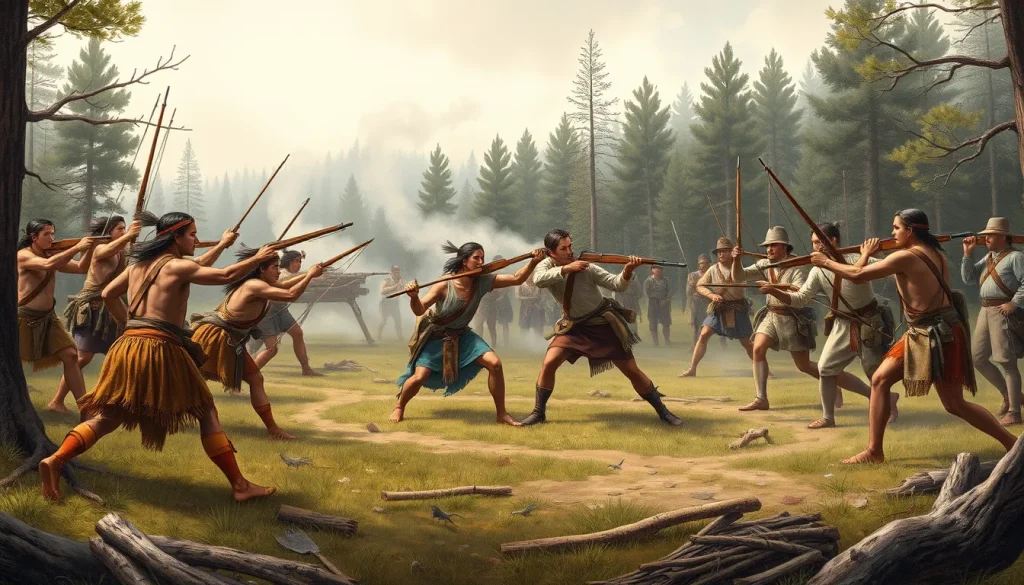
The Battle of Emuckfaw, fought on January 22–24, 1814, was a pair of engagements in the Creek War, a conflict that formed part of the broader War of 1812. At Emuckfaw and nearby Enotachopo Creek in present-day Tallapoosa County, Alabama, a force of United States militia and artillery under General Andrew Jackson, accompanied by approximately 200 Cherokee and Lower Creek warriors, faced 400–500 Red Stick Creek warriors. The Cherokee and Lower Creek allies were essential to Jackson’s survival, providing scouting, skirmishing, and combat support. Their participation illustrates the complex Indigenous alliances that shaped the War of 1812 in the South and had lasting consequences for all Creek and Cherokee people.
Historical Context
The Creek War (1813–1814) began as a civil war within the Creek Nation and quickly became entangled with the War of 1812. The Creek Nation was divided between the Upper Creek towns, many of whom followed the nativist Red Stick movement resisting U.S. expansion and assimilation, and the Lower Creek towns, which had adopted more elements of Euro-American economy and politics. The United States, already at war with Great Britain, sought to secure its southern frontier and prevent British or Spanish influence among the Creeks. Andrew Jackson’s Tennessee militia and U.S. regulars campaigned against the Red Sticks, while the Georgia militia operated separately.
Cherokee and Lower Creek support for the United States grew from a mix of factors. Lower Creek leaders, many of mixed ancestry and economically tied to the U.S. trade system, opposed the Red Stick rebellion as a threat to their own authority and interests. The Cherokee Nation, which had its own long-standing tensions with the Creek Nation and sought U.S. protection and recognition, allied with the United States. For both groups, the alliance offered a chance to defend their communities and gain favor with the U.S. government. However, their participation also deepened internal divisions and exposed them to retaliation from Red Stick forces.
What Happened
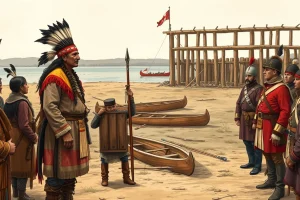
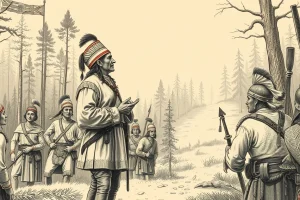
In January 1814, Jackson’s army was severely weakened. His militia enlistments were expiring, supplies were short, and he had only 175 militia and 30 artillerymen fit for duty. A draft of raw recruits arrived, but Jackson lacked experienced troops. He decided to march from Fort Strother toward Emuckfaw to cooperate with the Georgia militia, hoping to strike a blow before his forces melted away. About 200 Cherokee and Lower Creek warriors joined the expedition, serving as scouts, flankers, and light infantry.
On January 22, Jackson encamped about 12 miles from Emuckfaw. At dawn, Red Stick warriors attacked. The Cherokee and Lower Creek warriors helped repel the assault, and after about thirty minutes the Red Sticks withdrew. Jackson then sent John Coffee with a force of 400 — likely including many of the Native allies — to destroy a nearby Red Stick camp. Finding the position too strong, Coffee returned without attacking. The Red Sticks attacked again. Coffee was seriously wounded while leading a flanking party, but the allied force, including the Cherokee and Lower Creek, drove the Red Sticks off, killing 54. Jackson, low on supplies and with wounded to care for, decided to retreat to Fort Strother.
The return march brought a second engagement. On January 24, while crossing Enotachopo Creek, Jackson’s column was attacked. Jackson had anticipated an ambush and ordered his advance guard to counterattack. The rear guard panicked, but a small group of defenders, including Native allies, rallied and drove the Red Sticks back. The Red Sticks failed to exploit their advantage, and Jackson’s force escaped. Combined U.S. and allied casualties were 24 killed and 71 wounded. Red Stick losses were 54 killed, with unknown wounded. The battles were tactically inconclusive, but Jackson had survived.
Why It Matters
The engagement at Emuckfaw mattered immediately because it prevented the destruction of Jackson’s army. A decisive defeat there might have prolonged the Creek War and complicated U.S. operations in the South during the War of 1812. Instead, Jackson withdrew, regrouped, and resumed the offensive in March 1814, culminating in the Battle of Horseshoe Bend. The Cherokee and Lower Creek warriors who fought at Emuckfaw contributed directly to that survival and to the eventual U.S. victory.
In the longer term, however, the alliance did not protect Cherokee and Lower Creek interests. The Treaty of Fort Jackson (August 1814) forced the Creek Nation to cede vast lands, including territory belonging to U.S. allies, and set the stage for further dispossession. Cherokee warriors who had fought alongside Jackson later faced pressure to remove westward. Historians continue to debate the motivations and agency of the Cherokee and Lower Creek warriors: some emphasize their strategic calculations and desire to protect their communities, while others stress the tragic consequences of aligning with an expanding United States. The battle is also a reminder that the War of 1812 was not only an Anglo-American conflict but also a series of Indigenous wars with their own causes and outcomes.
Prelude
By early 1814, Jackson’s campaign was in crisis. After the Battle of Talladega in November 1813, his army suffered from supply shortages and discipline problems. Many militia enlistments expired, and John Coffee’s cavalry had dispersed. Jackson received 900 raw recruits on January 14, but he still lacked experienced soldiers. He hoped a quick movement toward Emuckfaw would keep his men occupied and coordinate with Georgia militia. Cherokee and Lower Creek warriors, who had already been fighting the Red Sticks in their own communities, joined Jackson’s force as he prepared to march. Their knowledge of the terrain and their fighting skills were crucial for the inexperienced army.
Forces and Commanders
The U.S. force was commanded by Major General Andrew Jackson, with Brigadier General John Coffee leading the cavalry and mounted infantry. The U.S. contingent numbered about 175 militia and 30 artillerymen. The Native American allies numbered roughly 200 warriors, composed of Cherokee and Lower Creek. These warriors served under their own leaders and were integrated into Jackson’s tactical plans. The Red Stick Creek force, estimated at 400–500 warriors, was led by William Weatherford, known as Red Eagle. Weatherford was a Lower Creek chief of mixed ancestry who had joined the Red Stick cause. The Red Sticks were highly motivated and familiar with the local terrain, but they lacked artillery and were fighting a coalition that included their own Creek relatives on the opposing side.
Battlefield and Map Context
The battles took place in the vicinity of Emuckfaw Creek and Enotachopo Creek, in what is now Tallapoosa County, Alabama. The area is part of the Piedmont and is characterized by rolling hills, mixed hardwood and pine forests, and numerous creek fords. The exact battle sites are not precisely marked, but they lie approximately 20–50 miles from the Horseshoe Bend of the Tallapoosa River, where Jackson would win his decisive victory two months later. The creeks themselves were strategic crossing points; control of the fords was essential for movement. The battlefield has not been extensively preserved, and the modern landscape includes private land and rural roads.
Battle Chronology
January 22, 1814: Jackson’s camp, about 12 miles from Emuckfaw, was attacked at dawn by Red Stick warriors. The attack lasted about thirty minutes before being driven off. Jackson ordered Coffee to take 400 men to burn a Red Stick camp three miles away. Coffee found the camp too strong and returned. The Red Sticks attacked again, and Coffee was wounded leading a flanking maneuver. The allied force, including Cherokee and Lower Creek warriors, counterattacked and routed the Red Sticks, killing 54. Jackson then began his retreat.
January 24, 1814: While crossing Enotachopo Creek, Jackson’s column was ambushed. Jackson’s advance guard counterattacked, but the rear guard panicked. A small group of defenders, including Native allies, held their ground and drove the Red Sticks back. The Red Sticks did not press their advantage, and Jackson’s force completed the crossing and continued to Fort Strother. The two engagements cost Jackson 24 killed and 71 wounded; Red Stick losses were 54 killed, with unknown wounded.
Casualties and Losses
U.S. and allied casualties for the two engagements totaled 24 killed and 71 wounded. The sources do not break down these figures between U.S. soldiers and Cherokee or Lower Creek warriors. Given that the Native allies were heavily engaged, particularly in the second attack on January 22 and the rear-guard action on January 24, it is likely that they suffered a significant portion of these losses. Red Stick casualties were 54 killed and an unknown number wounded. The exact number of Cherokee and Lower Creek dead and wounded is not recorded in surviving documents, a common limitation in accounts of Indigenous participation in the War of 1812.
Result
The battles were tactically inconclusive. Jackson was forced to withdraw to Fort Strother, and the Red Sticks remained in the field. However, the Red Sticks failed to destroy Jackson’s army, which was their best opportunity to do so. Jackson’s force survived to fight again, while the Red Sticks suffered heavy casualties and lost momentum. The withdrawal was a setback for Jackson’s immediate plans, but not a strategic defeat.
Strategic Consequences
In the short term, Jackson’s retreat delayed his offensive until mid-March 1814, when he resumed operations and eventually defeated the Red Sticks at Horseshoe Bend. The Cherokee and Lower Creek warriors who had fought at Emuckfaw continued to serve in that campaign. In the longer term, the battle demonstrated the indispensable role of Indigenous allies in frontier warfare. Yet the alliance did not lead to security for Cherokee and Lower Creek people. The Treaty of Fort Jackson imposed a massive land cession on the Creek Nation, including lands of U.S. allies, and the Cherokee faced increasing pressure to cede land and eventually remove. The Battle of Emuckfaw is thus a case study in the complexities of Indigenous alliance during the War of 1812.
Primary Accounts
Contemporary primary accounts of the Battle of Emuckfaw come primarily from U.S. sources. Andrew Jackson’s letters and official reports describe the engagements and mention the service of Cherokee and Lower Creek warriors, often in brief terms. John Coffee’s correspondence also references the fighting. These documents are biased toward the U.S. perspective and provide little detail on the specific actions or views of the Native allies. Cherokee and Lower Creek oral traditions may preserve memories of the battle, but they are not widely published in documentary form. No known detailed account by a Cherokee or Lower Creek participant at Emuckfaw survives in the archival record, which means historians must interpret their role through indirect evidence and U.S. records.
Primary Sources
Key primary sources for the Battle of Emuckfaw include:
- Andrew Jackson’s correspondence and reports (January–February 1814): Jackson wrote to Governor Willie Blount of Tennessee and to other officials describing the battles, his casualties, and his retreat. These letters are held in various archives, including the Library of Congress and the Tennessee State Library and Archives. They provide the U.S. command perspective but say little about individual Native warriors.
- John Coffee’s letters: Coffee, who was wounded at Emuckfaw, wrote accounts of the fighting. His letters offer additional tactical details but share Jackson’s viewpoint.
- U.S. Army records: Muster rolls and orderly books from the campaign may list some Cherokee and Lower Creek warriors by name or unit, but such records are incomplete and scattered.
- Cherokee and Lower Creek oral histories: These traditions, passed down through families and communities, preserve memories of the war and the alliances. They are valuable but difficult to date and verify for specific events like Emuckfaw.
No verbatim transcript of a contemporary account by a Cherokee or Lower Creek warrior at Emuckfaw is known to exist. Researchers should consult the published papers of Andrew Jackson and the records of the U.S. Army Center of Military History for the most detailed contemporary documentation.
Further Reading
- Blackmon, Richard D. The Creek War, 1813–1814. U.S. Army Center of Military History, 2014.
- Mahon, John K. The War of 1812. University of Florida Press, 1972.
- Owsley, Frank Lawrence. Struggle for the Gulf Borderlands: The Creek War and the Battle of New Orleans, 1812–1815. University of Alabama Press, 1981.
- Remini, Robert V. Andrew Jackson and His Indian Wars. Viking, 2001.
- Hickey, Donald R. The War of 1812: A Forgotten Conflict. University of Illinois Press, 1989.
- Encyclopedia of Alabama, articles on the Creek War and Cherokee involvement.
- Horseshoe Bend National Military Park (National Park Service) for broader campaign context.
References
- Wikipedia contributors. “Battles of Emuckfaw and Enotachopo Creek.” Wikipedia, The Free Encyclopedia. https://en.wikipedia.org/wiki/Battles_of_Emuckfaw_and_Enotachopo_Creek (accessed [date]).
- Blackmon, Richard D. The Creek War, 1813–1814. CMH Pub 74-4. Washington, D.C.: U.S. Army Center of Military History, 2014. https://www.govinfo.gov/content/pkg/GOVPUB-D114-PURL-gpo53888/pdf/GOVPUB-D114-PURL-gpo53888.pdf.
- Mahon, John K. The War of 1812. Gainesville: University of Florida Press, 1972.
- Adams, Henry. History of the United States of America During the Administrations of James Madison. New York: Library of America, 1986.
- Owsley, Frank Lawrence. Struggle for the Gulf Borderlands: The Creek War and the Battle of New Orleans, 1812–1815. Tuscaloosa: University of Alabama Press, 1981.
- Remini, Robert V. Andrew Jackson and His Indian Wars. New York: Viking, 2001.
FAQ
Who were the Cherokee and Lower Creek warriors at the Battle of Emuckfaw?
They were Indigenous allies of the United States, approximately 200 warriors total, who fought alongside Andrew Jackson's force against Red Stick Creek warriors in January 1814. Their exact identities are not fully recorded, but they served as scouts, skirmishers, and combatants.
What was the outcome of the Battle of Emuckfaw?
The battle was inconclusive. Jackson's force repelled Red Stick attacks on January 22 and 24, inflicting 54 killed on the Red Sticks, but Jackson suffered 24 killed and 71 wounded and withdrew to Fort Strother. The Red Sticks failed to destroy Jackson's army.
Why did Cherokee and Lower Creek warriors fight with the United States?
They had their own political and strategic reasons. Lower Creek leaders opposed the Red Stick rebellion and sought to protect their authority and lands. The Cherokee Nation sought U.S. favor and had tensions with the Creek. Both groups hoped alliance would secure their communities, though the long-term outcome was land loss and removal.
Leave a Reply