
Short Answer
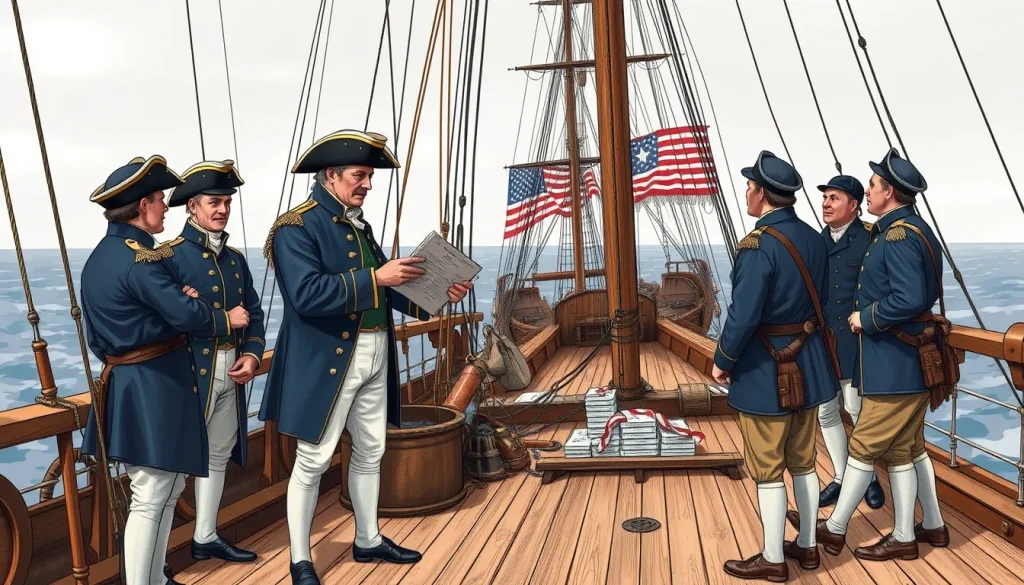
Prize money was the Royal Navy’s system for distributing the proceeds from captured enemy ships and cargo among the officers and crews who took them. In the War of 1812, it did not determine Britain’s overarching naval strategy, which was built around blockade, convoy protection, economic warfare, and amphibious operations. It did, however, shape how that strategy was carried out, because captures of American merchantmen, privateers, and warships offered substantial financial rewards. The result was a persistent tension between the lure of prize-hunting and the less lucrative but strategically essential duties of blockade and escort.
Historical Context
Britain entered the War of 1812 as the world’s dominant naval power, heavily engaged in the Napoleonic Wars. The Royal Navy’s principal tasks were to blockade France and its allies, protect British trade, and support land operations. When the United States declared war in June 1812, the Admiralty could spare only a small force for the North American station. According to naval historian Kevin D. McCranie, the station had one ship of the line and five frigates in June 1812; by mid-1813 it had grown to ten ships of the line and sixteen frigates, and by late 1814 to twelve ships of the line, two razees, and twenty-nine frigates. This expansion reflected Britain’s strategic priority: control of the sea and economic pressure on the United States.
Prize money was already deeply embedded in naval culture. For centuries, British seamen and officers had expected a share of the value of enemy ships and cargo taken as lawful prize. The system was regulated by Admiralty rules and adjudicated in vice-admiralty courts. It provided an incentive to risk life and limb, supplementing regular pay, especially for officers who might otherwise struggle on half-pay. In the War of 1812, the rich American merchant marine and the many American privateers offered tempting targets. The strategic context—blockade, convoy, and economic warfare—created both opportunities and tensions for a navy that also had to remain disciplined and coordinated.
What Happened
The war began with American frigate victories that shocked British naval opinion. In August 1812, HMS Guerrière struck to USS Constitution; in October, HMS Macedonian was captured by USS United States; in December, HMS Java was taken by Constitution. These losses did not change Britain’s overall naval supremacy, but they prompted the Admiralty to reinforce North America and, in July 1813, to order frigate captains to avoid single combat with the largest American frigates. The order reflected strategic calculation: the Royal Navy could not afford unnecessary losses when blockade and trade protection mattered more than duels.
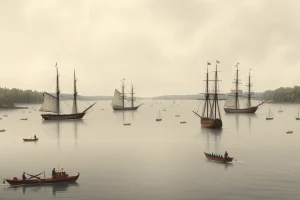
As British reinforcements arrived, the Royal Navy tightened its blockade of the American coast. The blockade was the central instrument of British strategy. It sought to strangulate American commerce, deny supplies to the U.S. Navy and privateers, and pressure the United States into peace. Enforcing the blockade produced a steady stream of captures: American merchantmen, blockade runners, and privateers were taken and sent to vice-admiralty courts, especially at Halifax, Nova Scotia. These captures were the raw material of prize money.
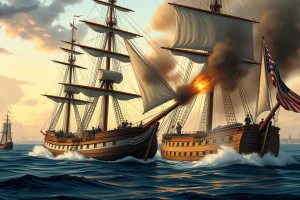
British warship captures of American naval vessels were less common but highly visible. On 1 June 1813, HMS Shannon, commanded by Captain Philip Broke, defeated and captured USS Chesapeake outside Boston Harbor. The Chesapeake was taken into the Royal Navy, and the capture yielded prize money for Shannon’s crew. In January 1815, a British squadron including HMS Endymion, HMS Pomone, and HMS Tenedos captured USS President. These events demonstrated that the Royal Navy could still win single-ship actions, but they were not the main source of prize income. Merchant and privateer captures were far more numerous.
Throughout the war, British naval officers balanced Admiralty orders with the pursuit of prizes. The blockade itself created a lucrative environment for prize-taking, because American ships that attempted to run it were lawful prizes. At the same time, convoy duty—escorting British merchant fleets—was essential but offered fewer opportunities for capture. Some captains and crews may have preferred cruising for prizes to tedious escort work, while others remained on station. Prize agents and vice-admiralty courts in Halifax, Bermuda, and London handled the legal and financial aftermath. The system continued to process prizes even after the Treaty of Ghent ended the war in December 1814.
Why It Matters
Prize money matters because it reveals how strategy is executed, not just designed. British naval strategy in the War of 1812 was formulated by the Admiralty and implemented by commanders on the North American station. That strategy prioritized blockade and economic warfare. Prize money did not replace those priorities, but it influenced morale, recruitment, and risk-taking. It gave officers and crews a personal stake in the capture of American shipping, helping to sustain the blockade’s enforcement. It also created a potential conflict of interest: the pursuit of valuable prizes could distract from convoy protection or coordinated fleet operations.
Historians interpret this influence differently. Scholars of economic warfare, such as Brian Arthur, emphasize that the Royal Navy’s blockades and convoys were the decisive maritime instruments of the war. From this perspective, prize money was a secondary incentive that oiled the machinery of blockade but did not determine strategy. Other historians, including Faye Kert, show that the prize system was central to the maritime economy of Atlantic Canada, with Halifax serving as a major prize port. They argue that prize money shaped the behavior of naval officers and privateers alike and was not merely incidental. Jeremy Black has noted that Britain emerged from the war with total command of the oceans and broad experience in blockade and amphibious operations, which suggests that strategic discipline generally outweighed prize-seeking. The debate continues over how much prize money altered operational decisions, but most historians agree that it was a significant motivating factor rather than the sole cause of British naval strategy.
Definition
Prize money was the share of the proceeds from a captured enemy vessel and its cargo paid to the captors after a vice-admiralty court condemned the prize as lawful. In the Royal Navy, the money was distributed according to a fixed scale based on rank. Flag officers, captains, lieutenants, warrant officers, petty officers, seamen, and marines all received shares, with captains and flag officers receiving the largest portions. The system was intended to reward initiative and compensate for the dangers and uncertainties of naval service.
Background
Prize money had a long history in British naval practice. It dated back to the medieval period and became more formalized in the seventeenth and eighteenth centuries. During the Napoleonic Wars, successful frigate captains could make fortunes from captures. The American war offered new opportunities because the United States had a large merchant marine and many privateers. The Admiralty’s prize rules, the vice-admiralty courts, and the network of prize agents formed an administrative apparatus that supported naval operations. For many officers, prize money was not a marginal bonus but a central element of their professional expectations.
How It Worked
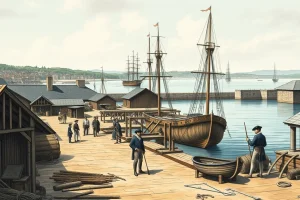
When a Royal Navy ship captured an enemy vessel, the prize was usually sent to a friendly port under a prize crew. A vice-admiralty court then determined whether the capture was lawful. If condemned, the ship and cargo were sold, and the proceeds—after court fees, prize agents’ commissions, and other deductions—were distributed among the captors. If more than one ship participated in the capture, the shares were divided according to Admiralty rules, sometimes leading to complex litigation. The system encouraged aggressive cruising, because the more prizes a ship took, the greater the potential payout. It also encouraged risk-taking, since valuable merchantmen might be defended or might escape. Prize crews removed men from their original ships, which could affect a warship’s fighting efficiency and crew strength.
Competing Viewpoints
Historians disagree about how deeply prize money influenced British naval strategy. One interpretation holds that prize money was a powerful but subordinate incentive. Britain’s strategic goal was to blockade the United States and protect its own trade; prize money helped motivate crews to enforce the blockade, but it did not change the overall plan. Another interpretation argues that prize money could distort operations. Captains might leave their station to chase a valuable merchantman, or they might avoid risky engagements that could jeopardize future prizes. Some scholars see the Admiralty’s July 1813 order to avoid single combat with heavy American frigates as evidence that strategic considerations overrode prize-seeking. Others note that the order also protected valuable ships and crews that might otherwise be lost. The disagreement reflects a broader question in naval history: how much do personal financial incentives shape state strategy?
Role in the War of 1812
In the War of 1812, prize money’s role was most visible in the enforcement of the blockade. The Royal Navy’s squadrons off the American coast captured hundreds of American merchant vessels and privateers. These captures were not incidental to the blockade; they were a direct consequence of it. Prize money gave officers and crews a material reason to pursue blockade runners aggressively. At the same time, the most important British naval operations—the blockade of the Chesapeake, the amphibious raids in 1814, and the support of land campaigns—were directed by the Admiralty and station commanders. Prize money shaped the tactics and tempo of those operations, but it did not set their strategic objectives. The system also affected relations with British merchants, who sometimes complained that naval captains prioritized prize-hunting over convoy protection. The Admiralty had to balance these pressures.
Consequences and Historical Interpretation
The immediate consequence of prize money was financial: successful British officers and crews received payments that could be substantial, and the prize system sustained a network of agents, lawyers, and court officials in Halifax and other ports. In the longer term, prize money remained a feature of Royal Navy life into the nineteenth century, though it was gradually reformed and eventually abolished. For historians of the War of 1812, prize money offers a lens into the relationship between strategy and incentive. It shows that the British naval war was not only a matter of fleet movements and blockade lines but also of individual ambition, legal process, and economic reward. The war’s naval outcome—British command of the oceans and the failure of American commerce raiding to break the blockade—owed much to the Royal Navy’s strategic superiority. Prize money helped make that strategy work on a day-to-day level, even as it created tensions that commanders had to manage.
Primary Sources
Several categories of primary sources illuminate prize money and British naval strategy. Admiralty correspondence and orders, held at The National Archives in Kew, show the Admiralty directing station commanders, reinforcing the North American station, and restricting single-ship engagements. Examples cited by Kevin D. McCranie include Croker to Warren, 10 February 1813 (ADM 2/1376/73–87) and Croker to the Several Commanders in Chief, 10 July 1813 (ADM 2/1377/154–56). These documents reveal strategic priorities but rarely discuss prize money directly.
Vice-admiralty court records, especially for Halifax, Nova Scotia, are essential for understanding prize money. They record the condemnation of captured vessels and cargo and the distribution of proceeds. Faye Kert’s Prize and Prejudice uses these records to reconstruct the scale of prize-taking in Atlantic Canada. Prize agents’ accounts, captains’ letters, and officers’ memoirs also mention the hope of prizes, but such sources are self-interested and may exaggerate or conceal motives. American sources, such as the National Park Service article by Paul Gilje, quote privateer sailors discussing prize money, providing a comparative perspective. The main limitation is that surviving records are uneven, and the actual influence of prize money on specific decisions is often inferred rather than documented.
Further Reading
- Arthur, Brian. The Royal Navy and Economic Warfare in North America, 1812–1815. PhD dissertation, University of Greenwich, 2009.
- Black, Jeremy. A British View of the Naval War of 1812. Naval History Magazine 22, no. 4 (August 2008).
- Dudley, William S., and Michael J. Crawford, eds. The Naval War of 1812: A Documentary History. 4 vols. Washington, DC: Naval Historical Center, 1985–2002.
- Kert, Faye. Prize and Prejudice: Privateering and Naval Prize in Atlantic Canada in the War of 1812. St. John’s, Nfld: International Maritime Economic History Association, 1997.
- McCranie, Kevin D. Waging Protracted Naval War: The Strategic Leadership of Secretary of the U.S. Navy William Jones in the War of 1812. The Northern Mariner 21, no. 2 (April 2011): 143–157.
- Gilje, Paul. Cruising for Dollars: Privateers in the World of 1812. U.S. National Park Service.
References
- Arthur, Brian. The Royal Navy and Economic Warfare in North America, 1812–1815. PhD dissertation, University of Greenwich, 2009. https://gala.gre.ac.uk/id/eprint/5708/8/Brian%20Arthur%20Vol.1%202009%20-%20Redacted.pdf.
- Black, Jeremy. A British View of the Naval War of 1812. Naval History Magazine 22, no. 4 (August 2008). https://www.usni.org/magazines/naval-history-magazine/2008/august/british-view-naval-war-1812.
- Gilje, Paul. Cruising for Dollars: Privateers in the World of 1812. U.S. National Park Service. https://www.nps.gov/articles/cruising-for-dollars.htm.
- Kert, Faye. Prize and Prejudice: Privateering and Naval Prize in Atlantic Canada in the War of 1812. St. John’s, Nfld: International Maritime Economic History Association, 1997.
- McCranie, Kevin D. Waging Protracted Naval War: The Strategic Leadership of Secretary of the U.S. Navy William Jones in the War of 1812. The Northern Mariner 21, no. 2 (April 2011): 143–157. https://www.cnrs-scrn.org/northern_mariner/vol21/tnm_21_143-157.pdf.
- The National Archives (UK). Admiralty and High Court of Admiralty records, Kew.
FAQ
Did prize money cause the War of 1812?
No. The war's causes included impressment, trade restrictions, and maritime rights. Prize money was an incentive within the war, not a cause of it.
How was prize money distributed in the Royal Navy?
After a vice-admiralty court condemned a prize, proceeds were divided according to rank, with flag officers and captains receiving the largest shares and seamen and marines smaller shares.
Did prize money make British captains ignore blockade duty?
Sometimes the pursuit of prizes could conflict with blockade or convoy duty, but the Admiralty's strategic orders and naval discipline generally kept the blockade as the primary mission. Historians debate the extent of the distortion.
Leave a Reply