Short Answer
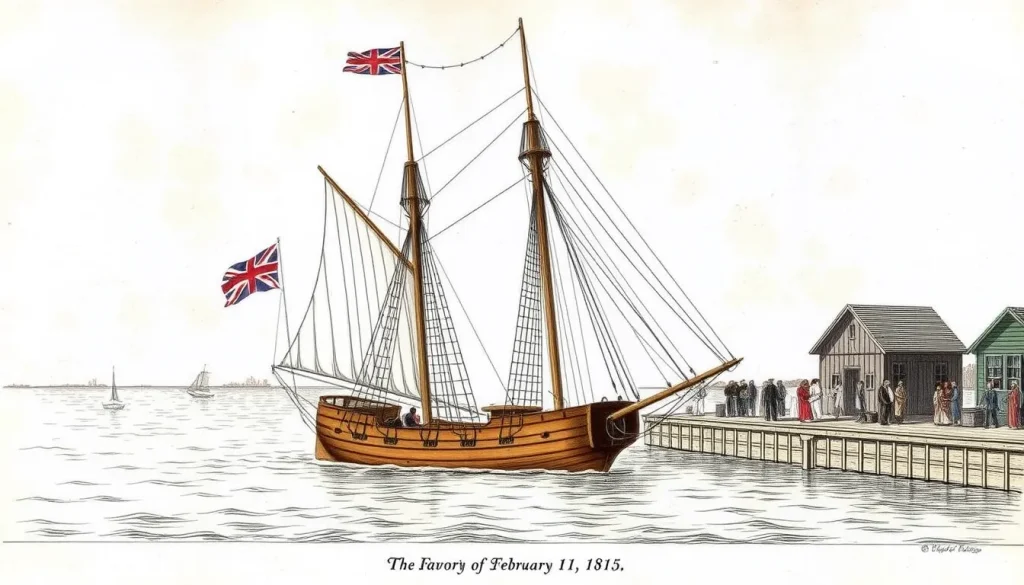
The Favorite was a British naval vessel—most often described as a packet-sloop—that carried the ratified copy of the Treaty of Ghent from Europe to the United States in February 1815. Its arrival in New York on 11 February 1815 brought the first official news that the War of 1812 had ended, enabling the U.S. Senate to approve the treaty and President James Madison to sign it before the formal exchange of ratifications on 17 February. The ship is remembered for this decisive final leg of the treaty’s transatlantic journey.
Historical Context
The War of 1812, fought between the United States and the United Kingdom, had reached a stalemate by 1814. Both sides, exhausted by years of conflict and mindful of the broader Napoleonic Wars, agreed to negotiate. Talks began in August 1814 in Ghent, in the United Netherlands (now Belgium), and produced the Treaty of Peace and Amity, signed on December 24, 1814. The treaty restored relations to the status quo ante bellum—pre-war borders—and contained no provisions on impressment or neutral rights, the issues that had originally sparked the war.
British ratification came quickly: the Prince Regent gave his approval on December 27, 1814. However, the treaty still required ratification by the U.S. Senate and the President. A transatlantic copy had to be delivered to Washington. Speed was essential, as both governments wanted to end hostilities before further bloodshed. The British dispatched the Favorite, a fast packet-sloop, to carry the signed treaty to American shores. The choice of a smaller, swift vessel reflected the diplomatic urgency.
What Happened
The Favorite departed from a European port (likely from the British Isles or a continental port) after receiving the ratified British copy. The ship carried an American messenger, a Mr. Carroll, who was entrusted with the treaty text. According to a contemporary handbill reprinted in the Columbian Centinel of Boston, the vessel arrived in New York harbor on the afternoon of February 11, 1815. The handbill, written by Jonathan Goodhue, announced: “I HASTEN to acquaint you, for the information of the Public of the arrival here this afternoon of His Britannic Majesty’s sloop of war Favorites, in which has come passenger Mr. Carroll, American Messenger, having in his possession A TREATY OF PEACE, between this Country and Great Britain, signed on the 24th December last.”
The news spread rapidly. The same handbill reported that New York City erupted in joy, with bells, illuminations, and celebrations. The treaty was dispatched to Washington, where Secretary of State James Monroe received it a few days later. President Madison submitted the treaty to the Senate, which unanimously approved it on February 16, 1815. Madison signed the document the same day. Ratifications were exchanged with the British minister the following day, February 17, formally ending the war.
While the Favorite’s delivery was the catalyst for American ratification, it is important to note that news did not reach all fronts immediately. The Battle of New Orleans had been fought on January 8, 1815, before the treaty arrived, and other remote areas continued to see skirmishes until couriers brought word. The Favorite’s voyage was thus the beginning of the peace process for the United States, though its effects rippled outward over days and weeks.
Why It Matters
The Favorite’s delivery of the Treaty of Ghent was the final link in a diplomatic chain that ended the War of 1812. Without the treaty’s physical arrival, the U.S. government could not complete its constitutional ratification process, and the war might have dragged on into further campaigns. The ship’s voyage ensured that the peace negotiated in December 1814 took effect in February 1815, preventing renewed offensives planned by American and British commanders.
The event also holds symbolic significance. It represented the transition from conflict to diplomacy, and the speed of communication across the Atlantic in the early nineteenth century. Historians note that the Favorite is remembered not for combat but for carrying a document that shaped the future of North America. The treaty led to the restoration of borders, the end of British support for Indigenous nations in the Northwest, and a lasting peace between Britain and the United States, with consequences for Indigenous peoples that were profound and negative. For the Canadas, the treaty solidified the boundary with the United States and contributed to a separate Canadian identity.
Type and Construction
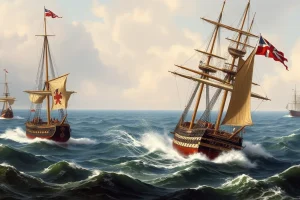
The Favorite is described in contemporary accounts as a “British sloop of war” (as in the Boston handbill) and by later sources as a “packet ship.” Both terms indicate a relatively small, fast naval vessel, likely a brig or sloop of war adapted for speedy passage. Specific construction details—dimensions, builders, or launch year—are not recorded in the available sources. The ship was built for the Royal Navy or for packet service, designed for rapid transport of passengers and mail.
Nation
The Favorite was a British vessel, flying the Royal Navy ensign or a packet service flag. Its national identity was key: it carried the official British ratification of the Treaty of Ghent, and its arrival in New York was an act of peaceful diplomatic communication between Britain and the United States.
Armament
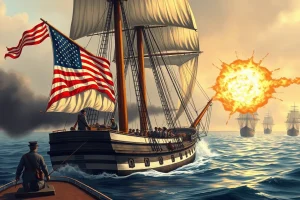
No armament details are preserved in the consulted sources. As a sloop of war, it may have carried a light battery of small cannons, but its role as a packet and dispatch vessel suggests that speed and diplomatic status were more important than combat capability. The lack of specific records prevents an accurate description of its guns.
Crew
The crew size and composition are not documented in the materials used for this article. A packet or sloop of war would typically have a complement of a few dozen officers and sailors, but no exact numbers are known for the Favorite. The voyage was successful and uneventful in terms of crew performance, but no individual names survive in the record.
Commander
The identity of the Favorite’s commanding officer is not recorded in the sources. Contemporary reports focus on the ship’s arrival and its passenger, Mr. Carroll, rather than the captain. Without further archival research, the commander’s name remains unknown.
Engagements
There is no record of the Favorite participating in any military engagement during the War of 1812. Its service on this voyage was diplomatic, not combatant. The ship’s only known significant action was carrying the Treaty of Ghent across the Atlantic, a nonviolent but crucial operation. If it saw other service, that history is not documented in accessible sources.
Fate
After delivering the treaty to New York on February 11, 1815, the Favorite disappears from the historical record in the sources consulted. It likely returned to routine packet or naval duties. No specific details about its later career, decommissioning, or final disposition are available. The ship’s legacy rests entirely on the single voyage immortalized in the peace handbills and subsequent historical accounts.
Primary Sources
The most direct primary source is the contemporary handbill written by Jonathan Goodhue, printed in the Columbian Centinel of Boston on February 15, 1815. It announces the arrival of the Favorite and quotes the message delivered to the newspaper. The handbill is reproduced in the Lilly Library’s War of 1812 collections and in the RareNewspapers.com description.
Another relevant primary source is James Monroe’s letter to General Jacob Brown, dated February 10, 1815—one day before the Favorite arrived—which discusses plans for a renewed invasion of Canada, showing that American leaders were unaware of the treaty’s imminent arrival. This letter is held in the Lilly Library collection and highlights the timing of the ship’s voyage.
The Treaty of Ghent itself, signed on December 24, 1814, is the ultimate document. Its full text is available via the National Archives and other government repositories. The treaty’s provision for mutual restoration of territory was critical to ending the war.
Further Reading
- National Park Service, “War’s End,” Star-Spangled Banner National Historic Trail. https://nps.gov/stsp/learn/historyculture/war-s-end.htm
- Lilly Library, “Peace,” The War of 1812 in the Collections of the Lilly Library. https://collections.libraries.indiana.edu/warof1812/exhibits/show/warof1812/the-war-1815/peace
- Jason Ridler, “Treaty of Ghent,” The Canadian Encyclopedia. https://thecanadianencyclopedia.ca/en/article/treaty-of-ghent
- RareNewspapers.com, “Treaty of Ghent signed… breaking news…” (listing for the Columbian Centinel handbill). https://www.rarenewspapers.com/newspaper/617281
References
- “War’s End,” National Park Service, Star-Spangled Banner National Historic Trail. https://nps.gov/stsp/learn/historyculture/war-s-end.htm (accessed October 2023).
- “Peace,” The War of 1812 in the Collections of the Lilly Library, Indiana University. https://collections.libraries.indiana.edu/warof1812/exhibits/show/warof1812/the-war-1815/peace (accessed October 2023).
- “Treaty of Ghent signed… breaking news…” RareNewspapers.com. https://www.rarenewspapers.com/newspaper/617281 (accessed October 2023).
- “Treaty of Ghent,” Wikipedia. https://en.wikipedia.org/wiki/Treaty_of_Ghent (accessed October 2023).
- Jason Ridler, “Treaty of Ghent,” The Canadian Encyclopedia. https://thecanadianencyclopedia.ca/en/article/treaty-of-ghent (accessed October 2023).
FAQ
What was the Favorite ship?
The Favorite was a British packet-sloop (described also as a sloop of war) that carried the ratified Treaty of Ghent to the United States in February 1815.
When did the Favorite arrive in New York?
It arrived on February 11, 1815, with the treaty and an American messenger, Mr. Carroll, aboard.
How did the Favorite's voyage affect the end of the War of 1812?
Its arrival allowed the U.S. Senate to ratify the treaty on February 16 and President Madison to sign it, leading to the official exchange of ratifications on February 17, 1815, ending the war.
What happened after the Favorite delivered the treaty?
The ship's later history is not recorded; it likely returned to regular service. Its legacy is tied solely to the treaty delivery.


Leave a Reply