
Short Answer
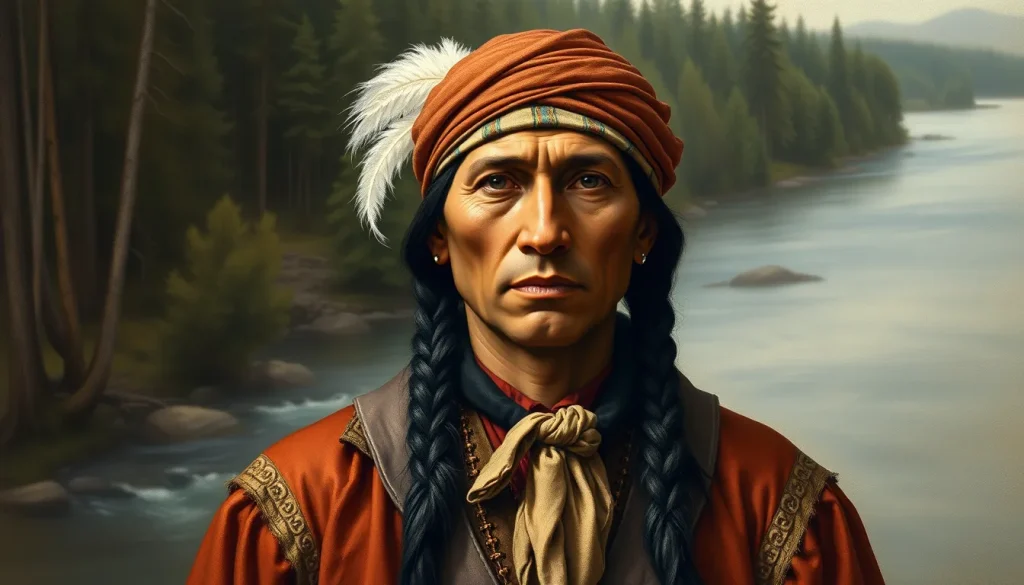
Tecumseh (c. 1768–1813) was a Shawnee chief and warrior who conceived and led a pan-Indian confederacy to resist the expansionist policies of the United States. His vision of unifying Native peoples from the Great Lakes to the Gulf of Mexico directly shaped his decision to ally with the British during the War of 1812, a choice that made him a decisive figure in the conflict’s western theater. His death at the Battle of the Thames on October 5, 1813, effectively dissolved the confederacy, yet he remains a symbol of Indigenous resistance and leadership in North American history.
Historical Context
Following the American Revolution, the United States rapidly expanded into the Ohio Country, the homeland of the Shawnee and other Indigenous nations. Treaties such as the 1795 Treaty of Greenville, which ended the Northwest Indian War, ceded most of present-day Ohio to the United States, pushing Shawnees westward. A cycle of violence and land cessions continued into the early 19th century. The British, still holding Canada, maintained forts and supplied Native allies in the region, fueling American suspicions. By 1810–1811, tensions over maritime rights, impressment, and British support for Indigenous resistance were pushing the United States and Britain toward war. For Tecumseh, the impending conflict represented a final opportunity to halt American encroachment and create an independent Indigenous state under British protection.
What Happened
Tecumseh was born in the Ohio Country, likely in March 1768, near the Scioto River. He experienced warfare early: his father was killed at the Battle of Point Pleasant in 1774, and his family suffered from American raids. By the early 1790s, Tecumseh had become a recognized warrior, fighting alongside Blue Jacket and other leaders in the Northwest Indian War, which culminated in the 1794 Battle of Fallen Timbers and the Treaty of Greenville. After that defeat, Tecumseh’s younger brother Lalawéthika, later known as Tenskwatawa, experienced a religious vision in 1805 and began preaching a return to traditional ways, rejecting white influence. Tecumseh embraced his brother’s message and added a political dimension—advocating that Indigenous peoples held land in common and that individual tribes could not sell territory without unanimous consent. In 1808, the brothers founded Prophetstown at the confluence of the Wabash and Tippecanoe Rivers in present-day Indiana, which grew into a multi-tribal community.
Tecumseh traveled extensively to recruit allies, visiting tribes from the Great Lakes to the Southeast. His message resonated especially among the Creeks, the Choctaws, and others facing American pressure. In 1811, while Tecumseh was away in the south, Indiana Territory governor William Henry Harrison marched against Prophetstown. On November 7, Harrison’s troops attacked and dispersed the defenders at the Battle of Tippecanoe, destroying the town. This setback did not end Tecumseh’s movement, but it weakened his military position.
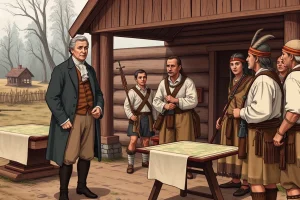
When the United States declared war on Britain in June 1812, Tecumseh immediately sought alliance with the British. He traveled to Fort Amherstburg (modern Windsor, Ontario) and in July 1812 met with British Major General Isaac Brock. Brock recognized Tecumseh as a commander of all Native forces and agreed that, should they win, the Old Northwest would form an independent Indigenous state under British protection. Tecumseh’s warriors played a crucial role in the capture of Fort Detroit on August 16, 1812, when the appearance of Tecumseh’s forces—reported to be far larger than they were—contributed to American General William Hull’s decision to surrender without a fight. This victory secured the western flank of Upper Canada and opened the way for continued British operations.
In 1813, however, the tide turned. At the Battle of Frenchtown (January 1813) and later at Fort Meigs (May 1813), Tecumseh’s efforts were often hampered by British commander Henry Procter’s hesitancy. After the American naval victory at the Battle of Lake Erie in September 1813, Procter ordered a retreat into Upper Canada. Tecumseh reluctantly followed, but he lost confidence in Procter. On October 5, 1813, American forces under William Henry Harrison caught up with them at the Battle of the Thames, also known as Moraviantown. Procter fled, and the British troops broke, but Tecumseh and his warriors fought fiercely from a swampy position. Tecumseh was killed during the battle. His body was never recovered.
Why It Matters
The immediate consequence of Tecumseh’s death was the collapse of his pan-Indian confederacy. Without his leadership, organized Indigenous resistance in the Northwest stalled, and American forces moved to secure the region. In the 1830s, the federal government implemented Indian removal, east of the Mississippi, a process that Tecumseh had fought to prevent. His legacy, however, transcended these defeats. During the war, Tecumseh was celebrated by British and American contemporaries as a brilliant leader and orator. His vision of a unified Indigenous front inspired later movements and serves as a foundational symbol for Indigenous sovereignty in both the United States and Canada. Historians debate the extent of his success and the cohesion of his confederacy, but his status as a folk hero and icon of resistance remains undisputed.
Early Life
Tecumseh was born into the Kispoko division of the Shawnee, likely in a village on the Scioto River. His name, meaning roughly “Shooting Star,” reflected the meteor associated with his clan. His father, Pukeshinwau, was a war chief, and his mother, Methoataaskee, was Shawnee. Tecumseh’s childhood was marked by violence; his father died in 1774 at the Battle of Point Pleasant. He was raised by his older brother Cheeseekau, a noted warrior. Tecumseh participated in his first raids as a teenager and soon earned a reputation for courage and discipline. He fought in the Northwest Indian War, distinguishing himself at Fallen Timbers. After the war, he moved with his band to the White River area, where he continued to lead a following.
Role Before the War
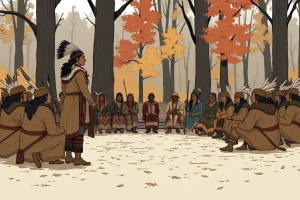
In the early 1800s, Tecumseh emerged as a leader advocating pan-Indian unity. He argued that Indigenous peoples held land communally, so no single tribe could cede land to the United States without the consent of all. This message directly countered the treaties that had separated tribes from their territories. He aligned with his brother Tenskwatawa’s spiritual movement, and together they built Prophetstown as a central community. Tecumseh’s oratory and diplomatic skills allowed him to cross tribal and linguistic boundaries, forming alliances with the Wyandot, Ottawa, Potawatomi, Creek, and others. In 1810 and 1811, he met with Indiana Territory governor William Henry Harrison, protesting land sales and asserting Indigenous rights. The destruction of Prophetstown at Tippecanoe in 1811 did not end his movement, but it hardened his resolve and pushed him closer to the British.
Role During the War
With the outbreak of war, Tecumseh saw an opportunity to achieve his goal of an independent Indigenous state. He allied with the British and provided essential intelligence and warriors to the defense of Upper Canada. He was instrumental in the capture of Fort Detroit, and his leadership at the subsequent siege of Fort Meigs in 1813 kept American forces in check. However, his partnership with British commander Henry Procter deteriorated, as Procter lacked aggression and ultimately retreated without consulting Tecumseh. Tecumseh’s insistence on fighting rather than retreating before the Battle of the Thames underscored his commitment to defending Indigenous lands. His role as a commander was recognized by both British and American observers; Brock once called him “the Wellington of the Indians” because of his tactical acumen.
Major Actions
Notable engagements and events involving Tecumseh include:
- Battle of Fallen Timbers (1794): Tecumseh fought with the confederacy and reportedly captured a field piece by cutting loose its horses.
- Establishment of Prophetstown (1808): He and his brother created a multi-tribal center that attracted thousands.
- Battle of Tippecanoe (1811): While Tecumseh was away, his brother’s forces were defeated, but Tecumseh’s political influence persisted.
- Capture of Fort Detroit (1812): Tecumseh’s forces were pivotal in inducing Hull’s surrender.
- Battle of Fort Meigs (1813): Tecumseh led successful ambushes and harassed American forces.
- Battle of the Thames (1813): Tecumseh was killed while covering the retreat.
Contemporary Accounts
British and American contemporaries left vivid descriptions. Major General Isaac Brock wrote, “A more sagacious or more gallant warrior does not, I believe, exist.” The future novelist John Richardson, who served at Amherstburg, recalled Tecumseh’s “ardour of expression in his eye” when he addressed his men. On the eve of the Thames, Tecumseh reportedly said, “Our lives are in the hands of the Great Spirit. We are determined to defend our lands, and if it is His will, we wish to leave our bones upon them.” These testimonies, though filtered through allied lenses, attest to Tecumseh’s personal magnetism and martial reputation. American accounts, such as those from Harrison’s officers, often credited Tecumseh with extraordinary skill, even while vilifying his cause.
Later Life
Tecumseh’s life ended on October 5, 1813, at the Battle of the Thames. His body was never positively identified, and many anecdotes claim that various individuals recognized or buried him. After his death, the confederacy fragmented, though some warriors continued to fight alongside the British until the end of the war. Tecumseh’s family and brother survived; Tenskwatawa later signed treaties ceding lands, a reversal of Tecumseh’s principles. The collapse of Tecumseh’s confederacy allowed the United States to dominate the Old Northwest and facilitated later removal policies.
Historical Legacy
Tecumseh has been memorialized as a symbol of Indigenous resistance and unity. His name was adopted by figures such as Civil War general William Tecumseh Sherman. In Canada, he is celebrated as a defender of what became Ontario against American invasion. Among Indigenous peoples, he remains a revered historical leader who foreshadowed later pan-Indian movements. Modern historians debate the extent of his confederacy’s organization and the practical viability of his proposed Indigenous state, but most agree that his leadership was remarkable in its scope and vision. Monumental sites, including Tecumseh Park in Ontario and various statues, commemorate his memory.
Primary Sources
The most relevant primary sources include:
- Isaac Brock’s correspondence (1812): Letters from Brock to his superiors and to Tecumseh’s allies provide insight into the military partnership and Brock’s high regard for Tecumseh.
- John Richardson’s memoir (later published as The War of 1812): Richardson, who witnessed Tecumseh’s speech at Amherstburg, offers a vivid, if romanticized, description.
- William Henry Harrison’s official dispatches (1811–1813): Harrison’s reports detail the American perspective on Tecumseh’s movements and the Battle of the Thames.
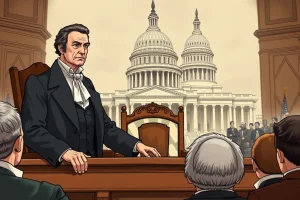
- William Hull’s court-martial testimony (1814): Hull defended his surrender at Detroit, blaming the overwhelming show of Tecumseh’s warriors and British artillery.
These sources provide eyewitness viewpoints, but each is colored by the author’s political and military agendas. For instance, Hull’s testimony seeks to justify a controversial decision, while Brock’s letters highlight his own strategic acumen. Reading them alongside Indigenous oral traditions is crucial, though the latter are less well documented in written form.
Further Reading
- Edmunds, R. David. Tecumseh and the Quest for Indian Leadership. Pearson, 2007.
- Laxer, James. Tecumseh and Brock: The War of 1812. House of Anansi Press, 2012.
- Hickey, Donald R. The War of 1812: A Forgotten Conflict. University of Illinois Press, 1989.
- National Park Service, “Tecumseh” (biography online).
- American Battlefield Trust, “Tecumseh” (biography online).
References
- National Park Service. “Tecumseh.” U.S. Department of the Interior. Accessed [date]. https://www.nps.gov/people/tecumseh.htm.
- The Canadian Encyclopedia. “Tecumseh and the War of 1812.” By James H. Marsh, updated by Tabitha de Bruin. Accessed [date]. https://thecanadianencyclopedia.ca/en/article/tecumseh.
- American Battlefield Trust. “Tecumseh.” Accessed [date]. https://www.battlefields.org/learn/biographies/tecumseh.
- Wikipedia. “Tecumseh.” Accessed [date]. https://en.wikipedia.org/wiki/Tecumseh.
FAQ
Why did Tecumseh ally with the British during the War of 1812?
Tecumseh allied with the British because he saw Britain as the only power able to stop American expansion into Indigenous lands. He secured a British pledge that, if they won, the Ohio Country would become an independent Indigenous state.
What was Tecumseh's vision?
Tecumseh envisioned a grand alliance of all Native American nations, from Canada to the Gulf of Mexico, to collectively defend their territories and way of life against American encroachment. He argued that no single tribe could sell land without the consent of all.
How did Tecumseh die?
Tecumseh was killed during the Battle of the Thames on October 5, 1813, while fighting with his warriors against American forces led by William Henry Harrison. His body was never recovered, and the exact circumstances of his death remain uncertain.
Leave a Reply