
Short Answer
The War of 1812 (1812–1815) between the United States and Great Britain is often remembered as a stalemate, yet it had a decisive impact on the institution of slavery. By crushing the military power of several Indigenous nations that had allied with Britain, the United States gained control of millions of acres of land in the South and West. This territorial conquest, combined with the rising global demand for cotton, enabled the rapid expansion of plantation slavery into the Deep South. The war also shattered the possibility of Indigenous-slave alliances, thereby reinforcing the security of the Southern slave system for decades to come.
Historical Context
In the late eighteenth and early nineteenth centuries, slavery had become increasingly entrenched in the American South, sustained by the invention of the cotton gin in 1793. The Louisiana Purchase of 1803 doubled the size of the United States and opened vast new territories, but most of the land east of the Mississippi remained under the control of powerful Indigenous nations, including the Creek, Choctaw, Chickasaw, and Cherokee. Many of these nations sought to preserve their independence by forming alliances, often with British or Spanish colonial powers, to counter American expansion. The War of 1812 provided the United States with the opportunity to break these alliances and seize Indigenous territories. British agents actively encouraged Indigenous resistance along the frontier, seeing it as a check on American power. In the South, the Creek Nation fractured into rival factions, with the Red Sticks (upper Creeks) supporting resistance and an alliance with Britain, while other Creek leaders sought peace with the United States.
What Happened
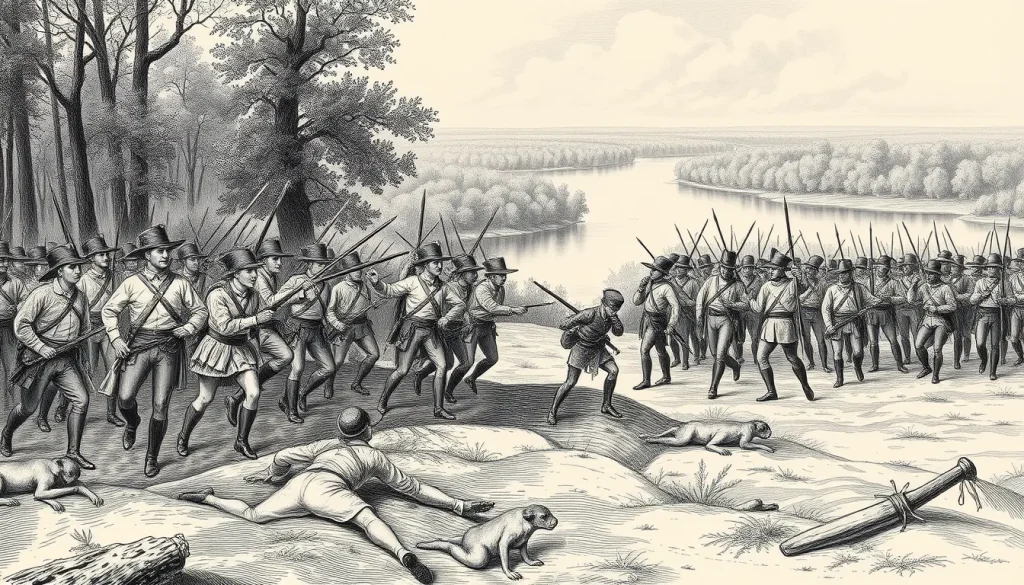
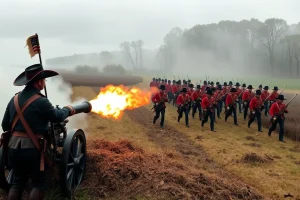
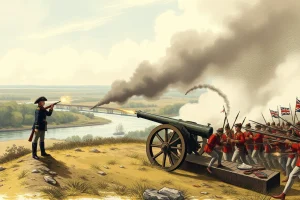
During the War of 1812, the United States launched campaigns against Indigenous peoples who were seen as British allies. In the Northwest, American forces defeated a confederation led by Tecumseh at the Battle of the Thames in October 1813. In the South, the conflict escalated into the Creek War (1813–1814). After the attack on Fort Mims by Red Stick warriors, General Andrew Jackson led Tennessee militia and allied Indigenous forces against the Red Sticks. At the Battle of Horseshoe Bend on March 27, 1814, Jackson’s forces slaughtered over 800 Red Stick warriors, effectively breaking their power. Jackson then forced the Treaty of Fort Jackson on both hostile and friendly Creek factions, demanding more than 23 million acres of land in present-day Alabama and Georgia. This treaty, signed in August 1814, ceded land that would become the heart of the Cotton Kingdom. The U.S. government also exerted pressure on other southern tribes, including the Cherokee, Choctaw, and Chickasaw, compelling them to sell or cede large tracts of land in the years immediately following the war. The defeat of Indigenous resistance ensured that the Lower South was open for white settlement and plantation agriculture, and the new territories were quickly colonized by slaveholders eager to cultivate cotton.
Why It Matters
The War of 1812’s most enduring consequence for slavery was the removal of the Indigenous barrier to southern expansion. The land ceded by the Creek Nation and other tribes provided the geographic foundation for the Cotton Kingdom, which by the 1820s had made the United States the world’s leading cotton producer. This expansion intensified the demand for enslaved labor, fueling the domestic slave trade and drawing enslaved people from the Upper South into the new cotton lands. The war also broke the possibility of an alliance between Indigenous nations and African slaves—a prospect that had haunted white southerners since the Haitian Revolution. By defeating Indigenous resistance, the U.S. government preempted any joint uprising against the slave system, strengthening the political and social power of slaveholders. In the long term, the expansion of slavery into the Southwest created the sectional tensions that culminated in the Missouri Crisis of 1819–1820, the Compromise of 1850, and ultimately the Civil War.
Definition
How did the War of 1812 fuel the expansion of slavery? The phrase refers to the direct and indirect ways the war removed obstacles to, and provided incentives for, the spread of the institution. The war’s campaigns against Indigenous nations resulted in the seizure of millions of acres of land, which were then opened to cotton cultivation. These lands were overwhelmingly settled by slaveholders, and the labor of enslaved African Americans produced the cotton that drove the economy. Additionally, the war weakened Indigenous peoples who might have allied with enslaved blacks, thus securing the southern slave system against internal threats.
Background
Prior to 1812, the United States had already acquired the Louisiana Territory, but much of it remained under Indigenous control. American settlers and land speculators had long coveted the fertile lands of the Mississippi and Alabama river valleys. The cotton gin made short-staple cotton profitable, but cultivation was limited to areas with ample land and a long growing season. Meanwhile, British agents, such as those in Spanish Florida, encouraged Indigenous resistance to American expansion. In the North, Tecumseh’s confederation aimed to halt white settlement, while in the South, the Red Stick faction of the Creeks drew inspiration from Tecumseh’s message. The growing demand for cotton in British mills meant that any new land brought into production would increase the demand for slave labor.
How It Worked
The connection operated through several mechanisms. First, the war provided a military justification for the U.S. government to attack Indigenous nations. The Treaty of Fort Jackson, dictated by Andrew Jackson, was not a negotiated peace but a forced cession. This land was then surveyed and auctioned to white settlers, many of whom brought enslaved workers to clear the land and plant cotton. Second, the war’s outcome removed the British as a potential protector of Indigenous nations. Without British military support, the Creeks, Choctaws, and Cherokees could not resist American pressure. Third, the war demonstrated to southern slaveholders that the federal government would use military force to secure their interests. This encouraged a more aggressive expansionist policy, leading to the acquisition of Florida in 1819 and the later removal of the Five Tribes in the 1830s. Finally, the war’s economic consequences—disruption of trade and high cotton prices—created a surge of investment in land and slaves in the postwar years.
Competing Viewpoints
Historians debate the degree to which the War of 1812 itself caused the expansion of slavery versus merely accelerating broader trends. Some, like the authors of a 2022 paper in the Journal of the Korean Society of History (Dongguk Sahak), argue that the war was essential: it broke Indigenous power and opened the land, which was the necessary precondition for the Cotton Kingdom. Others, such as historian James M. Banner Jr. in an article for Origins, emphasize that the war was part of a larger pattern of westward expansion and that the cotton economy would have grown regardless. Still, most scholars acknowledge that the war’s removal of Indigenous sovereignty in the South was a pivotal event. Some historians also note that the war had a mixed effect on slavery: while it strengthened slavery in the South, it also raised the issue of enslaved people fleeing to British lines, leading to a small number gaining freedom. This nuance is often overlooked in the broader discussion.
Role in the War of 1812
The War of 1812 was not fought over slavery per se, but the conflict created the conditions for its expansion. In the southern theater, the war merged with the Creek War, which was at once a civil war among the Creeks and a proxy war between the United States and Britain. Andrew Jackson’s victory at Horseshoe Bend was a turning point. The Treaty of Fort Jackson, signed after the war, was a unilateral diktat. Jackson later bragged that he had “fought the British and the Indians” and had opened “the best land in the world” for Americans. The U.S. government also used the war as justification for seizing land from other tribes. In the Old Southwest, the war effectively extinguished any possibility of a united Indigenous resistance.
Consequences and Historical Interpretation
The immediate consequence was the transfer of millions of acres of land from Indigenous to American hands. Between 1814 and 1817, land sales in the Mississippi Territory skyrocketed. Cotton production boomed, and the number of slaves in the region increased dramatically. The expansion of slavery into Alabama, Mississippi, and Louisiana fueled the growth of the domestic slave trade, which tore families apart and moved hundreds of thousands of enslaved people to the new territories. The political consequences were equally significant: the Missouri Crisis of 1819–1820 revealed that the question of slavery’s expansion had become the central national issue. Many historians argue that the War of 1812, by facilitating the expansion of slavery, made the Civil War possible. The war’s success in securing the South also encouraged a sense of southern power in American politics, culminating in the secession crises of the mid-nineteenth century.
Primary Sources
Primary sources that illuminate the link between the War of 1812 and slavery expansion include the Treaty of Fort Jackson (1814), which explicitly ceded land and shows the U.S. government’s coercive methods. Andrew Jackson’s correspondence from the period, available in The Papers of Andrew Jackson, details his views on land, Indians, and slavery. Contemporary newspapers such as Niles’ Weekly Register covered the land cessions and the economic opportunities in the South. Hezekiah Niles, the editor, also reported on the cotton boom and slave markets. An important limitation of these sources is their pro-American bias; they rarely represent Indigenous or enslaved perspectives. The Creek and enslaved voices are largely absent. However, these documents demonstrate how contemporaries understood the connection between the war, land, and slavery.
Further Reading
- James M. Banner Jr., “The Legacy of the War of 1812 Is With Us Still,” Origins (2014).
- “How Did the War of 1812 Contribute to Expansion of Slavery in Post-War of 1812?” Dongguk Sahak 74 (2022): 385–407.
- Matthew Mason, Slavery and Politics in the Early American Republic (University of North Carolina Press, 2008).
- John Craig Hammond, “‘They Are Very Much Interested in Obtaining an Unlimited Slavery’: Rethinking the Territorial Expansion of Slavery in the Louisiana Purchase Territories, 1803–1805,” Journal of the Early Republic 23, no. 2 (2003).
- Alan Taylor, The Civil War of 1812: American Citizens, British Subjects, Irish Rebels, and Indian Allies (Alfred A. Knopf, 2010).
References
- How Did the War of 1812 Contribute to Expansion of Slavery in Post-War of 1812? Dongguk Sahak 74 (2022): 385–407. doi:10.22912/dgsh.2022..74.385.
- James M. Banner Jr., “The Legacy of the War of 1812 Is With Us Still,” Origins, September 2014, https://origins.osu.edu/index.php/history-news/legacy-war-1812-us-still.
- Matthew Mason, “Was Slavery Really Not A Major Issue in American Politics Before the Missouri Crisis?” Commonplace, issue 9.1 (October 2008), https://commonplace.online/article/was-slavery-really-not-a-major-issue/.
- John Craig Hammond, “‘They Are Very Much Interested in Obtaining an Unlimited Slavery’: Rethinking the Territorial Expansion of Slavery in the Louisiana Purchase Territories, 1803–1805,” Journal of the Early Republic 23, no. 2 (2003): doi:10.2307/3595044.
FAQ
Did the War of 1812 cause the expansion of slavery?
Yes, but not alone. The war's successful campaigns against Indigenous peoples opened millions of acres of southern land to cotton cultivation, which was carried out by enslaved African Americans. This was a decisive factor in the expansion of slavery after 1815.
What specific events during the war contributed to slavery’s spread?
The Battle of Horseshoe Bend and the subsequent Treaty of Fort Jackson were the most important events, as they led to the cession of land that became the heart of the Cotton Kingdom.
How did the war affect relations between Indigenous peoples and enslaved blacks?
By breaking the military power of southern Indigenous nations, the war eliminated the possibility of alliances between Native peoples and enslaved blacks against white settlers, thereby making the slave system more secure.
Leave a Reply