

Short Answer
War of 1812 pension files are a rich resource for genealogists, containing detailed personal information about soldiers, their families, and their service. These records, generated through pension applications under various acts of Congress, document names, dates, residences, military units, and often include affidavits, family Bible pages, and other proofs. Because many earlier records were lost or poorly kept, these pension files often provide the most complete surviving documentation of a veteran’s life and family, making them essential for anyone tracing ancestors who served in the conflict.
Historical Context
During and after the War of 1812, the United States government awarded pensions to veterans and their dependents as a form of compensation and support. The first federal pension law for the war came in 1816, offering half-pay for widows and orphans of officers and soldiers who died in service. Later acts expanded eligibility, including the 1871 act granting pensions to all veterans who served at least 60 days, and the 1878 act that lowered the service requirement to 14 days. These laws created a large body of applications as veterans and their families sought benefits. The applications required documentation that often captured genealogical data not recorded elsewhere.
What Happened
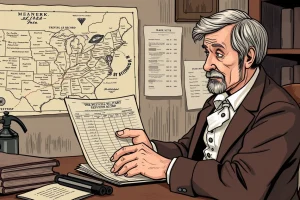
Pension applications involved several steps: a veteran or widow submitted a claim, providing evidence of service, marriage, and family relationships. The government required stringent proof, so applicants submitted affidavits from fellow soldiers, neighbors, clergy, and family members. They also included original documents such as discharge papers, marriage certificates, and pages from family Bibles. The resulting pension file could contain birth and death dates, marriage places, maiden names, names and birthdates of children, physical descriptions, residences, and military details like rank, unit, and period of service. Sometimes, files included correspondence and additional letters from descendants. The application process also generated related records like bounty land warrant applications, which often contain similar information.
Why It Matters
For genealogists, these files are invaluable. Many other records, such as censuses prior to 1850, did not list all family members, and military service records often noted only a soldier’s name and unit. Pension files fill in the gaps, providing exact dates and places. They document women, who often appear only as widows with maiden names. They also reveal family movements, as veterans often moved to new states where they claimed bounty land. The files connect generations, as later applications by children or widows provide more information. Additionally, they capture the daily life and challenges of early 19th-century families, offering insights into marriage, health, and social networks.
Definition
War of 1812 pension files are the official records created by the U.S. government when veterans, widows, or dependents applied for a pension based on service in the conflict. They contain genealogical information such as names, dates, places, and family relationships.
Background
The first pension act for the War of 1812 was passed in 1816, providing for widows and orphans. Subsequent acts in 1871 and 1878 expanded eligibility to all veterans with certain service lengths. These changes encouraged thousands of applications, leading to the creation of detailed files.
How It Worked
Applicants had to prove their service and family ties. They submitted witness affidavits, discharge papers, and family records. The pension bureau required specific information, leading to a standardized collection of data. Files also included correspondence, certificates, and sometimes physical descriptions.
Competing Viewpoints
While most historians and genealogists view pension files as highly reliable, some caution that they contain only what applicants chose to disclose, and errors may occur from memory or transcription. The files also reflect the legal requirements of the time, so not all families or soldiers qualified; many applications were rejected but still preserved. Thus, the absence of a file does not prove a lack of service.
Role in the War of 1812
Pensions were a direct consequence of the war, tied to military service. They also provide demographic data about the soldiers, including regional enlistment patterns and the diversity of participants, though they are not complete. They serve as a primary source for understanding the social composition of the American forces.
Consequences and Historical Interpretation
The records have been interpreted to reconstruct family histories and military service. They have also been used to study pension law administration and the government’s relationship with veterans. Digitization efforts, such as the War of 1812 Preserve the Pension Fund, have made these files widely accessible, revolutionizing genealogical research.
Primary Sources
The pension files themselves are the primary sources. They are held by the National Archives and Records Administration (NARA) in Washington, D.C. The index to these files is available on microfilm (M313). A major digitization project, led by the Federation of Genealogical Societies and NARA, has placed images of the files online at Fold3.com, free to access. Compiled military service records, created in the 1890s from muster rolls and pay lists, are another primary source. These records show a soldier’s unit and presence at musters.
Further Reading
- NARA, “Volunteer Military Service during the War of 1812 (1812–1815)” reference report (2010).
- FamilySearch, “How to Use War of 1812 Pension Files” (2018).
- Fold3, “What Can You Learn From the War of 1812 Pension Files” (2024) and “Update on the War of 1812 Pension Files” (2025).
References
- Ashcraft, Jenny. “What Can You Learn From the War of 1812 Pension Files.” Fold3 HQ, April 15, 2024. https://www.fold3.com/blog/what-can-you-learn-from-the-war-of-1812-pension-files/
- Ashcraft, Jenny. “Update on the War of 1812 Pension Files.” Fold3 HQ, March 24, 2025. https://www.fold3.com/blog/update-on-the-war-of-1812-pension-files/
- FamilySearch. “How to Use War of 1812 Pension Files.” June 13, 2018. https://www.familysearch.org/en/blog/how-to-use-war-of-1812-pension-files
- National Archives and Records Administration. “Volunteer Military Service during the War of 1812 (1812–1815)” Reference Report, December 2010. https://www.archives.gov/files/dc-metro/know-your-records/genealogy-fair/2012/handouts/war-of-1812-volunteer.pdf
FAQ
How do I find a War of 1812 pension file?
Search the index of pension applications (M313) or use online databases like Fold3 and FamilySearch, which have digitized many files. The originals are at NARA.
What kinds of documents are in a pension file?
Affidavits, marriage certificates, family Bible pages, discharge papers, correspondence, and sometimes physical descriptions.
Are all pension files available online?
As of 2025, the digitization project is about 86% complete, with files for many surnames available free on Fold3. The rest are accessible at NARA.



Leave a Reply