
Short Answer
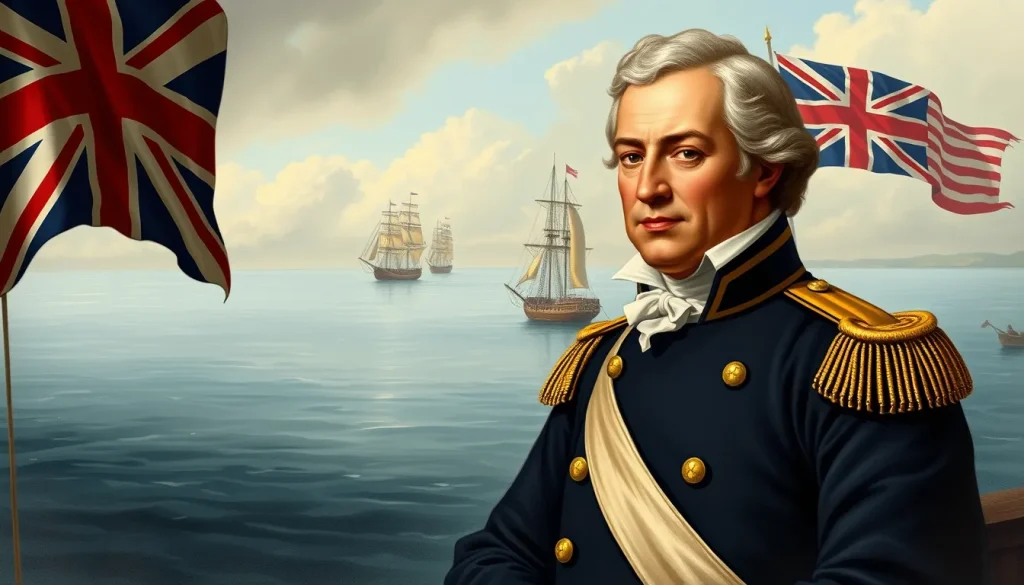
Sir James Lucas Yeo (1782–1818) was a British naval officer who served as commodore and commander-in-chief of the Royal Navy on the lakes of Canada from May 1813 to March 1815. His leadership on Lake Ontario was central to the naval war with the United States, where he faced American commodore Isaac Chauncey in a series of maneuvers and small-scale actions that ultimately preserved British control of the lake but produced no decisive victory. Yeo’s career embodied the challenges of adapting oceanic naval experience to the confined freshwater setting of the Great Lakes.
Historical Context
The War of 1812 was fought between the United States and Britain, with British North America (Canada) as the primary theater on land and sea. Control of the Great Lakes was critical for both sides because it allowed for the movement of troops, supplies, and communication lines between the interior and the Atlantic. Lake Ontario, in particular, connected the British naval base at Kingston, Upper Canada, to the Niagara frontier and the American naval base at Sackets Harbor, New York. Both sides engaged in an intense shipbuilding race, launching ever larger and more heavily armed vessels. The British command structure was divided among naval and military leaders, with Governor General Sir George Prevost holding overall authority. Yeo’s appointment in early 1813 came at a time when the British needed a competent commander to counter American naval superiority on the lakes.
What Happened
Yeo arrived at Quebec in May 1813 with a cadre of officers and sailors and immediately took command of the Lake Ontario squadron, based at Kingston. His force included the newly launched Wolfe, the Royal George, the Prince Regent, and several smaller vessels. His first major operation was an amphibious attack on Sackets Harbor on May 28–29, 1813, in conjunction with Prevost. The attack caused damage to the American dockyard but failed to destroy the ship under construction, the General Pike, and resulted in significant British casualties. Over the following months, Yeo and Chauncey each sought to gain a strategic advantage. They repeatedly avoided decisive combat, often because Yeo’s ships were armed mainly with short-range carronades while the Americans had long guns. On August 10, 1813, Yeo achieved a modest victory near the Niagara River, and on September 28, he broke off an engagement known as the Burlington Races to retreat to Kingston. During the winter of 1813–1814, Yeo oversaw the construction of larger ships, including the St. Lawrence, a 114-gun ship of the line, which gave the British temporary superiority. In May 1814, he commanded the naval force that captured the American supply depot at Oswego, New York. However, his relationship with Prevost deteriorated, particularly after the failed Plattsburgh campaign on Lake Champlain in September 1814, which Yeo blamed on Prevost. After the war ended in February 1815, Yeo returned to England, where he submitted a critical report and subsequently served on the West African coast, dying of fever at sea in 1818.
Why It Matters
Yeo’s command on Lake Ontario prevented the Americans from gaining control of the lake, which would have allowed them to sever British supply lines to the west and threaten Kingston. His shipbuilding efforts ensured that the British maintained parity or superiority in the key naval arena. Yet historians have debated his effectiveness. Some contemporaries and later writers described him as overly cautious or timid, while others emphasize the material constraints he faced, including shortages of men, supplies, and suitable armament. His relationship with Prevost exemplifies the friction between naval and military commanders in a theatre where cooperation was essential. Yeo’s actions directly shaped the outcome of the naval war on the Great Lakes, contributing to the stalemate that characterized the 1814 campaigns. His later career and death reinforced the image of a daring officer who, despite personal courage, struggled with the strategic demands of the Canadian command.
Early Life
James Lucas Yeo was born on October 7, 1782, in Hampshire, England, the elder son of James Yeo, an agent victualler to the Royal Navy. He received brief schooling at Bishop’s Waltham near Winchester but left at age ten to volunteer for the Royal Navy in March 1793. He rose quickly: acting-lieutenant by 1794, full lieutenant in February 1797. His early career was marked by service in the West Indies and the Adriatic, and he contracted yellow fever and malaria, health problems that recurred throughout his life. In 1805, while first lieutenant on the frigate Loire, he led a shore party of 50 men to capture a heavily fortified Spanish battery at Muros, an exploit that resulted in his promotion to commander and his first command, the captured French privateer Confiance. In 1809, he commanded an Anglo-Portuguese expedition that captured Cayenne, French Guiana, with a force of 400 men against a garrison of 1,200. For this, he was knighted by the Portuguese Prince Regent and later by King George III.
Role Before the War
Before the War of 1812, Yeo had established a reputation as an intrepid and successful naval officer. After his capture of Cayenne, he returned to England on half pay to recover from malaria. In early 1811, he was given command of the 32-gun frigate Southampton and sailed to Jamaica. In November 1812, while carrying dispatches, his ship ran aground and sank in the Bahamas, along with an American prize ship. He faced a court martial but was acquitted. His prewar service had demonstrated his courage and resourcefulness, qualities that led to his selection for the Canadian lakes command in March 1813.
Role During the War
Yeo was appointed commodore and commander-in-chief on the lakes of Canada on March 19, 1813, with strict instructions to cooperate with Governor General Sir George Prevost. He arrived at Quebec on May 5 and proceeded to Kingston to take command of the Lake Ontario squadron. His role involved both tactical command of the squadron and strategic oversight of all British naval forces on the lakes, including Lake Erie and Lake Champlain. He faced chronic shortages of sailors, supplies, and ships, and his primary objective was to maintain control of Lake Ontario. He conducted raids, blockades, and shipbuilding programs, but frequently avoided decisive action due to the superior long-range guns of the American squadron. His relationship with Prevost became increasingly contentious, culminating in formal charges after the Plattsburgh defeat.
Major Actions
Yeo’s major actions included the attack on Sackets Harbor (May 28–29, 1813), where he commanded the naval bombardment but failed to coordinate effectively with Prevost’s ground forces; the maneuvers of the summer and autumn of 1813, including the action of August 10 and the Burlington Races of September 28; the blockade of the American fleet at Sackets Harbor during the winter of 1813–1814; the construction of the Prince Regent and the St. Lawrence, which gave the British superiority on the lake; and the capture of Oswego, New York, on May 5–6, 1814, which secured vital supplies for the British. He also supported British army operations on the Niagara frontier. His last significant action was the coordination of naval forces during the Plattsburgh campaign in September 1814, though he was not directly involved in the naval battle on Lake Champlain, which was commanded by Captain George Downie. Yeo’s charges against Prevost after that defeat led to Prevost’s recall.
Contemporary Accounts
Contemporary reports offer mixed assessments of Yeo. American officers described the two squadrons as “lying alongside of each other, like two dogs, always growling and snapping but never biting.” British officers sometimes criticized Yeo’s caution, while others sympathized with his resource limitations. After the war, Yeo delivered a report to the Admiralty in which he attributed British successes more to American errors than to British skill. Historian Theodore Roosevelt later commented on the Sackets Harbor operation, writing that “The admirers of Sir James lay the blame on Sir George, and vice versa; but in reality neither seems to have done particularly well.” Yeo’s official dispatches to Prevost and the Admiralty provide a record of his decisions, though they naturally reflect his own perspective.
Later Life
After the war, Yeo was recalled to England in March 1815. He detoured through the United States, visiting his former adversary Isaac Chauncey at Sackets Harbor in a display of peacetime civility. He received further honors, becoming a Knight Commander of the Order of the Bath in January 1815. He then served as commander of a squadron on the West African coast, where he was tasked with suppressing the slave trade. He fell ill with fever in August 1818 and died at sea on August 21. His body was preserved in spirits and returned to England, where he was buried at the Royal Garrison Chapel in Portsmouth.
Historical Legacy
Yeo’s legacy is tied to his command on Lake Ontario, which historians view as a crucial but inconclusive naval campaign. He succeeded in preventing an American takeover of Lake Ontario, but his cautious approach drew criticism. Modern historians, such as Robert Malcomson, emphasize the material challenges he faced and downplay claims of personal timidity. In 1937, the Canadian government designated Yeo a National Historic Person, recognizing his role in the War of 1812. The Royal Military College of Canada named a dining hall after him in 1936. He is remembered as a capable though somewhat thwarted naval commander whose career exemplified the difficulties of naval warfare on the Great Lakes.
Primary Sources
Key primary sources include Yeo’s official dispatches to Governor General Sir George Prevost and the Admiralty, which detail his operations and justifications. His post-war report to the Admiralty (May 1815) offers a frank assessment of the Canadian naval war. The court martial records from his 1812 shipwreck and the charges he brought against Prevost illuminate command disputes. Contemporary newspaper accounts and the Annual Biography and Obituary for 1819 provide biographical details. The Dictionary of Canadian Biography entry synthesizes these sources. The miniature portrait of Yeo, held in a private collection, is a period artefact. These sources must be read with awareness of their authors’ biases, especially in the context of the Yeo-Prevost rivalry.
Further Reading
- Malcomson, Robert. Lords of the Lake: The War of 1812 on Lake Ontario. Toronto: Robin Brass Studio, 1998.
- Lafferty, Renée. “Sir James Lucas Yeo.” The Canadian Encyclopedia, Historica Canada, 2011.
- Dictionary of Canadian Biography, vol. 5, University of Toronto/Université Laval, 1966.
- Roosevelt, Theodore. The Naval War of 1812. 1882.
- Parks Canada. “Yeo, Sir James Lucas National Historic Person.” Historic Sites and Monuments Board of Canada.
References
- Lafferty, Renée. “Sir James Lucas Yeo.” The Canadian Encyclopedia. https://thecanadianencyclopedia.ca/en/article/sir-james-lucas-yeo.
- Parks Canada. “Yeo, Sir James Lucas National Historic Person.” https://www.pc.gc.ca/apps/DFHD/page_nhs_eng.aspx?id=1216.
- American Battlefield Trust. “James Yeo.” https://www.battlefields.org/learn/biographies/james-yeo.
- Grodzinski, John R. “A Miniature Depicting Commodore Sir James Lucas Yeo, KCB.” The Napoleon Series, War of 1812 Magazine, Issue 13, June 2010. https://www.napoleon-series.org/military-info/Warof1812/2010/Issue13/c_Yeo.html.
- Dictionary of Canadian Biography Online. “YEO, Sir JAMES LUCAS.” http://www.biographi.ca/en/bio/yeo_james_lucas_5E.html.
FAQ
Who was James Lucas Yeo?
James Lucas Yeo was a British naval officer who served as the commander of the Royal Navy on the Great Lakes during the War of 1812. He is best known for his command on Lake Ontario against the American fleet under Isaac Chauncey.
What was Yeo's most notable achievement in the War of 1812?
Yeo's most notable achievement was maintaining British control of Lake Ontario, preventing an American breakthrough. He also oversaw the construction of the HMS St. Lawrence, a 114-gun ship of the line that gave Britain temporary superiority on the lake.
Why did Yeo have a conflict with Sir George Prevost?
Yeo and Prevost clashed over strategy and resource allocation. Yeo accused Prevost of failing to support naval operations, particularly after the defeat at Plattsburgh in 1814, and he submitted formal charges that led to Prevost's recall.
Leave a Reply