
Short Answer
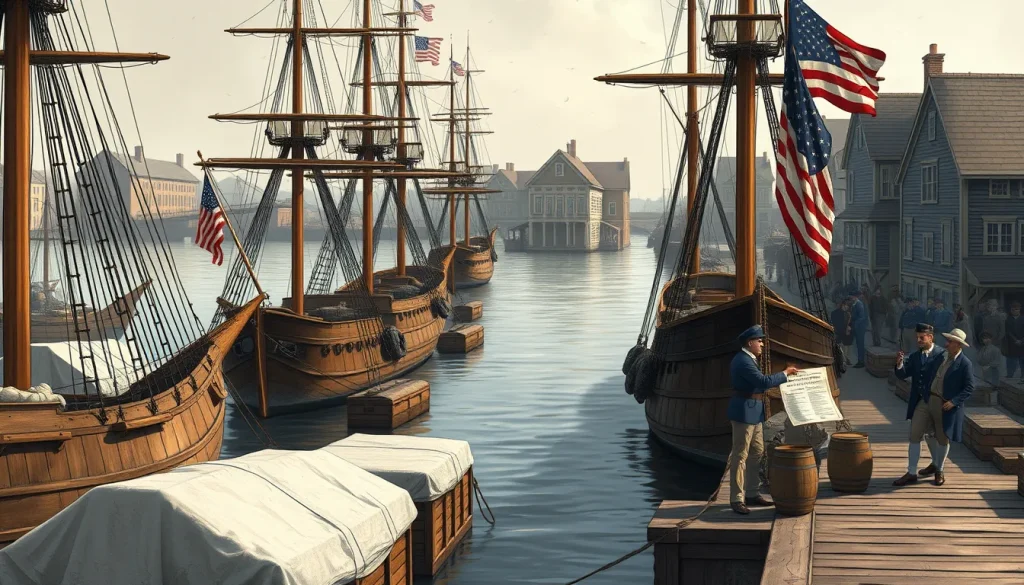
The Embargo Act of 1807 was a United States law, signed by President Thomas Jefferson on December 22, 1807, that prohibited American ships from leaving for foreign ports. It was an experiment in peaceful coercion during the Napoleonic Wars, intended to force Britain and France to respect American neutral trade and stop impressing American sailors. The embargo failed to achieve those goals, damaged the American economy, and became a significant step in the chain of events that led to the War of 1812.
Historical Context
During the Napoleonic Wars, Britain and France waged economic warfare against each other. Britain controlled the seas, while France dominated much of continental Europe. Both powers seized neutral American merchant ships, cargoes, and sailors under expansive maritime rules. Britain issued Orders in Council in November 1807 that restricted neutral trade with France and its allies. France had already issued the Berlin Decree in 1806 and later the Milan Decree in 1807, which authorized seizures of ships that complied with British regulations. American merchants were caught between the two systems.
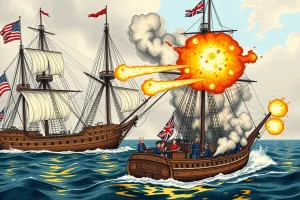
Impressment was another grievance. The Royal Navy stopped American vessels and removed sailors it claimed were British deserters, sometimes taking American citizens. The Chesapeake-Leopard affair of June 22, 1807, sharply worsened relations when HMS Leopard attacked USS Chesapeake off Norfolk, Virginia, and removed four men. President Jefferson ordered British warships out of American waters and faced demands for stronger action. The United States was militarily weak compared with Britain or France, so Jefferson and other Democratic-Republicans preferred commercial pressure to war. Earlier measures such as the Non-Importation Act of 1806 had been limited, and the Monroe-Pinkney Treaty of 1806 failed to end impressment or win Senate approval. The embargo became the most ambitious attempt to use trade as a weapon.
What Happened
In December 1807, Congress moved quickly. The Senate passed the embargo on December 18, the House followed on December 21, and Jefferson signed the act on December 22. The law laid an embargo on ships and vessels in American ports and harbors and barred them from obtaining clearance for foreign voyages. It effectively cut off most American exports and disrupted the re-export trade that had become central to the economy. The president could make exceptions for public vessels or other purposes, and revenue cutters and the U.S. Navy were used to enforce the restrictions.
Enforcement proved difficult. Merchants and shipowners evaded the law through smuggling, false destinations, coastal voyages that turned into foreign trips, and trade through Canada and Florida. New England, whose economy depended heavily on shipping, became a center of opposition. The embargo caused unemployment, falling prices, and hardship for farmers, sailors, and merchants. Congress passed a stricter Enforcement Act in January 1809, but it only increased resentment. On March 1, 1809, in the final days of Jefferson’s presidency, Congress repealed the Embargo Act and replaced it with the Non-Intercourse Act, which allowed trade with all nations except Britain and France. That law also failed to change British or French policy, and later measures such as Macon’s Bill No. 2 in 1810 led to further diplomatic maneuvering. Napoleon appeared to relax his decrees, but France continued seizing American ships; Britain maintained its Orders in Council. By 1812, President James Madison and Congress turned to war.
Why It Matters
The embargo mattered immediately because it caused a severe economic downturn and a political backlash. It revived Federalist fortunes in New England and deepened sectional divisions. It also encouraged domestic manufacturing, as Americans began producing goods they had previously imported. In diplomacy, the embargo failed to force Britain or France to respect neutral rights. Instead, it increased tensions with Britain, which found new markets in Latin America and elsewhere, and it did not stop impressment or ship seizures. The failure of peaceful coercion made commercial restrictions seem ineffective and helped convince many Americans that only war could protect national honor and interests.
Historians generally treat the embargo as a contributing cause rather than the sole cause of the War of 1812. It did not create the maritime disputes, but it was a major link in the chain from impressment and the Orders in Council to the declaration of war. Some scholars emphasize its economic and political damage within the United States; others place it within a broader Atlantic crisis that included frontier conflicts with Indigenous nations, British support for Native American resistance, and American expansionist ambitions. The embargo is therefore best understood as a failed alternative to war that made war more likely by leaving grievances unresolved and by discrediting the Republican policy of peaceful coercion.
Definition
The Embargo Act of 1807 was a general trade embargo enacted by the United States Congress. In this context, an embargo is a government order restricting ships from leaving port or trading with foreign nations. The act was not a declaration of war. It was a coercive economic measure designed to use American commerce as leverage against Britain and France.
Background
The embargo grew out of the neutral rights crisis of the Napoleonic Wars. Britain and France both preyed on American shipping, and the Royal Navy impressed sailors from American vessels. The Chesapeake-Leopard affair of 1807 brought anti-British feeling to a peak. Jefferson and his allies believed that Britain and France depended enough on American raw materials and markets that a trade cutoff could force concessions without risking a disastrous war. Federalists, especially in New England, warned that the cure would be worse than the disease.
How It Worked
The act prohibited vessels under U.S. jurisdiction from clearing for foreign ports. It authorized the president to use revenue officers and naval forces to enforce the embargo. Exceptions could be made for ships under immediate government direction. In practice, the policy was hard to enforce because the American coastline was long, local officials were sometimes sympathetic to merchants, and foreign trade could be rerouted through Canada, Florida, or the Caribbean. Smuggling and legal loopholes reduced the economic pressure on Britain and France while increasing the hardship at home. The Enforcement Act of 1809 tried to close some loopholes but could not save the policy.
Competing Viewpoints
Jefferson and many Democratic-Republicans saw the embargo as a republican alternative to war. It would avoid bloodshed, protect American sailors by keeping ships in port, and use economic pressure to bring Britain and France to terms. Federalists and many New England merchants viewed it as ruinous, unequal in its effects, and likely to provoke domestic resistance. British officials generally regarded the embargo as ineffective and were able to adapt by finding other markets. French officials continued seizing American ships despite Napoleon’s shifting decrees. Modern historians disagree about how much the embargo changed European behavior. Some stress that it was a rational response to military weakness; others argue that it was poorly designed, unevenly enforced, and politically motivated. Most agree that it failed to achieve its diplomatic goals.
Role in the War of 1812
The embargo contributed to the War of 1812 in several ways. It was the strongest American response to impressment and the Orders in Council, and its failure left those grievances unresolved. It intensified anti-British sentiment, especially after Britain continued to seize ships and impress sailors. It also discredited commercial coercion, leading to the Non-Intercourse Act and Macon’s Bill No. 2, which likewise failed to secure British concessions. By 1811 and 1812, War Hawks in Congress argued that embargoes and diplomacy had been exhausted and that war was necessary to defend American rights and honor. At the same time, the embargo deepened regional divisions and economic suffering, which shaped the political context in which Madison asked Congress for war on June 1, 1812. The war declaration followed on June 18, 1812. The embargo was not the only cause: British support for Indigenous resistance in the Northwest, American expansionism, and maritime grievances all played roles. But it was a critical link between the neutral rights crisis of 1807 and the decision for war in 1812.
Consequences and Historical Interpretation
In the short term, the embargo depressed the American economy, increased smuggling, and strengthened the Federalist Party in New England. In the longer term, it encouraged domestic manufacturing and highlighted the difficulty of using trade restrictions as a substitute for military power. It also contributed to the sectional tensions that would later appear during the war, including New England’s reluctance to support the conflict. Historians continue to debate whether the embargo made war inevitable or merely failed to prevent it. Those who see the War of 1812 as primarily a maritime conflict often treat the embargo as a central precursor. Those who emphasize frontier and Indigenous issues place it as one part of a larger crisis. The most defensible conclusion is that the Embargo Act of 1807 did not single-handedly cause the War of 1812, but its failure made war more likely by leaving American grievances unanswered and by undermining the credibility of peaceful economic pressure.
Primary Sources
- Embargo Act of 1807. The law was enacted by the 10th United States Congress and signed by President Thomas Jefferson on December 22, 1807. It is the central legal document for understanding what the embargo prohibited and how it was to be enforced. Its limitation is that it records the text of the policy, not its economic or political effects.
- President Thomas Jefferson’s message to Congress, December 1807. Jefferson recommended the embargo as a response to British and French attacks on American shipping. The message helps explain the Republican rationale for commercial coercion. It is a persuasive official statement, so it should be read alongside opposition sources and diplomatic correspondence.
- British Orders in Council, November 1807. These British regulations restricted neutral trade with France and its allies and were a major grievance behind the embargo. They show the British government’s legal and strategic reasoning. They do not show how the orders affected individual American sailors or merchants.
- Non-Intercourse Act, March 1, 1809. This law replaced the Embargo Act and allowed trade with all nations except Britain and France. It demonstrates that Congress continued to rely on commercial restrictions after the embargo failed. Its text alone does not reveal the law’s uneven enforcement or its diplomatic consequences.
- New England town meetings and merchant petitions, 1808–1809. Where these records survive, they document opposition to the embargo among merchants and shipowners. They are valuable for understanding regional protest, but they often represent commercial interests more than the views of farmers, laborers, or other Americans.
Further Reading
- American Battlefield Trust, Embargos: Economic Warfare on the Eve of the War of 1812.
- Donald R. Hickey, The War of 1812: A Forgotten Conflict.
- J.C.A. Stagg, Mr. Madison’s War: Politics, Diplomacy, and Warfare in the Early American Republic, 1783–1830.
- Bradford Perkins, Prologue to War: England and the United States, 1805–1812.
- Burton Spivak, Jefferson’s English Crisis: Commerce, Embargo, and the Republican Revolution.
- Library of Congress, Web Guides: War of 1812.
References
- American Battlefield Trust, Embargos: Economic Warfare on the Eve of the War of 1812, updated July 9, 2024, https://www.battlefields.org/learn/articles/embargos-economic-warfare-eve-war-1812.
- Wikipedia contributors, Embargo Act of 1807, Wikipedia, The Free Encyclopedia, https://en.wikipedia.org/wiki/Embargo_Act_of_1807.
- United States Congress, An Act laying an Embargo on all ships and vessels in the ports and harbors of the United States, 2 Stat. 451, December 22, 1807.
- Donald R. Hickey, The War of 1812: A Forgotten Conflict, Urbana: University of Illinois Press, 1989.
- J.C.A. Stagg, Mr. Madison’s War: Politics, Diplomacy, and Warfare in the Early American Republic, 1783–1830, Princeton: Princeton University Press, 1983.
- Bradford Perkins, Prologue to War: England and the United States, 1805–1812, Berkeley: University of California Press, 1961.
FAQ
How did the Embargo Act of 1807 contribute to the War of 1812?
It was the strongest American attempt to use economic pressure against Britain and France, but it failed to end impressment or shipping seizures. That failure left grievances unresolved, worsened anti-British feeling, discredited peaceful coercion, and helped push the United States toward war by 1812.
Did the Embargo Act cause the War of 1812?
No single measure caused the war. The embargo was a major contributing factor because it failed to resolve maritime disputes and deepened the political and economic tensions that led Congress to declare war in June 1812.
What was the Embargo Act intended to do?
Jefferson and congressional Republicans intended it to force Britain and France to respect American neutral rights by cutting off American trade. They hoped this peaceful coercion would avoid war while protecting American sailors and commerce.
Why did the Embargo Act fail?
It was difficult to enforce, widely evaded through smuggling and loopholes, and it hurt the American economy more than the European powers. Britain found new markets, France continued seizing ships, and neither government made the concessions the United States demanded.

Leave a Reply