
Short Answer
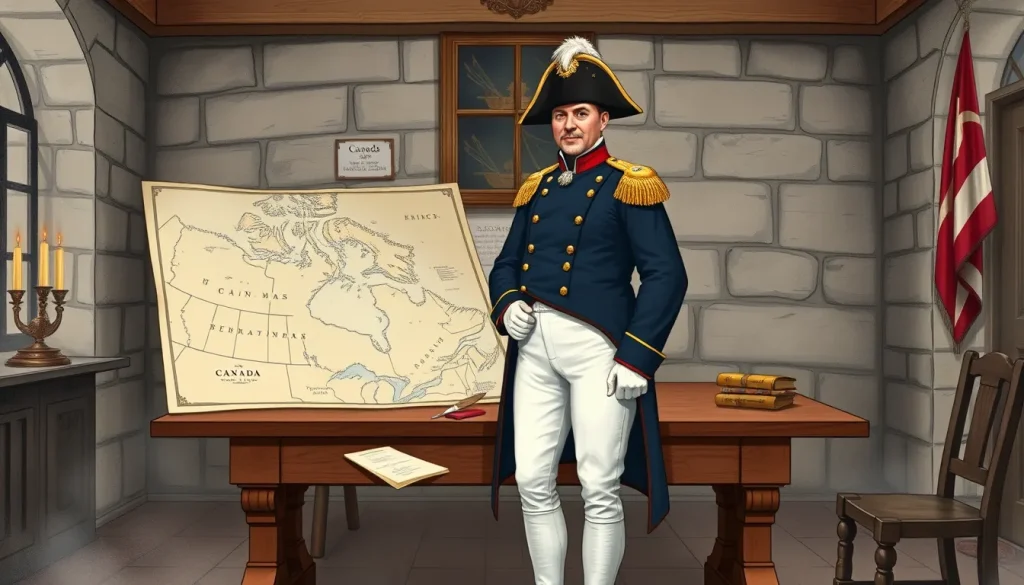
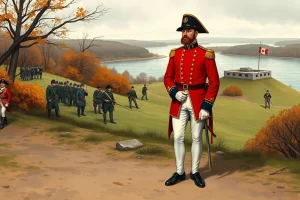
Sir George Prévost (1767–1816) was a British Army officer and colonial administrator who served as governor-in-chief of British North America and commander-in-chief of British forces in North America from 1811 to 1815. In that role he directed the defence of the Canadas during the War of 1812, balancing limited regular troops, colonial militia, Indigenous alliances, and diplomacy with the United States. His tenure is central to understanding how Britain preserved its North American colonies, and it remains contested because of his cautious strategy and the failed 1814 Plattsburgh campaign. This article covers his life and specifically his command in Canada during the War of 1812.
Historical Context
By 1811, Britain was locked in the Napoleonic Wars, and its military resources were stretched across Europe, the Mediterranean, and the Atlantic. British North America comprised several distinct colonies: the largely French-speaking Lower Canada, the sparsely populated Upper Canada, and the Atlantic colonies of Nova Scotia, New Brunswick, and Newfoundland. The United States, meanwhile, was increasingly hostile over British impressment of American sailors, trade restrictions, and support for Indigenous resistance in the Northwest. When the United States declared war in June 1812, Britain’s priority in North America was defensive: to hold the Canadas and avoid a costly second front while the struggle against Napoleon continued. Prevost’s predecessor, Sir James Craig, had alienated many Canadien politicians in Lower Canada, making it essential for the next governor to secure colonial loyalty, militia service, and funding. Quebec was the only permanent fortress in the Canadas, and control of the Great Lakes and Lake Champlain was vital for supply and communication. These geographic and political realities shaped every decision of Prevost’s command.
What Happened
Prevost arrived at Quebec in September 1811 and was confirmed as governor-in-chief and commander-in-chief in October. He worked to unite the colony, securing a militia act and funds from the Lower Canada assembly. When the United States declared war in June 1812, he ordered a defensive posture. British and Canadian forces captured Fort Michilimackinac and Detroit under subordinates, raising morale. In August 1812, Prevost arranged a truce with U.S. General Henry Dearborn, which lasted less than a month. In May 1813, he personally joined the raid on Sackets Harbor, which achieved only partial success. As Napoleon’s empire collapsed, Britain sent reinforcements, and in 1814 Prevost was ordered to take the offensive. He led an army of roughly 11,000 to 15,000 into New York, but at Plattsburgh in September 1814, after the British naval squadron under Captain George Downie was defeated on Lake Champlain, he retreated to Lower Canada. He was recalled in 1815, returned to England, and died in January 1816 before a court martial could clear his name.
Why It Matters
Prevost’s command shaped the outcome of the War of 1812 in Canada. His defensive strategy, combined with logistical support and diplomacy, prevented American conquest of Lower and Upper Canada. Yet his reputation suffered because of Plattsburgh. Contemporary critics blamed him for not supporting Downie and for retreating despite numerical superiority on land. Defenders argue that without naval control of Lake Champlain, continuing the land attack was futile. Historians disagree about whether he was a capable administrator constrained by London’s orders or an indecisive field commander. In 2014, Parks Canada designated him a National Historic Person, acknowledging his role in defending Canada while noting the Plattsburgh controversy.
Early Life
George Prévost was born on 19 May 1767 in New Barbadoes Township, now Hackensack, New Jersey, the son of Augustine Prevost, a French-speaking Swiss Protestant from Geneva who was a lieutenant-colonel in the British Army, and Anne Francoise Marguerite Grand. He was educated in England and on the Continent. On 3 May 1779, at about age twelve, he was commissioned as an ensign in the 60th Regiment of Foot, his father’s regiment. He transferred to the 47th Foot in 1782 and became a captain in the 25th Foot in 1784. Family wealth and the purchase system helped his rapid promotion. In 1789 he married Catherine Anne Phipps; they had five children. He served in the West Indies during the French Revolutionary Wars, was wounded twice at St. Vincent in 1796, and later served as lieutenant-governor of St. Lucia and governor of Dominica.
Role Before the War
In January 1808 Prévost was appointed lieutenant-governor of Nova Scotia and arrived at Halifax in April. He worked to improve the colony’s defences and encouraged New England trade with Britain by designating free ports in Nova Scotia and New Brunswick, where American goods could be landed without customs duties. This undermined Thomas Jefferson’s embargo and increased Nova Scotia’s trade with New England and the West Indies. He also secured a revised militia law that allowed a small but effective militia to be mobilized. In 1809 he commanded a successful expedition that captured Martinique. On 21 October 1811 he was confirmed as governor-in-chief of British North America and commander of British forces, succeeding Sir James Craig.
Role During the War
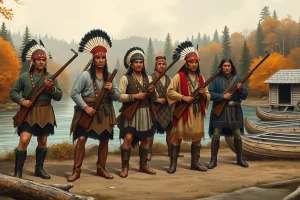
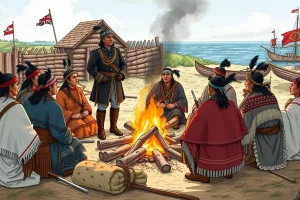
Prevost’s central task was to defend a vast territory with limited regular troops—about 5,600 regulars and fencibles in 1812, of which roughly 1,200 were in Upper Canada. He believed offensive operations were risky and that resources should be husbanded to protect Quebec, the only permanent fortress. He therefore adopted a defensive strategy in line with British instructions, while sending troops, supplies, and money to Upper Canada. He worked to maintain good relations with French-Canadian politicians and the Roman Catholic Church, which helped secure militia service and funding. He also maintained alliances with Indigenous nations, though his personal role in those relationships was primarily administrative and diplomatic. He appointed Isaac Brock to command in Upper Canada. Although he discouraged offensive action, he did not prevent Brock’s capture of Detroit or the earlier capture of Michilimackinac, both of which improved morale.
Major Actions
Prevost’s major actions included preparing the colony for war, the 1812 truce with the United States, the 1813 raid on Sackets Harbor, and the 1814 Plattsburgh campaign. In May 1813 he joined the attack on Sackets Harbor, New York, a key American naval base; the raid destroyed some stores but failed to capture the base. In 1814, with Napoleon defeated, Britain sent veteran reinforcements. Prevost was ordered to seize one or more major American bases. He assembled a force of roughly 11,000 to 15,000 troops and a naval squadron under Captain George Downie. At Plattsburgh, New York, in September 1814, the British naval squadron was defeated on Lake Champlain. Prevost then cancelled the land assault and retreated to Lower Canada. The decision was controversial; critics claimed he had numerical superiority on land and could have continued, while he argued that without naval support the position was untenable.
Contemporary Accounts
Contemporary correspondence shows divided opinions. Isaac Brock and other officers in Upper Canada found Prevost’s caution frustrating and believed he underused opportunities. Prevost’s own despatches to London emphasized his shortage of resources, the need to protect Quebec, and the risks of offensive operations. Colonial officials in Lower Canada generally praised his conciliatory approach. After Plattsburgh, British officers and officials criticized his leadership, and he returned to England to answer charges. American accounts often portrayed the retreat as a decisive victory for the United States. These sources are partisan: official reports were written to justify actions or seek credit, and private letters reflect personal rivalries. No single contemporary account provides a neutral overview.
Later Life
Prevost was recalled to England in 1815 and requested a court martial to answer his critics. Before the trial could proceed, he died in London on 5 January 1816, reportedly of dropsy. He was buried at the Church of St Mary the Virgin, East Barnet. His death left his reputation unresolved in official terms.
Historical Legacy
Prevost’s legacy is contested. He is sometimes called the “Defender of Canada” because his strategy preserved British North America from American conquest. Historians such as those writing for Parks Canada and the Canadian Encyclopedia credit his diplomatic skill, bilingualism, and administrative ability in holding together a divided colony and raising militia and funds. Others focus on his cautious battlefield leadership and the failure at Plattsburgh, arguing that he missed opportunities and failed to support his naval commander. The debate reflects broader questions about command responsibility, the constraints of coalition warfare, and the difficulty of defending a vast territory with limited resources. In 2014, Parks Canada recognized him as a National Historic Person, citing his role in defending Canada while acknowledging the Plattsburgh controversy.
Primary Sources
Key primary sources include Prevost’s official despatches and correspondence with the Colonial Office, particularly his letters to Earl Bathurst and earlier secretaries. His reports on the defence of Canada, militia returns, and general orders are held in The National Archives in the United Kingdom and Library and Archives Canada. Isaac Brock’s letters and despatches, published in documentary editions such as The Documentary History of the Campaign upon the Niagara Frontier, provide a critical contemporary view. Naval records from the Lake Champlain squadron, including reports on the Battle of Plattsburgh, are also important. These sources must be used carefully: official despatches are often self-justifying, while private letters can be shaped by personal ambition and rivalry.
Further Reading
- Wesley B. Turner, “Prevost, Sir George,” Dictionary of Canadian Biography.
- Donald R. Hickey, The War of 1812: A Forgotten Conflict.
- Alan Taylor, The Civil War of 1812: American Citizens, British Subjects, Irish Rebels, and Indian Allies.
- J. Mackay Hitsman, The Incredible War of 1812: A Military History.
- Parks Canada, “Prevost, Sir George National Historic Person.”
- The Canadian Encyclopedia, “Sir George Prevost.”
References
- Parks Canada, “Sir George Prevost” Backgrounder, https://www.canada.ca/en/parks-canada/news/2016/02/sir-george-prevost.html
- The Canadian Encyclopedia, “Sir George Prevost,” https://thecanadianencyclopedia.ca/en/article/sir-george-prevost
- Parks Canada, “Prevost, Sir George National Historic Person,” https://www.pc.gc.ca/apps/dfhd/page_nhs_eng.aspx?id=14255
- U.S. National Park Service, “Sir George Prévost,” https://www.nps.gov/people/george-prevost.htm
- Wikipedia, “George Prevost,” https://en.wikipedia.org/wiki/George_Prevost
FAQ
Who was Sir George Prévost?
He was a British Army officer and colonial administrator, born in New Jersey in 1767, who served as governor-in-chief of British North America and commander-in-chief of British forces in North America from 1811 to 1815, including during the War of 1812.
What was Prévost's strategy during the War of 1812?
He adopted a defensive strategy aimed at preserving Lower and Upper Canada, especially Quebec, while avoiding risky offensives. He worked to secure colonial militia, funding, and Indigenous alliances, and sent support to Upper Canada.
Why was Prévost criticized for the Battle of Plattsburgh?
After the British naval squadron on Lake Champlain was defeated in September 1814, Prévost cancelled the land assault and retreated. Critics argued he had numerical superiority on land and failed to support Captain George Downie; defenders claimed the retreat was necessary without naval control.
Leave a Reply