
Short Answer
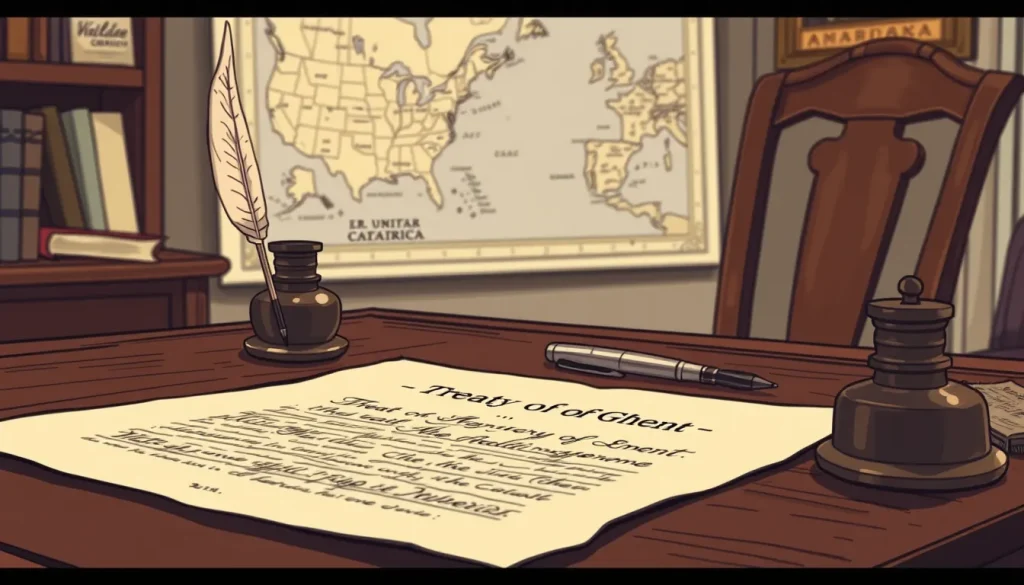
The treaties that ended the War of 1812—most notably the Treaty of Ghent, signed on December 24, 1814—are legal and diplomatic documents requiring careful reading to understand what they actually settled and what they omitted. This article explains how to approach these texts, focusing on structure, language, and the historical context that shaped their clauses. By learning to read treaties critically, students and researchers can better grasp the war’s outcomes and the perspectives of all parties involved.
Historical Context
The War of 1812 arose from unresolved conflicts between the United States and Great Britain, including the Royal Navy’s impressment of American sailors, trade restrictions imposed by both sides, and British support for Indigenous nations resisting U.S. expansion. By late 1814, the Napoleonic Wars had ended, prompting Britain to send more troops to North America, while American officials feared a costly escalation. Both sides began peace negotiations in Ghent (now in Belgium) in August 1814. The British delegation originally demanded territorial concessions and an Indigenous buffer state, but after defeats at Baltimore and Plattsburgh and the Duke of Wellington’s advice that Britain could not demand territory, the talks shifted toward a restoration of pre-war borders.
The Treaty of Ghent, signed on December 24, 1814, established a commission to resolve border disputes and returned all conquered territory to its pre-war owners. It said nothing about impressment, neutral trading rights, or the conquest of Canada—issues that had prompted the American declaration of war. The treaty also included provisions for the return of prisoners and for both nations to work toward ending the slave trade. Another important treaty was the Treaty of Fort Jackson (August 9, 1814), which ended the Creek War and forced the Creek Nation to cede vast territories, and the Treaty of Spring Wells (1815) aimed at restoring peace between the United States and allied Indigenous nations.
What Happened
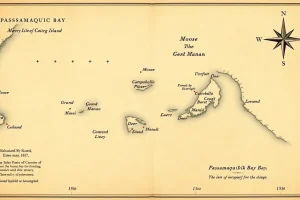
The Treaty of Ghent is the primary peace accord of the War of 1812. Its eleven articles were drafted in formal diplomatic language. Article I declared a firm and universal peace and provided for the restoration of all territory, places, and possessions taken by either side during the war, except for certain islands in Passamaquoddy Bay. Article II required orders to cease hostilities after ratification and set a twelve-day window for prize captures at sea. Articles III through VIII established boundary commissions to resolve the northeastern and northwestern borders. Article IX required both parties to restore to Indigenous nations their rights and possessions as of 1811, but this provision was never enforced. Article X sought to end the international slave trade, and Article XI fixed the date of ratification and required its exchange within six months.
American commissioners John Quincy Adams, James A. Bayard, Henry Clay, Jonathan Russell, and Albert Gallatin negotiated with British representatives James Lord Gambier, Henry Goulburn, and William Adams. The treaty was ratified by the British on December 27, 1814, and by the U.S. Senate unanimously in February 1815, coming into effect on February 17, 1815. The Battle of New Orleans, fought on January 8, 1815, occurred after the treaty’s signing but before its ratification, and thus did not affect the outcome of negotiations.
Other treaties during the conflict, such as the Treaty of Fort Jackson and the Treaty of Spring Wells, addressed specific regional and Indigenous issues. The Treaty of Fort Jackson was signed after Andrew Jackson’s victory at the Battle of Horseshoe Bend, forcing the Creek Nation to surrender more than 20 million acres. The Treaty of Spring Wells, signed in September 1815, reaffirmed peace with several Great Lakes and Western Indigenous nations, but did little to stop American expansion into Indigenous lands.
Why It Matters
Reading the War of 1812 treaties is essential for understanding the conflict’s true outcome. The Treaty of Ghent restored the status quo ante bellum, meaning all borders returned to their 1812 positions. This literal outcome has led to popular claims that the war was a “draw,” but on closer examination, America achieved none of its stated war aims—impressment, neutral trading rights, and the annexation of Canada—while Britain successfully defended Canada and maintained its maritime rights. The treaties also had significant consequences for Indigenous nations, whose rights were promised but not protected.
Historians continue to debate whether the conflict was a U.S. victory, a British victory, or a draw, and how to interpret the treaties’ silences. The omission of impressment and neutral rights is particularly instructive: it shows that the war’s causes were not addressed, leading to the later Webster–Ashburton Treaty and other negotiations over such issues. The treaty’s creation of boundary commissions also set a precedent for peaceful dispute resolution between the two nations. For modern readers, learning to read these treaties critically—examining both the explicit articles and the omissions—provides insight into the diplomatic and political realities of the early Republic.
Definition
A treaty is a formal, legally binding agreement between independent states or nations. War of 1812 treaties are specific examples of peace treaties, which end a state of war and establish terms for the cessation of hostilities, territorial boundaries, the exchange of prisoners, and other postwar obligations. They are typically written in a formal legal style, divided into numbered articles, and are subject to ratification by the parties’ governments.
Background
The treaties of the War of 1812 were negotiated at a time of intense international diplomacy. The Treaty of Ghent was the product of months of talks in a European city that also hosted the Congress of Vienna, which was reshaping Europe after Napoleon’s defeat. The American delegation, though initially weakened by demands to end impressment, benefited from Britain’s war-weariness and the military setbacks of fall 1814. The British, for their part, had hoped to secure territorial concessions and a protected Indigenous buffer state, but abandoned those goals in the face of costly military failure and domestic opposition to extended warfare. The resulting treaty was a compromise that returned to pre-war boundaries, reflecting a mutual desire to end the conflict without definitive victory for either side.
How It Worked
Reading a War of 1812 treaty effectively requires several strategies. First, understand the structure: treaties are divided into articles, each addressing a specific issue. Chunk the text by article and paraphrase each into simple language. For the Treaty of Ghent, for example, Article I is about peace and restoration of territory; Article II covers the cessation of hostilities and prize ships; Article IX concerns Indigenous rights. Second, look for missing issues. The Treaty of Ghent conspicuously omits any mention of impressment, neutral trading rights, or the U.S. desire to annex Canada—these war aims are absent, and their absence is as significant as the articles present. Third, pay attention to legal terms such as “status quo ante bellum” (the state before the war) and “uti possidetis” (each side keeps what it holds). Fourth, examine the treaty’s context by reading secondary accounts that explain the diplomatic maneuvers and military events that shaped its wording. Finally, compare different editions and translations, as wording may vary, and use scholarly annotations, such as those from the JSTOR Daily or the National Archives, to illuminate ambiguous clauses.
Competing Viewpoints
Historians hold divergent views on the significance of the War of 1812 treaties. American popular memory often frames the war as a second struggle for independence and the Treaty of Ghent as a diplomatic victory because it restored pre-war boundaries. Some historians, like Donald R. Hickey, argue that the United States achieved none of its declared objectives, while Britain successfully defended Canada and its maritime rights, so the war was not a draw but a British victory. Other scholars emphasize the long-term cooperative gains, such as the boundary commissions and the end of impressment de facto, and view the treaty as a foundation for later Anglo-American peace. For Indigenous peoples, the treaties are often seen as instruments of dispossession, as Article IX of the Treaty of Ghent was never enforced and subsequent treaties like Fort Jackson stripped nations of their lands. These competing interpretations highlight the need to read treaties from multiple perspectives, including those of the United States, Britain, Canada, and Indigenous nations.
Role in the War of 1812
The treaties played a dual role in the War of 1812. They formally ended the armed conflict, but they also shaped the postwar order. The Treaty of Ghent restored peace without addressing the grievances that had caused the war, leaving those issues to future negotiations. The Treaty of Fort Jackson, by contrast, was a punitive settlement imposed on the Creek Nation, demonstrating the U.S. government’s expansionist aims. The Treaty of Spring Wells attempted to restore peace with northern Indigenous nations but had little lasting effect. Thus, the treaties were both conclusion and cause: they ended the shooting war but also set the stage for continued border disputes and Indigenous land cessions.
Consequences and Historical Interpretation
The consequences of the War of 1812 treaties were profound. The Treaty of Ghent’s restoration of status quo ante bellum meant that no territorial changes occurred between the United States and British North America (later Canada), which allowed both nations to pursue their own development. The boundary commissions eventually resolved longstanding disputes, including the Passamaquoddy Bay islands. However, the treaty’s silence on Indigenous rights led to continued American expansion into Indigenous territories, breaking promises and sparking future conflicts. Historically, interpreters have used the treaty’s language to argue about the war’s outcome: if treaties are read purely as instruments of territorial exchange, the war appears a draw; if read as statements of war aims, the United States clearly fell short. This interpretive tension remains central to understanding the War of 1812’s legacy.
Primary Sources
The most important primary source is the Treaty of Ghent itself, available online from the U.S. National Archives (archives.gov/milestone-documents/treaty-of-ghent) and the JSTOR Daily annotated version (daily.jstor.org/the-treaty-of-ghent-annotated). These transcriptions are verbatim copies of the treaty’s text. The National Archives also provides the original parchment document. The Treaty of Fort Jackson and the Treaty of Spring Wells can be found in the U.S. Statutes at Large or in tribal treaty collections. For instruction, the Montana Historical Society’s “How to Read a Treaty” (mhs.mt.gov/education/Textbook/Chapter7/HowtoReadaTreaty.pdf) offers a structured reading strategy. When using these sources, note that treaties are legal documents with archaic phrasing; annotate and paraphrase to clarify meaning. Also, be aware that the Treaty of Ghent’s text says nothing about impressment or neutral trade rights—a notable omission that historians have analyzed.
Further Reading
- The War of 1812: A Forgotten Conflict by Donald R. Hickey
- “The Treaty of Ghent: Ending the War of 1812” from the American Battlefield Trust (battlefields.org/learn/articles/treaty-ghent-ending-war-1812)
- “The Treaty of Ghent: Annotated” from JSTOR Daily (daily.jstor.org/the-treaty-of-ghent-annotated)
- “How to Read a Treaty” from the Montana Historical Society (mhs.mt.gov/education/Textbook/Chapter7/HowtoReadaTreaty.pdf)
- Treaty of Ghent primary source at the U.S. National Archives (archives.gov/milestone-documents/treaty-of-ghent)
References
- National Archives. “Treaty of Ghent (1814).” Accessed on [date]. https://www.archives.gov/milestone-documents/treaty-of-ghent
- JSTOR Daily. “The Treaty of Ghent: Annotated.” Accessed on [date]. https://daily.jstor.org/the-treaty-of-ghent-annotated/
- American Battlefield Trust. “The Treaty of Ghent: Ending the War of 1812.” Accessed on [date]. https://www.battlefields.org/learn/articles/treaty-ghent-ending-war-1812
- Montana Historical Society. “How to Read a Treaty.” Accessed on [date]. https://mhs.mt.gov/education/Textbook/Chapter7/HowtoReadaTreaty.pdf
- The War of 1812 Website. “Treaty of Ghent.” Accessed on [date]. https://thewarof1812.org/treaty/
FAQ
What are the main articles of the Treaty of Ghent?
The Treaty of Ghent contains eleven articles. Article I establishes peace and the restoration of all captured territory; Article II orders cessation of hostilities; Articles III-VIII set up boundary commissions; Article IX promises to restore Indigenous rights; Article X addresses ending the slave trade; Article XI fixes ratification rules.
Why did the Treaty of Ghent not mention impressment?
Impressment was not mentioned because Britain refused to concede on that point, and the American commissioners, after initial demands, dropped it as a non-negotiable goal. The treaty focused on restoring pre-war borders and addressing territorial issues, reflecting Britain's refusal to alter its maritime practices.
How do I interpret the Treaty of Ghent's land restoration clauses?
Article I of the Treaty of Ghent required the return of all territories captured by either side, but it did not address Indigenous land claims. Article IX said both parties would restore to Indigenous nations 'all the possessions, rights, and privileges' they had in 1811, but the U.S. never enforced this provision, and subsequent treaties like Fort Jackson led to massive land cessions.


Leave a Reply