
Short Answer
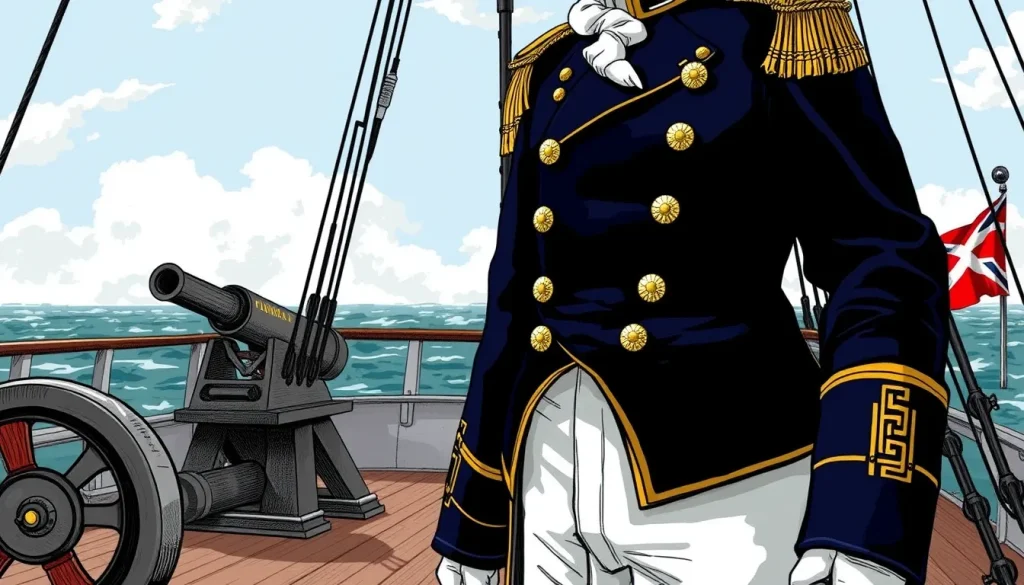
Sir Philip Bowes Vere Broke (1776–1841) was a senior Royal Navy officer whose career spanned the French Revolutionary and Napoleonic Wars and the War of 1812. He is chiefly remembered for commanding HM frigate Shannon when she captured the American frigate Chesapeake off Boston on 1 June 1813, an episode that restored British confidence after a series of American naval victories. Broke’s emphasis on gunnery training and his disciplined leadership made him one of the most respected frigate captains of his generation.
Historical Context
When the War of 1812 began in June 1812, the Royal Navy was the world’s largest maritime force, yet it suffered a string of single-ship defeats in the early months of the conflict. American frigates such as Constitution and United States were generally larger, carried heavier broadsides, and had larger crews than their British counterparts. The British Admiralty and public were anxious to reverse these setbacks. Broke’s ship, Shannon, was part of the North American squadron based at Halifax, Nova Scotia, tasked with blockading American ports and protecting British trade. The frigate duel between Shannon and Chesapeake took place against this background of naval rivalry and national honour.
What Happened
On 1 June 1813, Shannon was cruising off Boston harbour when Broke issued a formal challenge to Captain James Lawrence of Chesapeake. Lawrence sortied promptly, and the two frigates met in a close-range action. Broke had drilled his crew relentlessly in gunnery, and Shannon‘s opening broadsides severely damaged Chesapeake‘s rigging and killed or wounded key officers, including Lawrence. Within about fifteen minutes, Chesapeake was disabled, and a British boarding party swept onto her decks. The Americans resisted but were overwhelmed, and Shannon towed her prize to Halifax. Casualties were severe: Chesapeake lost 56 killed and 85 wounded; Shannon lost 24 killed and 59 wounded. Broke himself received a serious cutlass wound to the head while leading the boarding party. The victory was celebrated in Britain and seen as a humiliation in the United States.
Why It Matters
The capture of Chesapeake was the first British frigate victory of the war and ended the run of American single-ship successes. It demonstrated the effectiveness of intensive gun drill and professional training, a lesson that influenced later Royal Navy practices. Broke’s gallantry and his subsequent recovery from a near-fatal wound made him a national hero. In strategic terms, the action sustained the credibility of the blockade and lifted British morale. Historians have also noted that Broke’s challenge and the conduct of the action were conducted according to a code of honour that was already fading, marking the action as both a tactical and a symbolic event.
Early Life
Philip Bowes Vere Broke was born on 9 September 1776 at Broke Hall, Nacton, Suffolk, the eldest son of Philip Bowes Broke and Elizabeth Beaumont. He was educated at Ipswich School and then at the Royal Naval Academy at Portsmouth, where he received a formal naval education unusual for many of his contemporaries. He entered active service as a midshipman in 1792, serving in the Mediterranean and participating in actions off Toulon and Corsica.
Role Before the War
Broke rose through the ranks, becoming a lieutenant in 1797 after service on the frigate Southampton at the Battle of Cape St. Vincent. He was promoted to commander in 1799 and to captain in 1801. After a period ashore, he commissioned the frigate Druid in 1805 and then took command of Shannon on 31 August 1806. For the next several years, Shannon served in home waters, protecting whalers off Spitsbergen and cruising in the Bay of Biscay. In 1811, Shannon was ordered to Halifax as Anglo-American relations deteriorated, and Broke began a rigorous training regimen for his crew, including daily gun drill and target practice.
Role During the War
After the declaration of war in June 1812, Broke commanded Shannon in a series of cruises along the American coast. To avoid weakening his ship by sending prizes to Halifax, he often burned captured merchant vessels. He maintained an exceptionally high standard of gunnery, which later proved decisive. In May 1813, Shannon was stationed off Boston to watch the newly recommissioned Chesapeake. Broke’s bold challenge to Captain Lawrence on 1 June led directly to the celebrated single-ship action.
Major Actions
The principal military action of Broke’s career was the capture of USS Chesapeake on 1 June 1813. Although Chesapeake was nominally rated as a 36- or 38-gun frigate, the two ships were closely matched in firepower. Broke’s meticulous training and the concentration of fire from Shannon proved superior. The boarding action resulted in the capture of the American ship and the mortal wounding of Captain Lawrence. Broke also sustained a severe head wound from a cutlass blow, which precluded further active service at sea.
Contemporary Accounts
Contemporaries on both sides recorded the encounter. Broke’s pre-action challenge to Lawrence was preserved and later published. The official reports from Lawrence’s surviving officers and from Broke’s own lieutenants provided detailed accounts of the engagement. Surgeon Alexander Jack of Shannon reported the nature of Broke’s head injury and the decision to avoid the standard practice of bloodletting, which likely saved his life. Newspapers in Britain celebrated the victory, while American accounts mourned the loss and questioned the decision to accept the challenge.
Later Life
Broke was created a baronet on 25 September 1813 and appointed a Knight Commander of the Order of the Bath on 3 January 1815. He was also awarded the Naval Gold Medal, one of only eight for single-ship actions between 1794 and 1816. His wounds forced him into shore service, but he remained influential in naval gunnery development. He was promoted to rear-admiral in 1830. He died in London on 2 January 1841 and was buried at Nacton.
Historical Legacy
Broke’s legacy rests on his innovative approach to gunnery training and his victory over Chesapeake. Historians regard him as a professional officer who improved the effectiveness of the Royal Navy at a critical moment. The action became a favourite subject for painters and writers, and Broke’s name remains synonymous with the Shannon and with the War of 1812. His tactical methods were studied by later naval generations, and his personal bravery and adherence to naval codes of honour have been emphasised in both British and American historiography.
Primary Sources
Primary sources for Broke’s life include his personal correspondence, official despatches, and the after-action reports from both the British and American sides. Broke’s challenge letter to Captain Lawrence is a notable surviving document, as is the report by Surgeon Jack describing his head wound. The Navy Records Society and various archival collections hold Broke’s letters. The portrait by Samuel Lane at the National Maritime Museum is a contemporary visual source. The Dictionary of National Biography entry provides a detailed narrative based on these documents. For the Shannon–Chesapeake action, the most direct sources are the ships’ logs and court-martial records.
Further Reading
- Roosevelt, Theodore. The Naval War of 1812. 1882.
- Lambert, Andrew. The War of 1812: The British Perspective. Oxford University Press, 2012.
- Dudley, William S., and Michael J. Crawford, eds. The Naval War of 1812: A Documentary History. Naval Historical Center, 1985.
- Marrero, Frank. HMS Shannon and the Capture of USS Chesapeake. Journal of the Royal United Services Institute, 2013.
References
- “Philip Broke.” Wikipedia, https://en.wikipedia.org/wiki/Philip_Broke
- “Broke, Sir Philip Bowes Vere.” Dictionary of National Biography, 1885-1900, Wikisource, https://en.wikisource.org/wiki/Dictionary_of_National_Biography,_1885-1900/Broke,_Philip_Bowes_Vere
- “Captain Sir Philip Bowes Vere Broke, 1776-1841.” Royal Museums Greenwich, https://www.rmg.co.uk/collections/objects/rmgc-object-14049
- “Admiral Sir Philip Bowes Vere Broke, 1st Bt.” The Peerage, https://www.thepeerage.com/p18035.htm
FAQ
How did Philip Broke train his crew?
Broke instituted daily gunnery practice, fitting sights to guns and using concentrated marks on the decks, which made Shannon's crew exceptionally accurate and fast.
What was the significance of the Shannon-Chesapeake action?
It was the first British frigate victory in the War of 1812, restoring confidence and demonstrating the value of professional gunnery training.
Was Philip Broke wounded during the battle?
Yes, he suffered a severe cutlass wound to the head while leading the boarding party. The surgeon avoided bloodletting, which likely aided his recovery.
Leave a Reply