
Short Answer
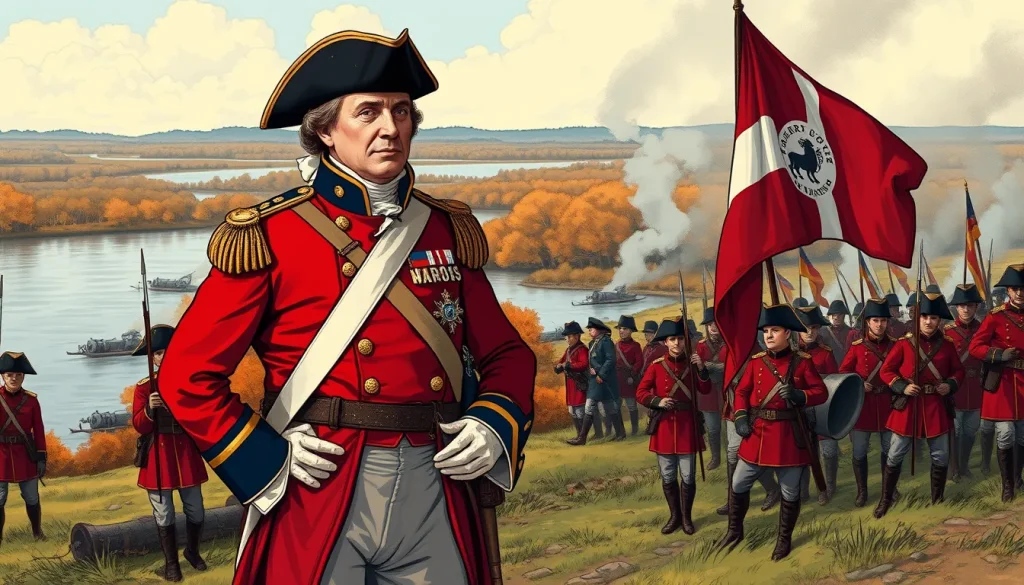
William Henry Harrison, the ninth president of the United States, served as a major general in the War of 1812, commanding the Army of the Northwest from 1812 to 1814. His leadership was pivotal in reversing early American setbacks in the Ohio country and the Great Lakes region, culminating in the Battle of the Thames in October 1813, where the British and their Indigenous allies were defeated and Tecumseh was killed. Harrison’s military career during the war shaped both the outcome of the conflict and his subsequent political rise.
Historical Context
The War of 1812 on the Northwest frontier grew out of long-standing tensions between the United States, Great Britain, and Indigenous nations. Prior to the war, American expansion into the Ohio Valley and Indiana Territory had been resisted by a pan-Indian confederacy led by Tecumseh and his brother Tenskwatawa. The British in Canada supplied arms and encouragement to these Indigenous forces, viewing them as a buffer against American expansion. When war broke out in June 1812, the U.S. planned to invade Canada through Detroit and Niagara. However, General William Hull’s surrender of Detroit in August 1912 left the Northwest Territory vulnerable to British and Indigenous raids, and the American position had collapsed by the fall. The U.S. government needed a commander who knew the frontier and could rally militia and regular troops.
What Happened
In August 1812, Harrison received a commission as brigadier general and was given command of the Army of the Northwest, later promoted to major general. He faced immense logistical challenges, including insufficient troops, supplies, and a scattered frontier. He organized reinforcements and attempted to recapture Detroit, but his advance stalled due to a lack of supplies and winter weather. In early 1813, a detachment under James Winchester was defeated at Frenchtown (River Raisin) in January, a setback that underscored the difficulty of the campaign. Harrison then focused on building a trained army and coordinating with naval forces on Lake Erie. After Oliver Hazard Perry’s victory at the Battle of Lake Erie in September 1813, Harrison moved his army across the lake to invade Upper Canada. He pursued the retreating British and their Indigenous allies under Tecumseh. On October 5, 1813, Harrison’s forces defeated them at the Battle of the Thames in present-day Ontario. Tecumseh was killed, and the British commander, Henry Procter, fled. This victory secured the Northwest frontier and broke the Indigenous confederacy. Harrison resigned from the army in May 1814, after a dispute over strategy with Secretary of War John Armstrong, and the war continued without his direct involvement in the West.
Why It Matters
Harrison’s command was crucial in restoring American control over the Northwest Territory. The Battle of the Thames was the first major American land victory in the region after the disaster at Detroit, and it eliminated Tecumseh’s confederacy as a threat. It also secured the Great Lakes frontier and helped enable the later Treaty of Ghent, which restored the status quo but ended the British alliance with the northwestern tribes. For Harrison personally, the victory at the Thames and his earlier reputation from Tippecanoe made him a national hero. It propelled him into Congress and eventually the presidency. Historians note that Harrison’s tactics and logistics were sometimes criticized, and his earlier treaties had contributed to the very tensions that led to war. Nevertheless, his role in the War of 1812 cemented his legacy as a frontier leader.
Early Life
William Henry Harrison was born on February 9, 1773, at Berkeley Plantation in Virginia, the son of a signer of the Declaration of Independence. After studying classics and medicine, he joined the U.S. Army in 1791 and served under Anthony Wayne at the Battle of Fallen Timbers (1794). He resigned as captain in 1798 and entered politics, becoming the first governor of Indiana Territory in 1801. As governor, he negotiated treaties that transferred millions of acres from Indigenous nations to the United States, often through controversial methods. He also dealt with the growing resistance led by Tecumseh. His command at the Battle of Tippecanoe in 1811, though costly, earned him fame and a nickname that would define his later political career.
Role Before the War
Before the formal outbreak of war, Harrison was already deeply involved in frontier military affairs. As governor of Indiana Territory, he sought to undermine Tecumseh’s confederacy. In November 1811, he led a force of regulars and militia against Tenskwatawa’s settlement at Prophetstown near the Tippecanoe River. The attack was launched while Tecumseh was away, and despite heavy American casualties, Harrison claimed a victory. This engagement, the Battle of Tippecanoe, escalated tensions with the British and Indigenous peoples and set the stage for the wider conflict of 1812.
Role During the War
When the war began, Harrison’s familiarity with the Northwest made him an obvious choice to command. He was initially appointed brigadier general in August 1812, then promoted to major general in March 1813. His command was plagued by supply shortages, political interference, and the need to coordinate with the militia. He also had to respond to raids along the frontier, including the siege of Fort Wayne in September 1812 and the defense of Fort Harrison. After Perry’s naval victory, Harrison’s army transported by Perry’s fleet to Canada, where he forced the British and Indigenous forces into a retreat that culminated at the Thames. He remained in command until his resignation in 1814, though his later planning for a spring 1814 campaign was shelved.
Major Actions
Harrison’s principal military actions in the War of 1812 included the defense of Fort Harrison (August 1812), the relief of Fort Wayne (September 1812), the difficult winter campaign and the defeat at Frenchtown under his subordinate Winchester (January 1813), the rebuilding of the army at Fort Meigs, and the decisive invasion of Upper Canada in the fall of 1813. The Battle of the Thames on October 5, 1813, was his crowning victory. His forces, numbering around 3,000, attacked a smaller British and Indigenous force of roughly 800, killing Tecumseh and routing the enemy. This action ended the war’s most significant Indigenous-British alliance in the Northwest.
Contemporary Accounts
Harrison communicated extensively with Secretaries of War and other officials. His letters and reports, collected in the William Henry Harrison Papers, document his planning, logistical struggles, and battle accounts. He wrote after the Thames victory to President James Madison, describing the enemy’s defeat. Contemporary observers recognized his leadership, though some critics noted his cautious advance and heavy reliance on militia. British accounts, such as those from Procter, acknowledged the defeat but blamed a lack of support. Native American accounts of the battle are scarce, but the death of Tecumseh had a profound impact on all participants.
Later Life
After resigning in 1814, Harrison served in the U.S. House of Representatives (1816-1819), the Ohio Senate (1819-1821), and the U.S. Senate (1825-1828). He was appointed minister to Colombia in 1828. He ran unsuccessfully for president in 1836 as a Whig, then won the 1840 election on a campaign that emphasized his frontier image. He died on April 4, 1841, just 31 days into his presidency, becoming the first president to die in office. His grandson Benjamin Harrison later became the 23rd president.
Historical Legacy
Harrison’s legacy in the War of 1812 is twofold. On one hand, he is credited with securing the Northwest frontier and achieving a major victory that boosted American morale. On the other, his earlier treaty-making and aggressive policies toward Indigenous peoples are seen as contributing to the very conflicts he fought. Modern historians also question his tactical choices and the degree to which he was overshadowed by his subordinate commanders. Nonetheless, the image of “Tippecanoe” persisted, and his military record was used to great effect in his political campaigns. The battle of the Thames is commemorated in Canada, where it is known as the Battle of Moraviantown, and at historic sites in the United States.
Primary Sources
Key primary sources for Harrison’s wartime actions include his official correspondence, contained in the William Henry Harrison Papers, available on microfilm from the Indiana Historical Society. Notable items include his letters to Secretary of War William Eustis and his reports from the field. The microfilm reel covering August 1812–December 1812 includes documents on the Battle of Fort Harrison, the Siege of Fort Wayne, and his appointment to command. His letters to James Winchester, Isaac Shelby, and Henry Clay provide insight into his strategy. Also important are the official after-action reports from the Battle of the Thames, printed in the National Intelligencer and other newspapers. These sources, while reflecting Harrison’s perspective and the standards of military reporting, offer valuable detail.
Further Reading
- American Battlefield Trust, “William Henry Harrison” (biographical article).
- Ohio Memory / Ohio History Connection, “William Henry Harrison: Soldier and Statesman”.
- Indiana Historical Society, The Papers of William Henry Harrison, microfilm edition.
- Robert M. Owens, Mr. Jefferson’s Hammer: William Henry Harrison and the Origins of American Indian Policy (2007).
References
- American Battlefield Trust, “William Henry Harrison,” https://www.battlefields.org/learn/biographies/william-henry-harrison
- Ohio Memory, “William Henry Harrison: Soldier and Statesman,” https://ohiomemory.ohiohistory.org/archives/3665
- Indiana Historical Society, William Henry Harrison Papers, microfilm reel 6, via Indiana Memory: https://digital.library.in.gov/Record/IHS_dc050-9297
FAQ
What was William Henry Harrison's most important military achievement in the War of 1812?
His most important achievement was the victory at the Battle of the Thames in 1813, which secured the Northwest frontier and led to the death of Tecumseh.
Why did Harrison resign from the army in 1814?
Harrison resigned after a dispute with Secretary of War John Armstrong over strategy and perceived lack of support, and because the fall 1813 campaign had achieved its objectives.
How did Harrison's actions during the war affect Indigenous peoples?
Harrison's victory broke Tecumseh's confederacy, leading to the decline of Indigenous resistance in the region and paving the way for further American expansion.
Leave a Reply