
Short Answer
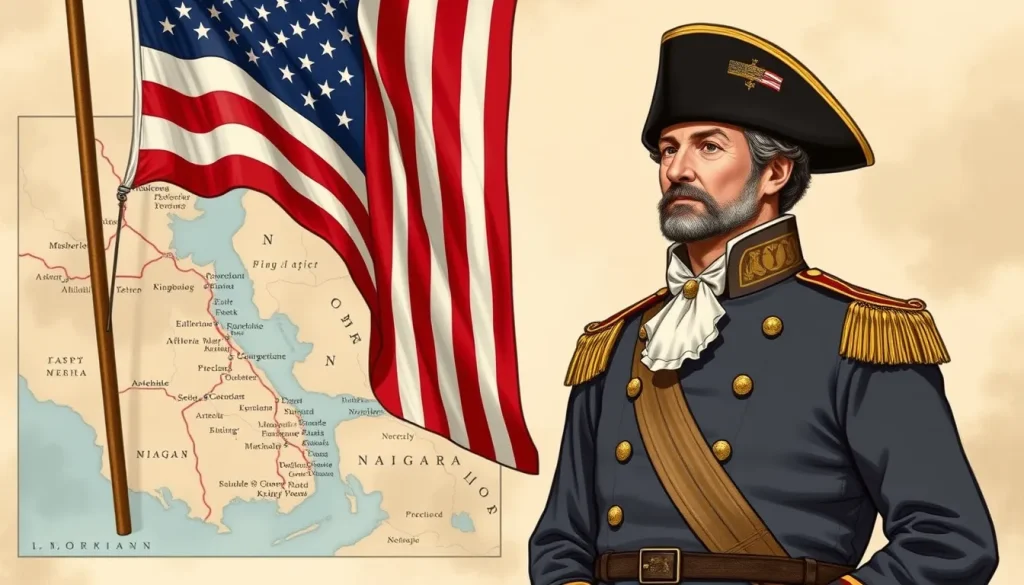
Henry Dearborn (1751–1829) was a senior major general in the United States Army during the War of 1812, appointed by President James Madison to command American forces in the northeastern theater. His tenure from January 1812 to July 1813 was marked by failed invasions of Canada and a lack of decisive action, leading to his recall. He is historically significant as an example of the early war’s leadership problems and the challenges of raising and commanding a professional army.
Historical Context
The War of 1812 began in June 1812 due to British impressment of American sailors, seizure of ships, and suspected British encouragement of Indigenous resistance on the frontier. The United States, with a small standing army, planned to invade Canada as a means of pressuring Britain. President Madison appointed Dearborn, a Revolutionary War veteran and former Secretary of War, as senior major general, hoping his experience would lead to success. However, the army was unprepared, poorly equipped, and had a largely untrained officer corps.
What Happened
Dearborn was appointed on January 27, 1812. He initially had to organize and train forces while facing political and logistical obstacles. His planned invasion of Canada in late 1812 failed due to delays and his reluctance to engage, and he signed a local armistice with British governor Sir George Prévost. In 1813, his forces captured York (modern Toronto) on April 27 and Fort George on May 27, but these successes were not followed up strategically. His failure to coordinate forces led to losses at Stoney Creek and Beaver Dams. He was recalled on July 6, 1813, and replaced by James Wilkinson.
Why It Matters
Dearborn’s command showed the weaknesses of the U.S. military command structure. His caution and lack of aggressive leadership contributed to the failure of the 1812 campaign. After his recall, leadership improved under officers like Jacob Brown and Winfield Scott. Historians view Dearborn as an able administrator but a mediocre field commander, highlighting the need for professional military training.
Early Life
Henry Dearborn was born on February 23, 1751, in North Hampton, New Hampshire. He studied medicine under Dr. Hall Jackson and began practice in Nottingham Square, but his military career began with the outbreak of the American Revolution. He served with distinction at Bunker Hill and on Arnold’s expedition to Quebec, where he was captured. He later served on Washington’s staff at Yorktown, with the rank of colonel.
Role Before the War
After the Revolution, Dearborn settled in Maine (then part of Massachusetts) and became a major general of militia. He served as U.S. marshal for the district of Maine, then as a U.S. Representative from a Massachusetts district. He was appointed Secretary of War by President Thomas Jefferson, serving from 1801 to 1809. In that role, he helped plan the removal of Indigenous nations westward and oversaw military modernization. He then became collector of the port of Boston.
Role During the War
In 1812, Madison appointed him senior major general. He took command of the Northeastern army. His role was to invade Canada and secure the St. Lawrence River. His leadership was criticized for indecisiveness and failure to press attacks. The campaign of 1812 saw no major offensive. In 1813, he directed the capture of York and Fort George, but his failure to exploit these victories led to his recall.
Major Actions
The capture of York (April 27, 1813) was a significant American victory, with forces landing and taking the town. However, the retreating British blew up the magazine, killing many American troops. The capture of Fort George (May 27, 1813) forced British withdrawal from the Niagara frontier. Yet Dearborn failed to pursue the retreating British, allowing them to regroup and later win at Stoney Creek.
Contemporary Accounts
Contemporaries, including Secretary of War John Armstrong, criticized Dearborn’s lack of vigor. His own letters show frustration with militia and logistical issues. Officers like Winfield Scott expressed disappointment. However, some appreciated his administrative abilities.
Later Life
After his recall, Dearborn commanded the military district of New York. He resigned in 1815. He later served as Minister to Portugal from 1822 to 1824. He died in Roxbury, Massachusetts, on June 6, 1829.
Historical Legacy
Historians have generally assessed Dearborn poorly, seeing him as a symbol of the early war’s incompetence. Some argue he was too old and cautious, while others note the difficult circumstances. His legacy is largely overshadowed by more successful commanders.
Primary Sources
Key contemporary sources include Dearborn’s official correspondence and reports, held at the Library of Congress and the Dearborn Historical Commission. His personal letters, such as those to Thomas Jefferson and James Madison, reveal his strategic thinking and frustrations. The British side is documented in the papers of Sir George Prévost and other commanders. These sources provide insight into the decision-making and constraints on both sides.
Further Reading
- Rauch, Steven J. The Campaign of 1812. Washington, D.C.: Center of Military History, U.S. Army, 2013.
- Hickey, Donald R. The War of 1812: A Forgotten Conflict. Urbana: University of Illinois Press, 1989.
- Taylor, Alan. The Civil War of 1812: American Citizens, British Subjects, Irish Rebels, & Indian Allies. New York: Alfred A. Knopf, 2010.
References
- “DEARBORN, Henry – Biographical Information.” U.S. House of Representatives: History, Art & Archives. Accessed 2023. https://history.house.gov/People/Detail/12053.
- “Henry Dearborn.” American Battlefield Trust. Accessed 2023. https://www.battlefields.org/learn/biographies/henry-dearborn.
- “Henry Dearborn – First Marshal of Maine.” U.S. Marshals Service. Accessed 2023. https://prod.usmarshals.gov/who-we-are/history/directors-and-organizational-leadership/directors-and-organizational-leadership/henry-dearborn.
- “Major General Henry Dearborn.” The Army Historical Foundation. Accessed 2023. https://armyhistory.org/major-general-henry-dearborn/.
- Rauch, Steven J. The Campaign of 1812. Washington, D.C.: Center of Military History, U.S. Army, 2013. https://history.army.mil/Portals/143/Images/Publications/Publication%20By%20Title%20Images/C%20Pdf/CMH_Pub_74-2.pdf.
FAQ
Why is Henry Dearborn considered a failed commander?
Dearborn faced criticism for his cautious approach and failure to launch a decisive invasion of Canada, leading to a lack of progress and ultimately his recall in July 1813.
What battles did Henry Dearborn fight in the War of 1812?
Dearborn commanded forces at the capture of York (April 1813) and Fort George (May 1813), but his failure to follow up these victories allowed the British to recover.
Did Henry Dearborn serve in the American Revolution?
Yes, Dearborn fought at Bunker Hill, the Quebec expedition, Saratoga, and Yorktown, earning a reputation as a capable officer.
Leave a Reply