
Short Answer
The Treaty of Peace and Amity Between His Britannic Majesty and the United States of America—commonly known as the Treaty of Ghent—was signed in Ghent, present-day Belgium, on December 24, 1814, bringing the War of 1812 to a close. Under the principle of status quo ante bellum, meaning “the state existing before the war,” both nations agreed to restore all territory, possessions, and boundaries to their pre-1812 condition. The treaty’s restoration of borders between the United States and British North America, and the commissions it created for resolving boundary disputes, made it a foundational document in the lasting peace between the two countries.
Historical Context
The War of 1812 had its roots in British maritime practices, particularly the impressment of American sailors into the Royal Navy, restrictions on neutral trade arising from the Napoleonic Wars, and British support for Indigenous nations resisting American westward expansion. In June 1812, the United States declared war, expecting quick victories in Canada and recognition of its maritime rights. Instead, the conflict produced a military stalemate: American incursions were repelled along the Canadian frontier, British naval supremacy dominated the coasts, and American victories at Baltimore and Lake Champlain in September 1814 strengthened the U.S. negotiating position just as talks were about to begin.
By late 1814, both combatants had compelling reasons to seek peace. The collapse of Napoleonic France freed British military resources for possible deployment in North America, but it also reduced the importance of impressment and neutral rights—the very issues that had ignited the war. Britain’s economy and population were exhausted by more than a decade of conflict with France, and new taxes for another American campaign were deeply unpopular. The Duke of Wellington, recently victorious over Napoleon, advised that Britain had no right, from the state of the war, to demand territorial concessions. In the United States, the British blockade caused severe economic hardship, particularly in New England, fueling opposition that culminated in the Hartford Convention of late 1814.
What Happened
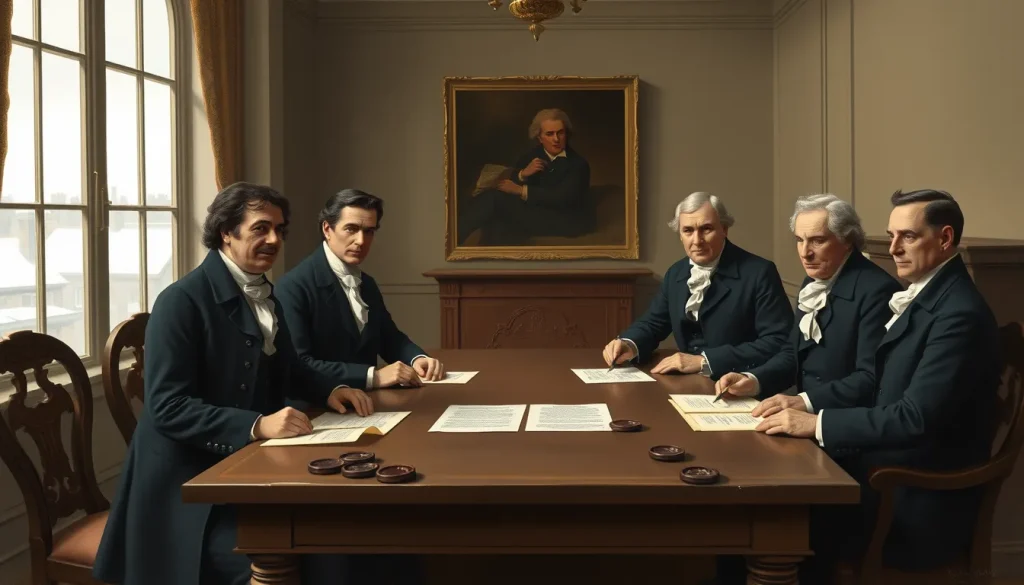
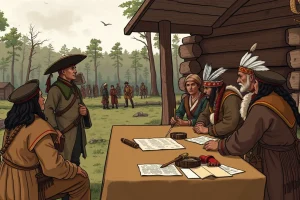
American peace commissioners had first been appointed in 1813 after the Russian government offered to mediate. Negotiations with the British began in Ghent, Belgium, on August 8, 1814. The American delegation comprised John Quincy Adams, James A. Bayard, Henry Clay, Jonathan Russell, and Albert Gallatin. The British delegation consisted of Admiral James Lord Gambier, Henry Goulburn, and William Adams. The British initially demanded acknowledgment of maritime rights, demilitarization of the Great Lakes, expanded Canadian borders, and an Indigenous buffer state in the Old Northwest—demands the Americans rejected, holding out for an unconditional restoration of pre-war boundaries.
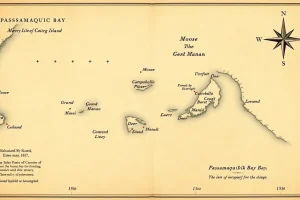
Over the following months, British demands were gradually reduced. The Americans refused to concede territory, and Britain, facing diplomatic pressure at the Congress of Vienna and concerned about the cost of continued warfare, eventually agreed to the status quo ante bellum formula. Article I of the treaty required the return of “all territory, places, and possessions whatsoever taken by either party from the other during the war,” with exceptions only for disputed islands in Passamaquoddy Bay. The treaty made no mention of impressment or neutral trading rights—the principal American war aims—reflecting both the resolution of those issues after Napoleon’s fall and the changing international order. Article IX pledged both parties to restore the “possessions, rights, and privileges” of Indigenous nations as they had existed in 1811, a promise that was never enforced.
The treaty was signed on December 24, 1814. Britain ratified it on December 27, but the treaty was not to take effect until both parties ratified. A British packet ship carried the document to the United States, where President James Madison received it in Washington in February 1815. The U.S. Senate approved it unanimously, and Madison signed it on February 16, 1815. Ratifications were exchanged on February 17, 1815, formally ending the war. Meanwhile, news of the treaty had not yet reached American forces, and on January 8, 1815, U.S. troops under Andrew Jackson defeated the British at the Battle of New Orleans—a battle fought after the peace had been signed but before it was ratified.
Why It Matters
The immediate effect of the Treaty of Ghent was the restoration of borders between the United States and British North America exactly as they stood before the war. No territory changed hands. The treaty established commissions—one for the Passamaquoddy Bay islands and the Bay of Fundy, another for the Great Lakes boundary and the 45th parallel—to resolve lingering disputes, work that continued into the 1820s. It also laid the groundwork for the Rush-Bagot Agreement of 1817, which demilitarized the Great Lakes.
For Indigenous nations, the treaty’s consequences were devastating. Britain, which had supported Indigenous resistance to American expansion during the war, dropped its proposal for an Indigenous buffer state during negotiations. Article IX’s promise to restore Indigenous lands and privileges to 1811 status was ignored by American authorities, and Britain lacked the means or will to enforce it. The treaty thus opened the door for the relentless westward expansion that followed the war.
Historians have long debated whether the war was a “draw.” At the level of territorial boundaries, the treaty changed nothing. But in terms of war aims, Britain secured its objectives—Canada remained British, and British maritime supremacy was untouched—while the United States achieved none of its stated goals regarding impressment, neutral trade, or territorial acquisition. The war nevertheless produced a lasting peace: after 1815, the United States and Britain never again fought a war, and the border between the two nations became the world’s longest undefended boundary.
Document
The Treaty of Ghent is an eleven-article peace treaty formally titled “A Treaty of Peace and Amity between His Britannic Majesty and the United States of America.” It was the document that ended the War of 1812 and restored pre-war territorial conditions between the United States and British North America.
Date
Signed December 24, 1814, in the city of Ghent, then part of the Kingdom of the Netherlands (present-day Belgium). Ratifications were exchanged on February 17, 1815, when the treaty officially took effect.
Author
The treaty was drafted by the plenipotentiaries of both powers. The British delegation comprised Admiral James Lord Gambier, Henry Goulburn, and William Adams. The American delegation comprised John Quincy Adams, James A. Bayard, Henry Clay, Jonathan Russell, and Albert Gallatin. The wording was the product of prolonged negotiation and revision between the two delegations.
Historical Context
The negotiations took place in Ghent after an earlier Russian-mediated peace initiative collapsed over the impressment issue. By the time talks began in August 1814, the American government had abandoned impressment as a necessary war aim, recognizing that the end of the Napoleonic Wars had removed the immediate crisis. The British government, initially confident after the burning of Washington in August 1814, reduced its demands as American victories at Baltimore and Lake Champlain strengthened the American position and as British financial and diplomatic pressures mounted.
Transcript
The following is the opening of Article the First of the ratified treaty, as reproduced in the official United States government transcript:
“There shall be a firm and universal Peace between His Britannic Majesty and the United States, and between their respective Countries, Territories, Cities, Towns, and People of every degree without exception of places or persons. All hostilities both by sea and land shall cease as soon as this Treaty shall have been ratified by both parties as hereinafter mentioned. All territory, places, and possessions whatsoever taken by either party from the other during the war, or which may be taken after the signing of this Treaty, excepting only the Islands hereinafter mentioned, shall be restored without delay and without causing any destruction or carrying away any of the Artillery or other public property originally captured in the said forts or places, and which shall remain therein upon the Exchange of the Ratifications of this Treaty, or any Slaves or other private property.”
Modernized Transcript
In modern language, Article the First declares that a firm and universal peace will exist between Great Britain and the United States, covering all their countries, territories, cities, towns, and people of every degree without exception. All fighting by land and sea will stop as soon as the treaty is ratified by both governments. Any territory, places, or possessions captured by either side during the war—or captured after the signing of the treaty—will be returned without delay. This return must occur without causing destruction or carrying away artillery or other public property that was originally captured and still remains in those forts or places at the time of ratification. The same protection applies to enslaved people and other private property.
What the Document Tells Us
The treaty reveals the central importance both governments placed on the status quo ante bellum principle: neither side gained or lost territory. It demonstrates that impressment and neutral trade rights, which had dominated the war’s causes, were absent from the final terms, reflecting how the end of the Napoleonic Wars had resolved those issues. Article IX’s promise to restore Indigenous lands and privileges to 1811 status shows that negotiators acknowledged Indigenous interests but produced a provision that was never effectively enforced. The treaty also established machinery—boundary commissions—that allowed future disputes to be settled peacefully rather than by war.
Limitations and Bias of the Source
As a diplomatic document, the Treaty of Ghent represents an agreement about terms for peace, not an objective account of the war. It is silent on the issues that led to the war—impressment, neutral rights, and the Orders in Council—which makes it an incomplete source for understanding the war’s causes. The treaty’s language, particularly regarding public property and enslaved people, reflects the competing legal systems and diplomatic conventions of 1814, and its provisions about Indigenous sovereignty were written without Indigenous participation and were never given effect.
Citation
Treaty of Ghent, December 24, 1814, Perfected Treaties, 1778–1945, General Records of the United States Government, Record Group 11, National Archives, Washington, DC. The original parchment and the official transcript are available in the National Archives Catalog and through the National Archives Milestone Documents website.
Primary Sources
The most important contemporary documents are the treaty itself and the diplomatic correspondence surrounding it. The American commissioners’ joint and individual letters to Secretary of State James Monroe, held at the National Archives and the Library of Congress, document their negotiating strategies, frustrations, and assessments of British positions. The British side is documented in the dispatches of Henry Goulburn, Under Secretary of State for War and the Colonies, and Admiral Lord Gambier, archived in British government records now held by The National Archives of the United Kingdom. Albert Gallatin’s papers, including his correspondence from Ghent, provide insight into the American delegation’s internal debates. The Hartford Convention resolutions of January 1815 show the extent of American domestic opposition to the war, while the Senate’s executive journal records the unanimous ratification vote of February 16, 1815.
Further Reading
- Donald R. Hickey, The War of 1812: A Forgotten Conflict, University of Illinois Press.
- J.C.A. Stagg, The War of 1812: Conflict for a Continent, Cambridge University Press.
- Bradford Perkins, Castlereagh and Adams: England and the United States, 1812–1823, University of California Press.
- National Archives, “Treaty of Ghent (1814)” Milestone Document page, https://www.archives.gov/milestone-documents/treaty-of-ghent.
- National Park Service, Star-Spangled Banner National Historic Trail, “War’s End,” https://nps.gov/stsp/learn/historyculture/war-s-end.htm.
References
- National Archives, “Treaty of Ghent (1814).” https://www.archives.gov/milestone-documents/treaty-of-ghent
- National Park Service, “War’s End.” https://nps.gov/stsp/learn/historyculture/war-s-end.htm
- American Battlefield Trust, “The Treaty of Ghent: Ending the War of 1812.” https://www.battlefields.org/learn/articles/treaty-ghent-ending-war-1812
- U.S. Senate, “Transcript: Treaty of Ghent.” https://www.senate.gov/about/powers-procedures/treaties/treaty-of-ghent/transcript-treaty-of-ghent.htm
- The War of 1812, “The Treaty of Ghent.” https://thewarof1812.org/treaty/
FAQ
What did the Treaty of Ghent restore?
The treaty restored all territory, places, and possessions taken by either side during the War of 1812 to their pre-war condition, a principle known as status quo ante bellum. It also established commissions to settle pre-existing boundary disputes between the United States and British North America.
Why was the Battle of New Orleans fought after the treaty was signed?
The Treaty of Ghent was signed on December 24, 1814, but slow transatlantic communication meant that news of the peace did not reach American or British forces in time. The Battle of New Orleans was fought on January 8, 1815, before the treaty's ratification by the United States on February 17, 1815.
What did Article IX of the Treaty of Ghent say about Indigenous peoples?
Article IX required both parties to restore to Indigenous nations 'all possessions, rights, and privileges which they may have enjoyed or been entitled to in 1811.' The provision was never enforced by the American government, and Britain did not attempt to compel it, leaving the article effectively a dead letter.

Leave a Reply